
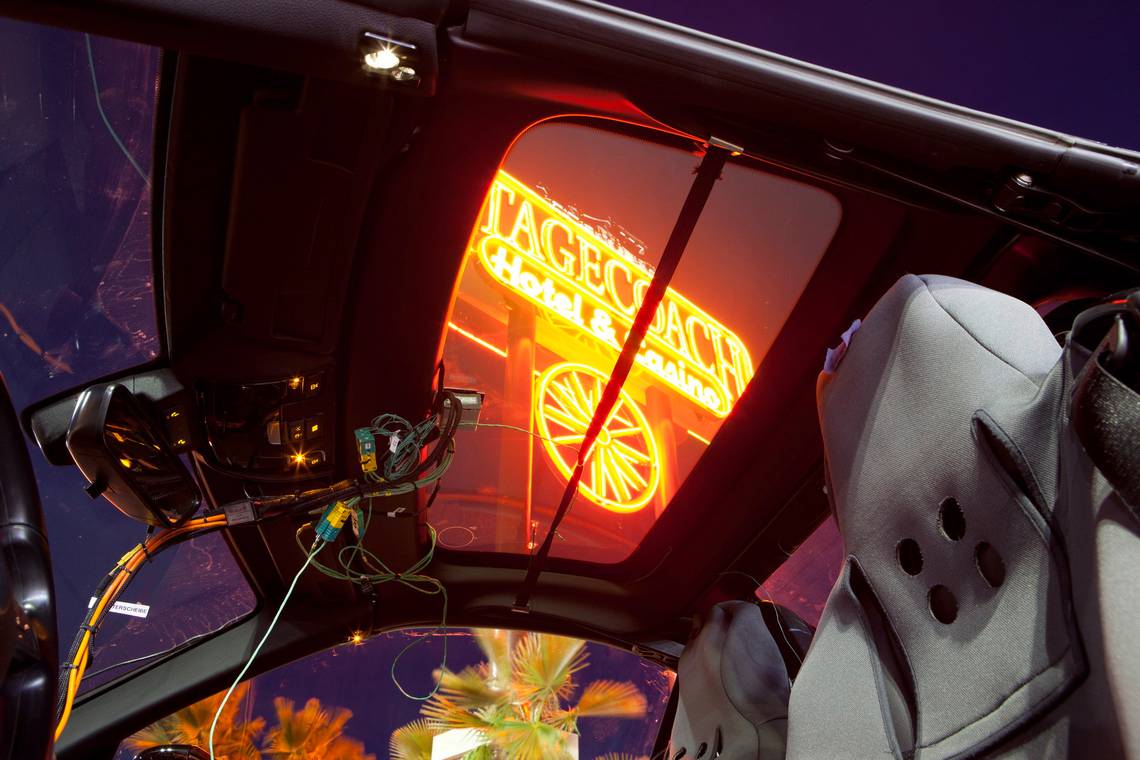
We've already caught a glimpse of the future Mercedes SLK->ke1683 featuring the brand's new Magic Sky Control system with a spy shot captured a little over a week ago, and although finally seeing the technology cleared up the questions we had about its aesthetics, the whole technology part is still a little unclear. In an attempt to part the clouds of uncertainty, Mercedes->ke187 has released a series of images that they are hoping will explain this phenomenon.
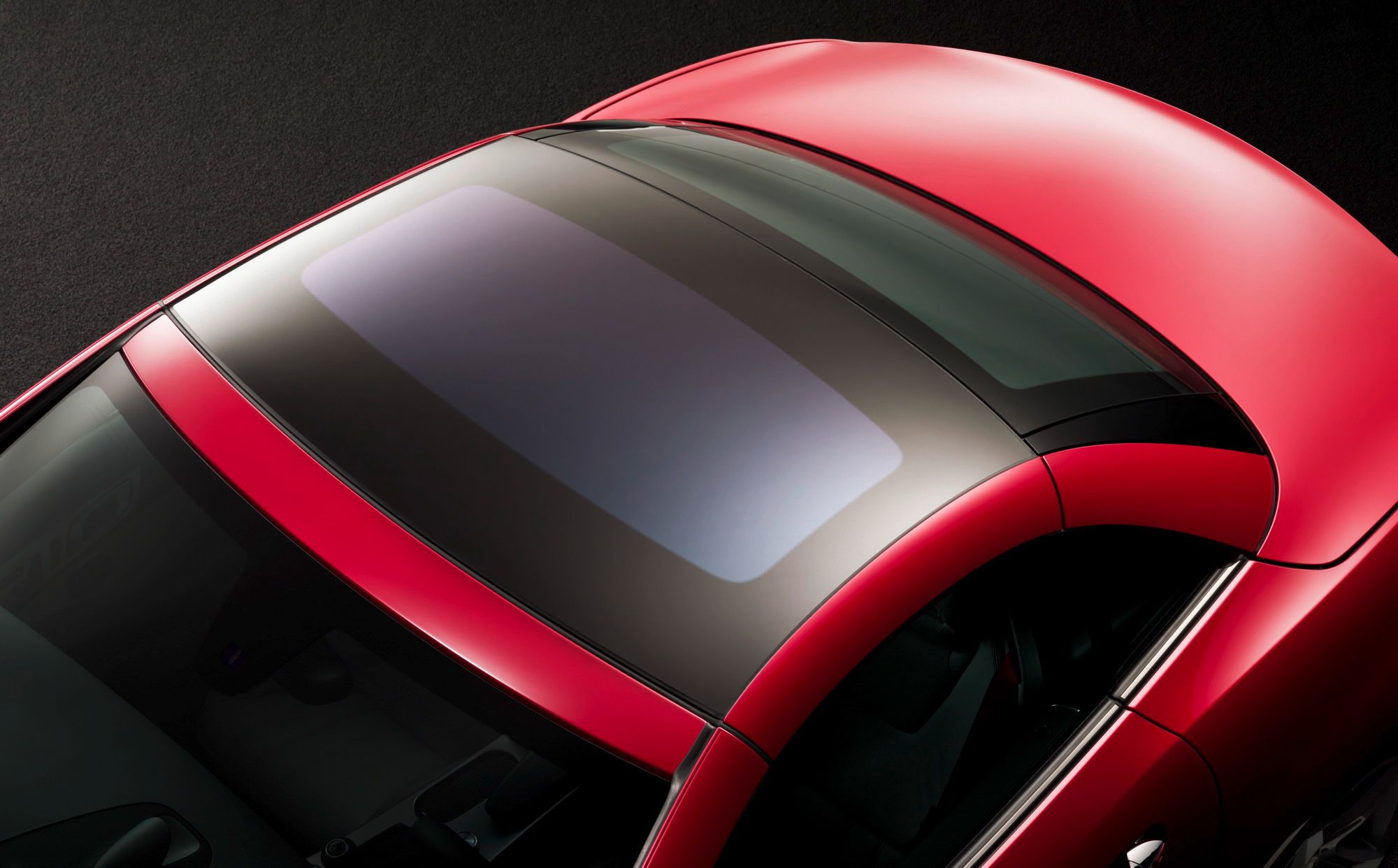
Magic Sky Control is in fact a transparent glass roof that can be darkened on demand in a matter of seconds. It's like the transitional lenses people wear that go from clear to dark when stepping out into the sun. It works by using electrically-governed particles that shift to allow only a certain amount of UV light into the car. The technology is said to help keep away UV and infrared rays and can reduce the 1,000 watts per square meter into a measly 50-200 watts. Bringing that shade to the interior of the vehicle should make for quite a pleasant driving experience during those warm, sunny days.
The images provided by Mercedes include results from testing performed on the new Magic Sky technology. The tests were done at temperatures higher that 50 degrees Celsius in the shade, and, with an open roof, the load from the sun in the heat of Death Valley reached 1000 to 1100 W per square meter. With the transparent glass roof it dropped to 200 W, and when the roof was switched to darkened mode with MAGIC SKY CONTROL, it dropped to 40 to 50 W – 1/20th of the original value.
Don't get too excited though; the Magic Sky Control doesn't come cheap. The price for this technology is an extra 2,000 euro ($2,700 at the current exchange rates) on top of the base price for the car.
Press release after the jump.
Press release
Mercedes-Benz is enhancing the vario-roof of the SLK with innovative technology boasting entirely new features. As a result, a totally unique glass roof will be celebrating its world premiere in the new SLK next year: at the touch of a button it can be made either transparent or darkened. In transparent mode it will offer an open-air experience during cold weather, while in darkened mode it will afford a haven of shade and prevent the interior from heating up in direct sunlight.
Mercedes-Benz will be the first automotive manufacturer to offer the new glass roof – called the panoramic vario-roof with MAGIC SKY CONTROL – as an optional extra in the new SLK next year. Thanks to this new development, the transparent glass roof can be darkened on demand in a matter of seconds. By affording shade and a unique ambience, it helps to ensure a pleasant wellness atmosphere in the vehicle interior.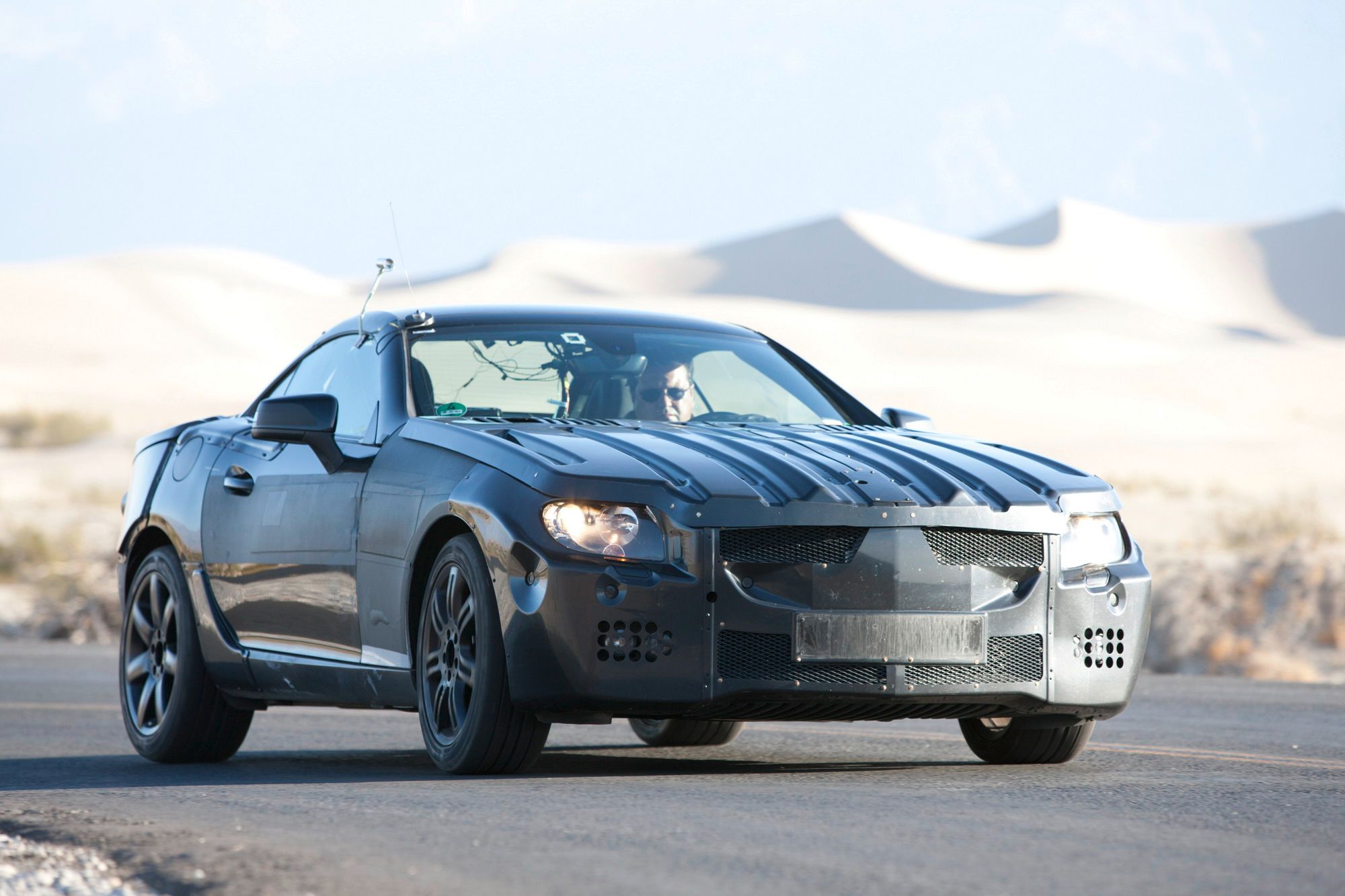 Since the innovative glass also shields against the sun's rays far more effectively than conventional thermal insulation glass or sunblinds, the occupants of the new SLK will also enjoy the highest level of climatic comfort at the same time. When driving with the roof open would be unpleasant due to intense heat, the driver and front passenger are able to remain composed under the MAGIC SKY CONTROL roof – an important contribution towards feeling comfortable and driver-fitness safety, a concept typically promoted by Mercedes. Even when the vehicle is at a standstill the interior does not overheat, since the roof is switched to darkened mode when powered off.
The operating principle is based on the physics of a plate condenser: if the glass structure is subjected to an electrical voltage, particles in the structure position themselves so that light is able to pass through the glass. If the voltage remains switched off, however, the particles position themselves randomly. This partially blocks the light, and the glass remains dark. The control unit and converter are integrated into the front section of the roof, and the switch is in the overhead
control console.
In addition to the unique panoramic effect and transparency at the touch of a button, MAGIC SKY CONTROL also provides a top-class wellness atmosphere. UV and infrared light are also effectively blocked in transparent mode, while insulation increases even more significantly and noticeably in darkened mode, thereby helping to keep the temperature on interior parts such as armrests cooler by up to 10 degrees Celsius compared with conventional green glass.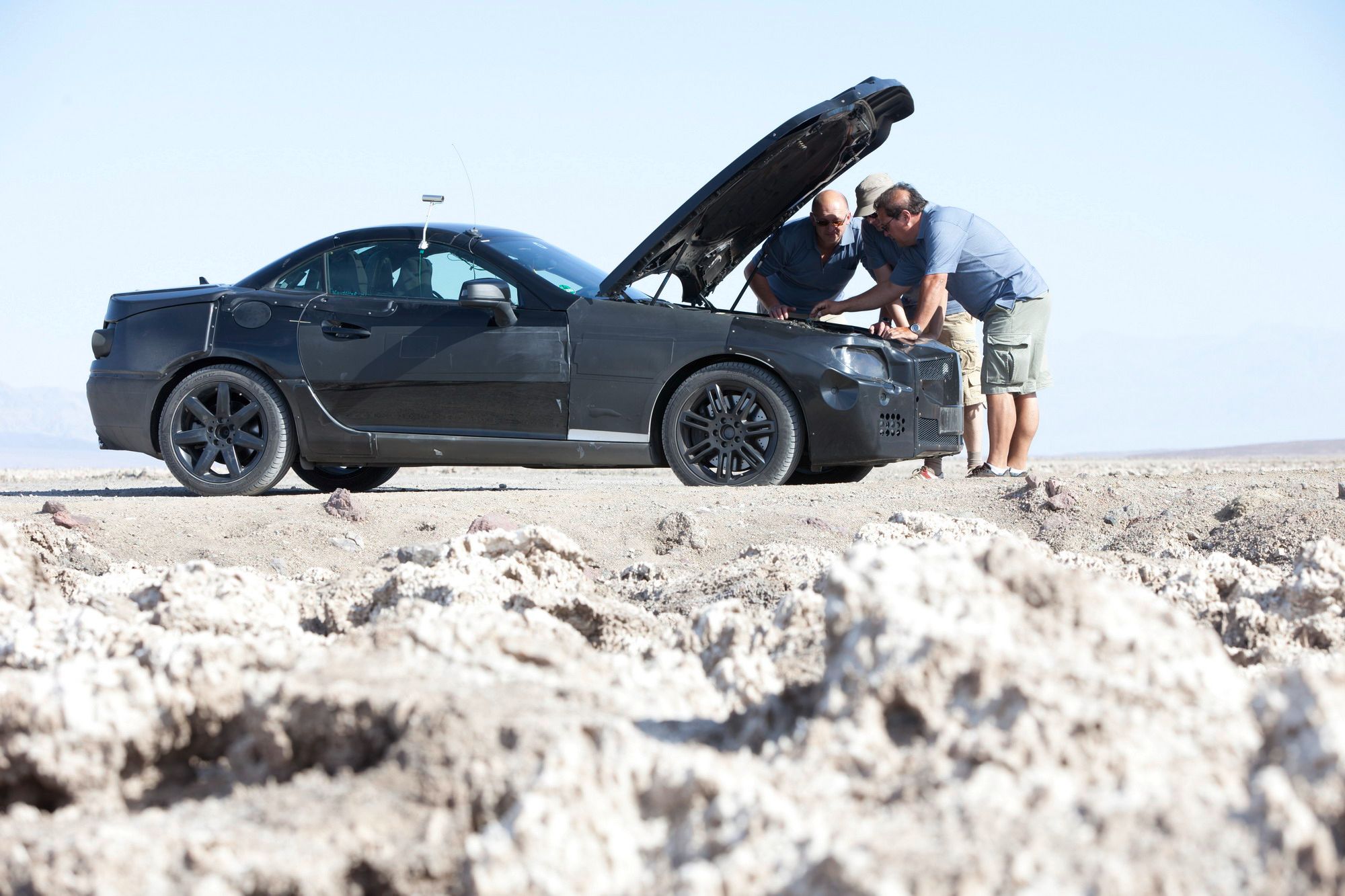 The demanding Mercedes-Benz endurance test programme which prototypes fitted with the switchable glass roof had to pass around the globe included harsh practical tests conducted in Death Valley in the USA – one of the hottest places on earth. Under the heat of the baking sun, summer temperatures there regularly hit over 50 degrees Celsius in the shade. The test engineers made the most of these conditions to heat up the SLK prototypes with transparent roofs for four hours around midday, for example. They then switched the roofs to non-transparent mode and immediately noticed significant relief from the torturing heat. Thermal images showed that temperatures in the region of the head were reduced.
Measurements using a device called a star pyranometer revealed why this was the case. This device measures the intensity of exposure to sunlight. With an open roof, the load from the sun in the heat of Death Valley reached 1000 to 1100 W per square metre. With the transparent glass roof it dropped to 200 W, and when the roof was switched to darkened mode with MAGIC SKY CONTROL, it dropped to 40 to 50 W – one 20th of the original value.
But MAGIC SKY CONTROL not only benefits passengers. Some of the strain is also taken off the air-conditioning system, thereby in turn saving on CO2 emissions.
The panoramic vario-roof with MAGIC SKY CONTROL will be available to order as an optional extra for less than 2000 euros.
Endurance test
 Around noon it becomes unbearable. In the legendary Death Valley, on the border between California and Nevada, the thermometer soars to over 50 degrees Celsius during the summer. But the Mercedes-Benz test team considers these exceptional thermal conditions to be ideal.
In the middle of a rocky, scarcely frequented parking area, they have positioned three prototypes, one of which is the SLK, due to celebrate its world premiere next year. The next generation of the successful roadster is fitted with a glass roof which Mercedes-Benz will be offering - the world's first automotive manufacturer to do so - as an optional extra in the new SLK. Known as the MAGIC SKY CONTROL panoramic vario-roof, this technical marvel boasts a unique level of versatility, as its name suggests: when open, it creates an intense feeling of being in touch with nature which is typical of a roadster, and being transparent it still provides an open-air feeling even in poorer weather. Yet it also features another unusual highlight: the transparent glass roof can be darkened on demand in a matter of seconds. As such, by optionally affording shade and a unique ambience, it helps to ensure a pleasant wellness atmosphere in the interior.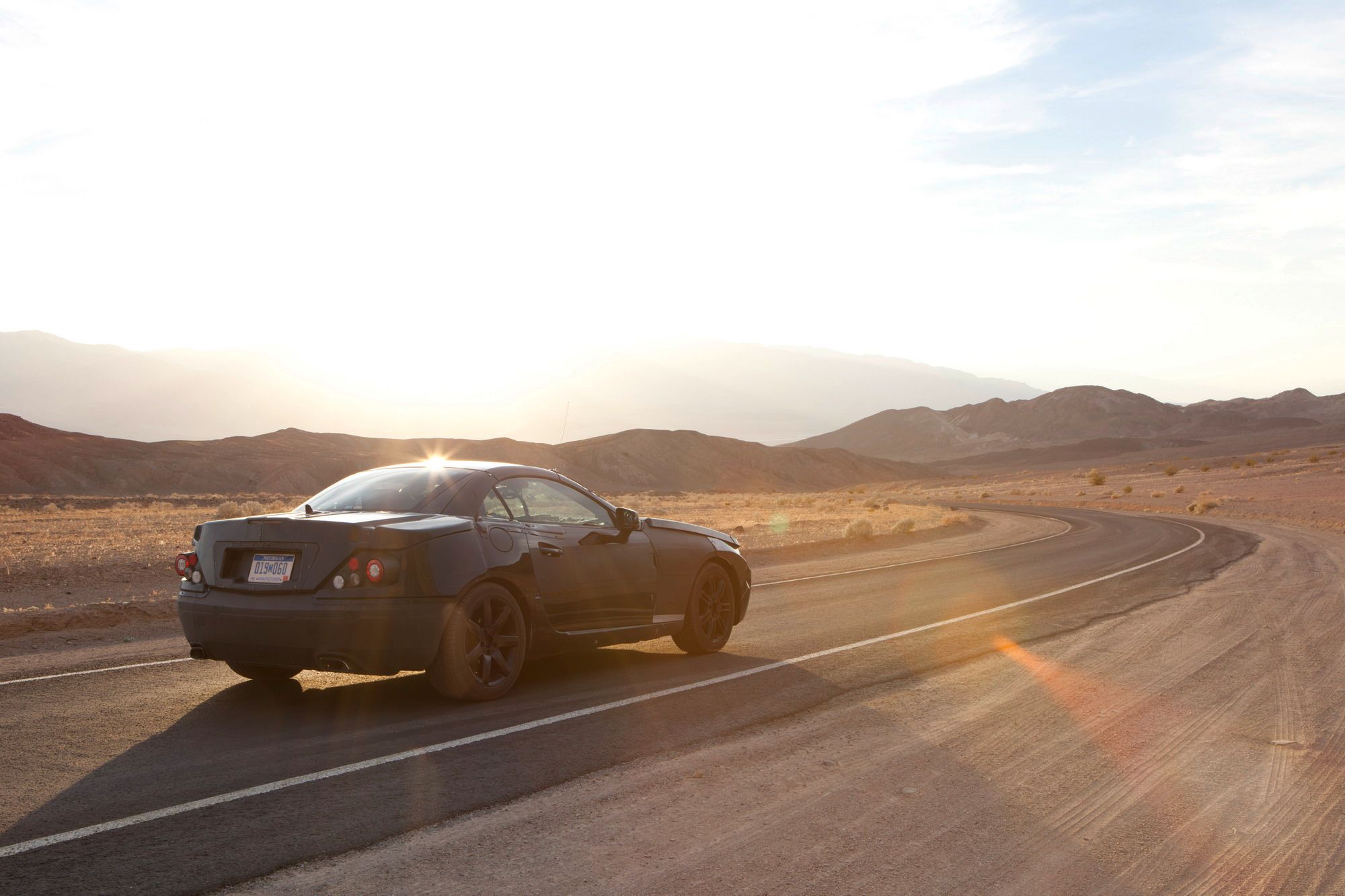 The luggage compartment is almost fit to burst with electronic measuring equipment. Dozens of cables trail towards the front, beneath the bonnet, into the interior and onto the innovative roof. This is the last rigorous operational and endurance check, in the severest of environmental conditions which a future SLK driver is ever likely to encounter anywhere in the world. During its development, the MAGIC SKY CONTROL panoramic vario-roof has already successfully endured hundreds of test hours, including sessions in the sun simulation laboratory and on various test rigs. Last winter, the future SLK and the novel panoramic roof passed the test programme in the cold arctic conditions close to the polar circle with flying colours – and that was at temperatures below minus 30 degrees. Now it's time to turn up the heat.
To ensure that verifiable and reliable measurements can be guaranteed, the measurement technicians gather their equipment from their black van and set everything up. Then they make their adjustments under the blazing sun. The centrepiece of their equipment is a so-called star pyranometer. It provides extremely accurate measurements of the energy generated by the sunlight to which the prototypes in this bleak parking area in Death Valley are being subjected, without any shade. At ten o'clock in the morning, with a clear sky, the device's display is already showing a good 800 W. And it is climbing. Shortly after midday it will exceed the 1000 W mark. It's almost impossible to go any higher. In the meantime, a light cloudy mist passes through briefly, barely discernible to the eye. Yet the intensity of the sunlight immediately drops a good 200 W. The test technicians have hardly noticed this change, yet the star pyranometer reacts immediately.
Of course clouds are something of a rarity in the height of summer in Death Valley. Generally the technicians allow the prototypes of the SLK to heat up in the blazing sun for four hours each day. They then continuously record the data from the unerring star pyranometer to gather base values, so that later the measurement results can be correctly compared against each other.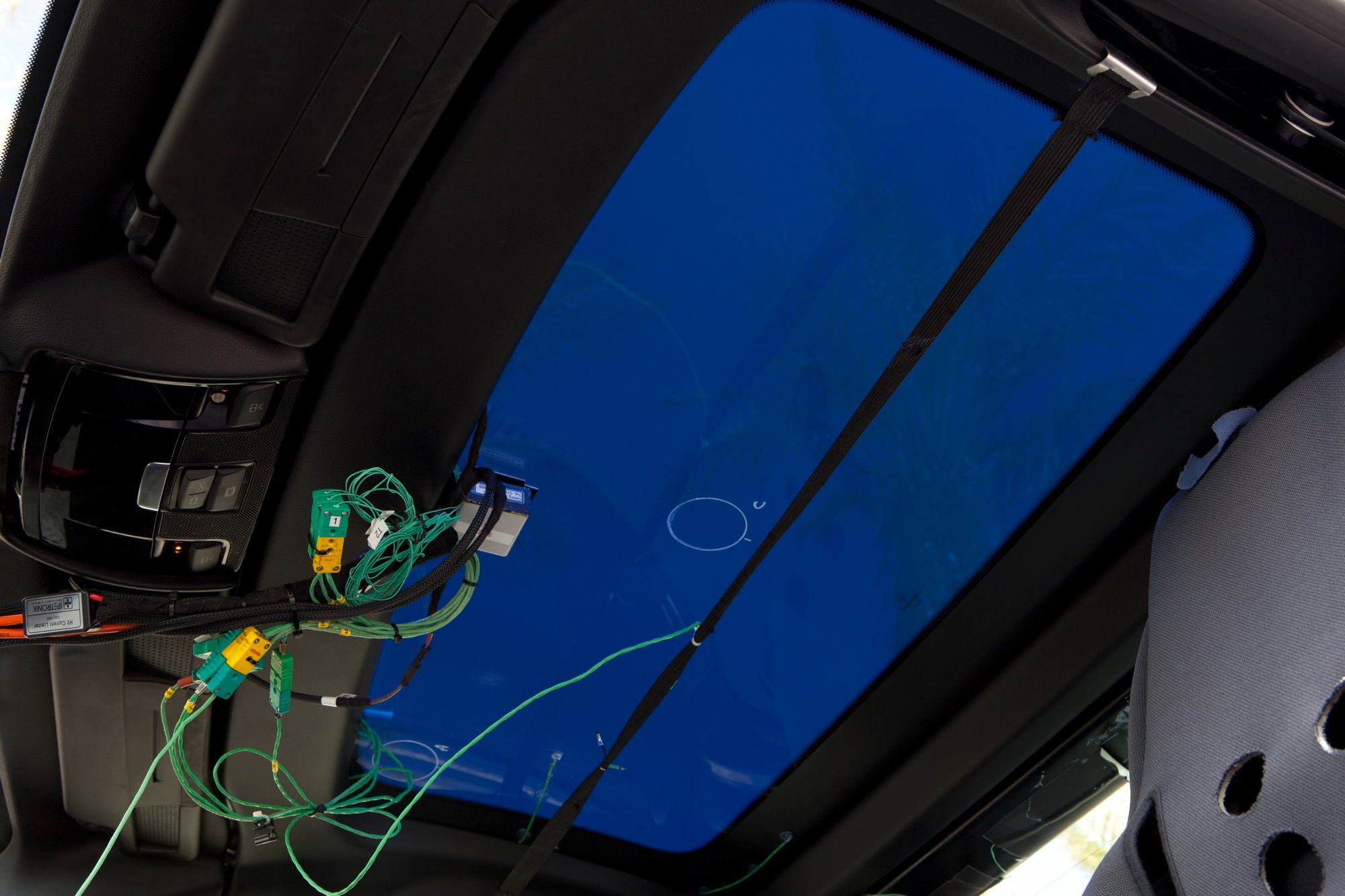 Their main attention is also turned to other measurements, however. Sensors are distributed throughout the entire vehicle. That morning, the technicians installed eight new sensors in the panoramic roof alone. These sensors painstakingly record every variation in temperature, make any possible stresses in the glass visible, and monitor the load values and responses of the electronic components. Everything has to work just as smoothly and reliably at temperatures above 50 degrees as it does at minus 40 degrees.
After four hours beneath the blazing sun, the test crew leaves Death Valley and heads off in the direction of Daylight Pass, travelling through a bizarre landscape which is constantly changing: solidified mud deposits form mountains which are then gnawed away by the powers of erosion.
A chain of mountains crumbles, and sandstone returns to sand. "Bleak, sterile mountains and blinding salt flats stare back at us", noted Lewis Manly in 1849, when a Mormon trek had to wait 25 days on the valley floor for help to arrive. Later, an accompanying pastor's wife wrote: "We have walked through the valley of death", and with these words gave the valley its name.
On arrival at the test support centre in Beatty, located around 1200 metres higher up, it is comparatively cool: the thermometer here shows a moderate 40 degrees Celsius. And now it's time to take stock of the day's results. The collected data have to be sorted out and transferred to laptops. Today everyone is satisfied with the results. This means that the measurement results from each individual sensor have met all expectations. There were no surprises, as expected.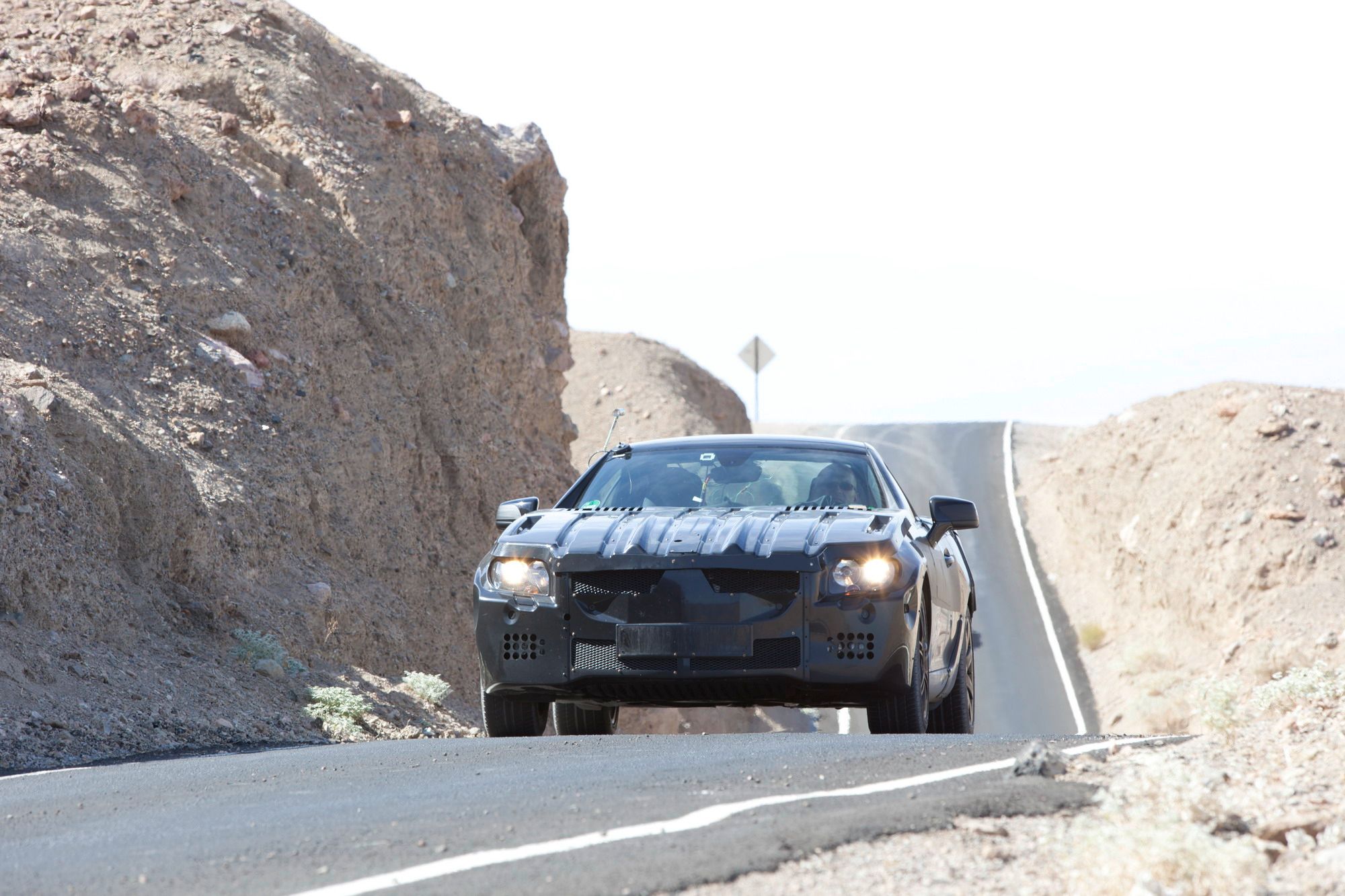 This has not always been the case. As with any innovative product, the new MAGIC SKY CONTROL panoramic vario-roof has also posed quite a number of challenges for the Mercedes-Benz engineers. Glass and foil have had to work perfectly together, and the control electronics have had to function in all imaginable circumstances. Sometimes the measurement data highlighted specific problems. This then resulted in the test technicians embarking on a flurry of hectic activity in their test workshop. What does this measurement tell us? How did it happen? What do we need to change in order to achieve an ideal result?
The technicians and engineers in Beatty were in constant contact with the development centre in Sindelfingen via the internet. Suggestions were made, then discarded, and new strategies were created and components changed. Often parts were exchanged and new sensors installed by early morning.
This phase has now been completed. The last heat tests in Death Valley have now confirmed this – and they have also once again demonstrated, to impressive effect, the efficiency of the newly developed roof. After taking to the driver's seat – following the vehicle's exposure to the torturing heat for four hours – and switching the roof to darkened mode, the test technicians immediately noticed significant relief from the heat. Thermal images showed that the temperature in the region of the head and shoulders was reduced. Measurements using the star pyranometer located on the centre stowage compartment clearly demonstrated why this was the case. With an open roof, the sun load in the heat of Death Valley reached 1000 to 1100 W per square metre. With the transparent glass roof it dropped to 200 W, and when the roof was switched to darkened mode with MAGIC SKY CONTROL, it dropped to 40 to 50 W – just one 20th of the original value.
The unique MAGIC SKY CONTROL glass roof will now be able to celebrate its world premiere next year.