| | ||||||||||||||||||||||||||||||||||||||||||||||||||||||||||||||||||||||||||
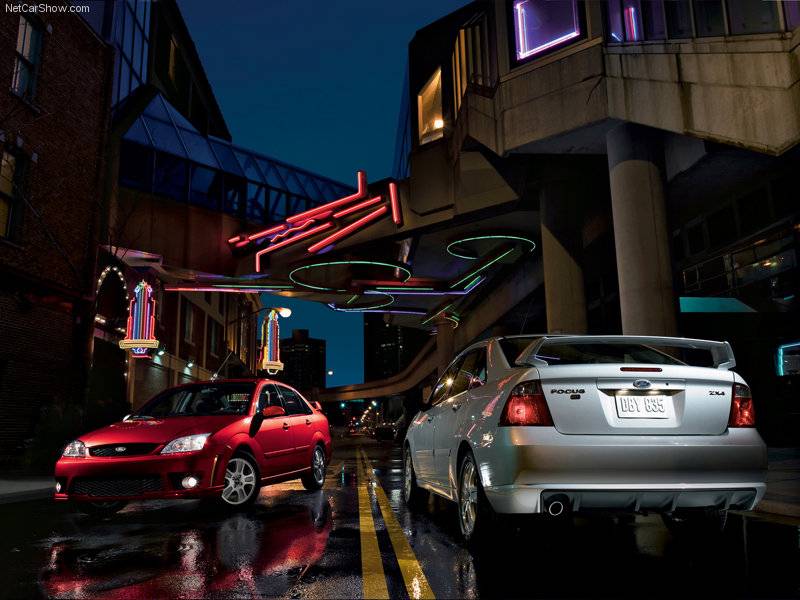
The all-new 2007 Ford Focus is designed to raise the standard of what a small car should be with new levels of roominess, comfort, driving dynamics and safety. Combined with a bold new exterior design and an all-new chassis, the Focus is designed to give customers much more car while still providing affordability and value.
To meet this growing demand, Ford has further refined the award-winning Ford Focus for 2007. The Focus continues to be among the leaders in the small-car segment, thanks to its spirited driving character, contemporary exterior appearance and smart interior. And, as it has from the beginning, it delivers award-winning quality, environmentally responsible emissions, superb passenger space and low cost of ownership. Focus enters 2007 with a series of changes to address the needs of those seeking a more individualized vehicle. These include class-exclusive, leather-trimmed sport seats, two new exterior colors and upgrades to the standard and premium audio systems. The importance of choice and versatility is evident in the many Focus configurations available. Focus offers more body styles than any of its competitors: a three-door hatchback, a five-door hatchback, a four-door sedan and a wagon — all available in S, SE and SES trims. A sedan model is also available in the performance ST version. ExteriorSpoilers are the focal point of two available Street Appearance packages, which give Focus an aggressive, customized tuner look. Street Appearance Package I is available on the ST sedan as well as the three-door, sedan and five-door versions of the SE and the SES. Sedan models sport a rally-style, body-color decklid spoiler. With Street Appearance Package II, a body-color SES spoiler replaces the rally decklid spoiler. Sport Appearance Package II is offered on SE, SES and ST sedans. All models fitted with either of the Street Appearance packages also come with:
Exterior changes for 2007 include two new paint colors, Kiwi Green Clearcoat Metallic and Aqua Blue Clearcoat Metallic. They replace Light Tundra and Sonic Blue. All Focus models except the ST have a prominent grille with a chrome-ringed diamond mesh and clear-lens headlamps, which make for an expressive face. Focus ST’s grille has satin mesh with a body-color surround. Fog lamps are standard on SES and ST models.
Ford DNA: Dynamic designOn the outside, the Focus appearance is designed to be progressive, adventurous and distinctively different from the softer, more traditional proportions and silhouettes of other small cars.The design objective was to give customers a striking and dynamic-looking car that would clearly differentiate it from the competition and signal a step forward. The "New Edge" proportions, surface treatment and graphics are used to communicate the vehicle’s strong driving dynamics and reflect the precision of the underskin engineering as well as the fundamental roominess of the interior. The Focus design also was driven by maximum functionality. The car’s low hood line and shape couples outstanding aerodynamics with maximum crash protection. This functionality also created a challenge for the Focus engineers. For example, the A-pillar was difficult to construct and the subject of many conflicting requirements. The "fast" windshield angle and high roofline mean it’s long, yet it must still pass crash tests and Ford’s aggressive targets for rigidity. To achieve these goals, high-strength steel was used and its external shape has been tuned to reduce noise and effectively manage water across the side glass. Communicating the car’s practicality and versatility was important - but insufficient. Ford Focus also had to satisfy both the head and the heart by being more than just a sensible means of transport. Beneath Ford Focus’ crisp edges, taut lines and sharp intersections lies a highly-functional, smooth and aerodynamically sculptured shape. Below the gracefully arcing daylight area (DLA), tall doors allow easy access for families. Between the bold, high-mounted tail lamps and behind the low-drag "Kamm tail," the rear hatch offers excellent access to a highly practical load compartment devoid of intrusions. ---- InteriorFor 2007, Focus features a new option of sport seats with leather seating surfaces and contrasting leather inserts. Available on the ST sedan as well as all SE and SES models except wagon, this seat treatment is also offered in the new Interior Upgrade Package. This package includes a two-tone, leather-wrapped steering wheel with Charcoal upper and Flint lower to match the seating surfaces, a unique satin finish on the center stack surround and instrument-panel cluster gauge surround, and black sill plates with exposed “Focus” in body color. The Focus interior is clean and modern-looking, highly functional and built of high-quality materials. The instrument panel is symmetrical; the driver and front-passenger areas are divided by two rectangular climate control registers, the hazard switch and a shallow center stack for the audio and climate control systems. Storage areas include a drawer for six compact discs, located by the driver’s left knee, and an open space just below the climate control dials. A standard floor console houses the shifter, two cup holders, the parking brake lever and optional features, including the traction control system. An overhead console with sunglasses holder and space for a garage door opener is optional. Front doors include molded-in beverage holders. A CD and MP3 capable player is standard across the Focus lineup. One of the key objectives set for the new Focus was a superior package with intelligent use of space. The car’s design started on the inside - around a new generation of customers, who are taller than ever before - to provide more cabin space, interior comfort and roominess. Focus’ high roofline, raised seating positions, tall, wide doors, and long wheelbase work together to provide more overall interior passenger room than any major competitor.* A secondary spin-off of Ford Focus’ interior package is the creation of a high "command post" driving position, which provides safety benefits The raised H-point and widely spaced seat runners also add greater foot-space for the comfort of rear seat occupants.This takes advantage of the vehicle’s higher roofline to liberate rear leg room, create a "command post" driving position - which customers welcome as a perceived safety benefit - and also ease ingress and egress for families, the young and the old. Today’s consumers, particularly small car customers, demand more interior space with greater levels of practicality. For many buyers, Ford Focus will be a family car, and ease of access - for loading young children and luggage - is important. To address this, Ford Focus has a longer wheelbase - at 103 inches. The wheels are pushed to each corner, the roofline raised and the hip pivot point is higher - an important factor for the comfort of older drivers. These actions liberate significant head and legroom, and create a class-leading interior package. Critical interior package dimensions:
Maximizing shoulder room - at 53.7 inches - was another key objective - one which greatly influenced the shape of the 3-door models and its distinctive Kamm tail design. The demand for greater width for the rear compartment called for a longer, tapering overhang to achieve aerodynamic targets. Not possible within the confines of a typical C-class footprint, the solution was to adopt the low-drag Kamm tail, with the carefully resolved trailing edge delivering aerodynamic benefits that make up for the car’s enhanced width beyond the C-pillars. Advanced ergonomics and attention to detailDuring the development of the Focus, considerable attention was paid to ergonomics - the science of comfort, convenience and ease of use. More than 10 separate and specific studies were conducted to collect ergonomics data that then was used by the Focus engineers to assess the easiest and most user-friendly systems for virtually all the vehicle controls.The result is a cockpit designed to allow drivers of all shapes and sizes to find a comfortable seating position from which all controls fall perfectly to hand. For example, revised seating positions - which are more upright, thanks to the raised H-point - make use of the extra cabin height, boosting legroom in the front and rear. A next step was to utilize the extra space intelligently, with an aim to provide greater comfort for a greater range of passengers. Focus IPFord Focus design engineers were able to consider the needs of drivers of all shapes and sizes by relying on RAMSIS, advanced 3-D software. Occupant height was just one factor in the calculation. Variations in height, torso, neck and limb measurements were all considered, and a comfort rating for each major joint was established. The information was used to plot ideal seat and steering column adjustment requirements, together with instrument groupings according to priority.The raised H-point (and widely spaced seat runners) enabled designers to also provide Focus with greater foot-space beneath the front seats for rear occupants. This gives rear seat occupants sufficient space to adjust their posture, providing a significant boost to comfort, especially for adult and teenage passengers during extended trips. But this is only part of the story: extensive video studies and generic customer research identified that the greatest discomfort in small cars stemmed from the lack of space between the B-pillar and seat cushion. For Ford Focus, the combination of widely spaced seat runners and the waisting of the outer corners of the rear seat squab provide that vital extra space needed to reduce ankle articulation and ease entry. The Ford Focus engineers also developed a sympathetically molded door trim panel to provide greater elbow room. In the event of a side impact, the trim panels also are designed to distribute crash energy forces evenly across an occupant’s body and limbs. Prioritizing reach zones involved placing the air conditioning and heater controls below the more frequently used audio controls - but still high enough for ease of operation. The temperature panel features a thermostat control that can easily be identified by feel alone, so that adjustments can be made without the driver looking away from the road ahead. The Focus cupholders also do not obscure any controls when in use. Focus switches also have been fine-tuned to sound similar, to require similar effort and to be smooth and positive in operation. Rotary switches are rubberized and push/pull buttons use silicon pads for a pleasing, tactile operation. Unexpected convenience features - such as a manual-height seat adjust and optional tilt and telescopic steering wheel - also abound in the Ford Focus. The manual-height adjust enables drivers to raise or lower their seat positions easily to fit nearly any size build. The available tilt and telescopic steering wheel, a feature typically found on more expensive cars, enables drivers to position themselves at just the right distance from the steering wheel. Drivers can tilt the steering wheel up or down, pull it forward or push it backwards to fit their stature. Another convenience feature is available on the 3-door. The 3-door’s tailgate release is situated high on the instrument panel and close to the door, enabling operation from inside or outside the car without bending. The tailgate also can be opened remotely - with or without the key in the ignition and when the engine is running. A safety cut-out ensures that the tailgate cannot be opened by accident when the vehicle is moving. Comfort
Acoustic comfortFord Focus’ development team concentrated on far more than simply reducing levels of noise, vibration and harshness (NVH) within the vehicle. They also worked relentlessly to ensure the quality of sound emitted is pleasing to the ear.Even before the first body shells had been manufactured, computer models were used to analyze the primary noise paths and develop an optimized structure. Attention to design detail was followed by fine-tuning of prototype assemblies on special test rigs, where noise generators reproduced powertrain and suspension inputs, using digital recording techniques to record interior sound levels. The design specifications set very high targets for the body structure rigidity and weight. This was achieved by detailed design optimization of every body joint, use of laser welded blanks and special reinforcement profiles for powertrain and chassis attachment points. Ford Focus’ wind noise has been reduced by micrometer-precision in door and window fit, rigid door exteriors and complete insulation systems around the doors and in the area of the front wall. Triple door seals with a special lip profile also ensure extremely efficient sealing from exterior wind noise. The aerodynamic design of details, such as door mirrors, windshield wipers and the radio aerial, also has been tuned to reduce the total noise level. Aerodynamicists spent more than 2,600 hours in the wind tunnel fine-tuning details to reduce turbulence. Suppression of engine noise and vibration also was identified as a major target in reducing levels inside the vehicle cabin. Starting with extremely rigid powertrains - both engines incorporate an alloy beam or ladder frame that improves basic stiffness by up to 30 percent - acoustics engineers used advanced computer systems to simulate engine noise so the body structure could be tuned to reduce resonant peaks and move natural vibration frequencies outside the operating range. Deep swaging of Ford Focus’ body panels, especially the floorpan, help to maintain stiffness while permitting down-gauging for weight reduction. Where this was not possible — around the bulkhead for example — dual-function deadening pads were developed with a viscous layer to dampen sound and a mass layer to absorb it. Torque roll axis engine mounts also are used to reduce powertrain noise, improve idle quality and reduce powertrain shake on rough roads. Such a mounting system separates the powertrain mass from its torque reactions by using two rubber-to-metal bonded mounts located at either end of the assembly, in line with the axis of rotational inertia, plus a dedicated torque reaction link. The front mount incorporates a hydraulic chamber so the modulus of the rubber can be optimized to reduce NVH transmission at high engine revs, without reducing idling smoothness. Two direct acoustic paths from the drivetrain to the interior have been eliminated with the adoption of a hydraulic clutch mechanism and cable-operated gearshift. A unique flexible exhaust joint situated behind the engine manifold limits the transmission of drivetrain vibrations along the length of the exhaust system. It also has specially tuned exhaust hangers positioned at the natural vibrational nodes to provide further isolation. The quality of the sound levels entering the passenger compartment was the subject of a special development program. Intake noise was reduced and tuned for a pleasing quality of sound by acoustic attention to every part of the induction system. With the goal of generating an acoustical harmony that also conveys power, the intake noises were recorded and digitally analyzed so that the system could be tuned to generate a fitting and pleasant sound profile. The acoustics engineers used ’Helmholtz’ resonators — "dead-end" cavities attached to the air inlet trunking — to filter or select individual frequencies so that an appropriately purposeful, yet subdued sound could be composed — similar to adding harmonies to a musical note to create a chord. The design of Ford Focus’ suspension bushes and attachments also was extensively developed to isolate the interior from road-generated NVH. Engineers worked closely with tire suppliers to develop low-noise tread patterns that were fine-tuned in conjunction with the critical suspension elements. Starting from extremely rigid front and rear subframes, the bush profiles were optimized to reduce harshness and still maintain precise wheel control. Large-diameter horizontal bushes for the lower arms have different axial and radial stiffness. Dual-path top mounts for the MacPherson struts de-couple impact loads from damping forces so each input can be optimized to improve isolation. The design of Ford Focus’ multi-link rear suspension also separates the springs from the dampers, and a new design of damper valving is more progressive throughout the operating range. It incorporates internal bump stops that limit suspension travel in extreme conditions without harshness or a sudden jolt. The total effect of all these developments worked to reduce Ford Focus’ overall interior noise level by 4 decibels, or db(A). Specific sources, such as road noise, wind noise and engine noise, were reduced by as much as 5 dB(A). A 3 dB(A) reduction on the noise scale is generally equated with a 50 percent reduction in perceived noise. For Ford Focus, considerable attention has been placed on ergonomics - the science of comfort, convenience and ease of use. Many separate and specific studies were made to collect ergonomics data, which was then applied during the car’s development. Attention to ergonomics detail was paramount - from the grouping of instruments and switches into different priority touch zones to the tactile response of levers and switches. The texture of knob surfaces and the click made by push-button switches also were developed using a haptic interface approach, which deals with the relationship between sense and touch. Low-effort temperature and air distribution switches are integrated with the controls for the air conditioning system. The center of the three rotary knobs, which operate the four-speed booster fan, is larger than the other two, so it can be identified by feel alone. The main lighting switch has an easily gripped rotary knob, which pulls out in two stages to operate the fog lamps. The fog lamps automatically self-cancel when the main lights are extinguished. The triangular hazard-warning switch is positioned in the center of the facia where it can be reached by passenger or driver. The audio systems available with Ford Focus are oriented to the user. The audio unit is located prominently in the upper area of the instrument panel, where it is easy to reach, and has large switches and a large visual display. Additional remote audio controls are located on the left side of the steering column so the driver can adjust frequency or volume level without losing sight of traffic. A well-positioned trunk release button is located on the top left of the instrument panel. This eliminates fumbling between the seat and the door, and allows reaching the button from outside the car. Quality and durabilityFor Ford Focus, special craftsmanship teams were established to develop new ways to address all aspects of fit, finish and function, using assessment criteria that break the vehicle down into a number of primary categories and then subdivide each category into its component parts. These were then compared against the best competitive models - not just in its class but also the class above - to derive a set of quantitative benchmarks. Detailed attention to the manufacturing processes for all systems and components, and continuous control of fit and finish tolerances, have resulted in extremely high standards for all aspects of vehicle quality.A highly systematic procedure known as Systems Engineering was applied throughout Ford Focus’ development, combined with Quality Functional Deployment (QFD). QFD involves converting the expectations and demands of the customers into reproducible objective values, which are then translated into the vehicle specification. For example, by monitoring customers driving a range of products, it was observed that beyond a roll angle of 2 degrees and a lateral acceleration of 13.2 feet per second squared, passengers began to feel discomfort. These data were used to help define design criteria and targets for the chassis engineers. Similar data were collected and used in the development and fine-tuning of steering, ride comfort, brake performance and feel as well as engine response and gearshift operation. Strict criteria of reliability and longevity are a foundation of the kind of quality-oriented development expected at Ford. On proving grounds and testing stands, each Ford Focus prototype was subjected to an endurance program equivalent to a real driving performance of 100,000 miles under extreme conditions. ---- Safety and SecurityFocus occupant-sensing technology will turn the front-passenger seat air bag on or off depending on the size of the seat occupant. Ford continues to recommend that children under 12 ride in the back seat secured by a safety belt or in a child safety seat. Anti-lock brakes are optional on the S, SE and SES, and standard on the ST. Seat-mounted, side-impact air bags are optional on all series.
Active Safety: Intrinsic stabilityAgility, stability, precision and comfort. These core attributes are central to Ford’s chassis development engineers. Yet they provided the same development brief for the car’s safety engineers, as they form the core of Ford’s Dynamic Safety Engineering (DSE) philosophy. DSE stresses a "whole car" approach to safety, with a primary focus on vehicle attributes that help the driver avoid an accident, particularly in extreme conditions.The precise feel of the steering and brakes inspire confidence, while the car’s ability to change direction, hold the road and keep to the chosen line through bends provides agility, stability and a secure feeling of being in control. These qualities have been engineered into Ford Focus using extensive computer modeling, laboratory testing and thousands of hours driving on test tracks. They have been optimized and fine-tuned to ensure that every new Ford Focus behaves the same way - consistently and predictably in all situations. Particular attention has been placed on trying to ensure that Ford Focus remains highly controllable and stable when approaching its dynamic limits. The result is a car with new levels of high-speed emergency driving dynamics, including an accident avoidance capability that sets new standards in the class. Passive safety: Engineered beyond mandatory requirementsFord’s exceptional computing power provided Ford Focus’ safety engineers with a powerful tool to help understand the forces involved in a crash. More than 100 complex and highly realistic simulations were performed to provide accurate predictions of how the car would perform in a real-world incident. This gave engineers the ability to design, test, re-design, refine and re-test the car’s body structure and restraint systems in scores of different crash modes before even the first prototype car was assembled.As a result, Ford Focus meets more than 100 different real-world crash tests, modes and events - far beyond existing or currently proposed legislation - including all mandatory U.S. and European crash tests. Ford Focus also meets Ford’s far more rigid internal standards. For example, the car’s rigid barrier test was conducted at 35 mph, rather than the required 30 mph, representing an increase of 30 percent in absorbed crash energy. Ultra-stiff body structure protects passenger cell At the front, beyond the bumper support beam, the car’s cross member is made from ultra-high-strength steel so it is robust and stable and will not tear upon impact. Resistance to tearing helps spread crash energy into the car’s lower side rails, which is particularly effective in offset impacts. Additional to the progressive collapse of the lower side rails which absorbs most of the energy ahead of the passenger safety cell, a secondary load path channels the remaining energy over the roof and around the door to ensure safe evacuation of passengers. At the rear, the objective is to minimize intrusion of the passenger compartment in a rear impact, while also ensuring that the doors remain operable and the integrity of the fuel system is maintained. This is achieved via the progressive collapse of the rear side rails, supported by the wheel housings. Stamped and laser-welded, the side rails are made up of three different metal gauges - changing in thickness from 1.6 mm to 2.6 mm (in the area of the fuel tank) and 2.4 mm - to provide progressive controlled collapse, while maintaining fuel system integrity. The compound structure avoids over-gauging near the rear bumper and eliminates the need to add reinforcement further back. Vehicle weight is thus reduced by more than two pounds per side and the number of parts and welding operations are reduced, improving assembly tolerances and providing robust control of the collapse performance. For side-impact protection, Ford Focus exceeds even the most stringent legal proposals. The entire side structure, which includes door beams and anti-burst door latches, is designed to absorb energy and reduce intrusion, especially above the door bars. To achieve this, the B-pillar is made from a laser-welded, high-strength steel blank, with a gauge thickness that reduces from 2.25 mm at the top to 1.1 mm at its base. Additional inner reinforcement, designed to increase rigidity, makes it highly resistant to "kinking," so it can more effectively channel crash energy into both the rocker and roof rail, and support the side air bag during deployment. Integrated restraint systems Approximately 4 milliseconds later - before the head and chest begin to move forward - the air bag sensors trigger the front air bags and the small pyrotechnic charges in the pre-tensioners, which minimize any slack in the safety belt and negate the effects of bulky or layered clothing. The front air bags take approximately 35 milliseconds to fully inflate, which is completed just before the occupant meets the bag, approximately 50 milliseconds after impact. To reduce chest loading and minimize injury, Ford Focus is equipped with load-limiting devices within the inertia reel assemblies. These pay-out belt webbing after a pre-determined load is exceeded. This process is progressive and occurs between 45 and 70 milliseconds after impact, ensuring that the cross belt pressure against the occupant’s chest remains fairly constant. By avoiding peak loads, the potential for chest injury in very severe impacts is reduced. The load-limiting device consists of a torsion bar within the traditional inertia reel, and the typical pay-out is six inches. The system is calibrated to help ensure that front seat occupants do not meet the air bag until the optimum point, which is just as it is beginning to deflate. The progressive pay-out also ensures that the upper torso is less likely to twist, an action that can compromise the efficiency of the front air bag. Ford Focus also is the first vehicle to benefit from extensive research and tests conducted at Ford’s new head-impact protection facility. Believed to be one of the most advanced facilities of its kind, it allows testing of dummy headforms impacting the car’s interior trim. Such data aid in the development of sympathetic, occupant-friendly trim panels that minimize the potential for head injuries. In Ford Focus, the B-pillar was subjected to an extensive special study resulting in a new design of energy-absorbing trim panel. Door trim panels are similarly sympathetic. In the event of a side impact, the trim panel works in conjunction with foam "pushers" located between the door skin and the interior trim. As the outer door skin begins to deform during a side impact, the foam first absorbs crash energy before it. Together with the trim panel, the foam then spreads the impact across the occupant’s body from thigh to pelvis, minimizing localized impact and thus reducing potential injury. Similar detailing includes foam padding in the foot box, to reduce foot and lower-leg injury during a severe frontal impact. Rear-seat and child protection Rear seat-backs, hinges and catches are reinforced to resist movement of unsecured luggage. Front seat backs, head restraints and side trim panels are designed with rear-seat occupants in mind and are, thus, free from any protrusions. Latest SecuriLock safeguard against theft SecuriLock offers several advantages to the customer. The system arms itself, eliminating human error through forgetfulness. The interception of the key code by a thief is virtually impossible because the transponder only has the power to pass the code by radio to the transceiver when it is within the electrical field of the transceiver. SecuriLock also incorporates a special erasing procedure and smart "learning" mode to maintain security after resale and eliminate the requirement for a master key. The Focus security features also extend to the radio which incorporates a removable security bezel to provide increased protection against radio theft. The four central station-select buttons can be unlocked as a strip and easily slipped into a pocket or handbag. This exposes a reflective, highly visible panel behind and a flashing LED telltale light Low running costs Ford Focus features high component durability. Under normal driving conditions with regular fluid and filter changes, components such as spark plugs will have a life expectancy of 100,000 miles and fuel filters should be good for the life of the vehicle. A fully galvanised body and 24-stage paint and body protection provide advanced corrosion and paint protection, in addition to a 5-year corrosion perforation warranty coverage. Focus engineers worked closely with insurance industry representatives from the U.S., U.K. and Germany during the entire development process of the Focus to ensure that damage resistance is maximized and collision repair costs are minimized. Among the features contributing to the Focus performance are bolt-on upper and lower radiator support panels, large crush spaces between the bumper beam radiator core and engine, large bumper shelves to protect adjacent sheet metal and lighting, and packaging of expensive engine components away from likely impact points. ---- Powertrain and ChassisThree engine choices begin with the 136-horsepower, 2.0-liter, Duratec 20 dual-overhead-cam (DOHC), inline four-cylinder (I-4). Powering the sporty Focus ST is the 151-horsepower, 2.3-liter Duratec 23 DOHC I-4. This engine is derived from the Duratec 20 family, with larger displacement and performance-tuned exhaust. In California, New York, Massachusetts, Vermont and Maine, a super-clean, 130-horsepower Duratec 20E qualifies Focus as a Partial Zero Emissions Vehicle. The 20E version of Focus is cleaner than some hybrid gas-electric vehicles. The Duratec 20 and 20E are available with a five-speed manual transmission or a four-speed automatic. Focus ST offers a five-speed manual exclusively.
Improved structural integrity, reduced weight and superior NVH characteristics Developed from a clean sheet, Ford Focus-’ all-new body and platform architecture draw on the latest design, engineering and manufacturing techniques to combine stiffness and light weight with outstanding crash performance and improved running refinement from reduced noise, vibration and harshness (NVH) levels. Honed using highly sophisticated, multi-functional software to define the optimal balance between structural performance and weight, Ford Focus’ lightest model, the 3-door, weighs just 2,551 pounds. Achieved through intelligent engineering and ingenuity - rather than the use of exotic materials - Ford Focus’ body features variable-thickness steel, achieved by laser-welded blank technology used to join steel panels of different gauges. The rear side rails, for example, are traditionally made from four separate parts. For Ford Focus, these parts have been replaced by a single laser-welded blank, in which the gauge reduces progressively in three stages from front to rear. The result is a structure that is stiffer - with more rigid mounting points for the suspension - has improved crash performance and saves more than 2 pounds per rail in weight. Similarly, the gauge of steel in the B-pillar is 2.25 mm thick at the top but tapers to just 1.1 mm at the base, providing a stiff upper section for controlled performance in the event of a side-impact crash. As well as offering weight savings, laser-welded blank technology enables the fine-tuning of deformation characteristics, providing strength where it is required and allowing down-gauging where it is not. From a vehicle dynamics standpoint, the Focus’ highly rigid platform (boosted further by ultra-stiff cross-members front and rear) has enabled engineers to fine-tune the front and rear suspension systems to deliver new levels of precision and comfort. The goal was to give Ford Focus a level of comfort, refinement and active safety normally associated with larger cars, while providing handling and stability of a more sporty and reassuring nature. Refined, low-friction suspension and steering systems Focus relies on MacPherson struts and new, broad A-arms located by horizontal bushes. The lower A-arm incorporates zero-offset geometry, which combines stiff lateral control - through the forward A-arm bush, located directly in line with the kingpin - and longitudinal compliance via a larger rear A-arm bush. The system allows new levels of fine tuning to provide the optimum balance between handling and ride comfort, with greatly reduced impact harshness being achieved alongside linear steering characteristics and handling precision. Large-diameter, offset coil springs provide enough space for their operating axis to be directly in line with Focus’ suspension load inputs, compensating for the angle of the struts. This eliminates bending forces acting on the strut, reducing friction within the damper and helping to provide outstanding ride quality - especially during initial movements. As a result, ride comfort is enhanced over a greater range of road surfaces, whether the car has a full complement of passengers or only the driver. Ride quality also is enhanced by dual-path top mounts, which separate the load paths for the springs from the dampers. The dampers work against a relatively compliant bush to reduce NVH for small amplitudes, while progression within the top mount ensures effective body control. The dampers also use new low-friction seals and finely calibrated valves to ensure the dampers respond quickly and smoothly to initial inputs. Being "fun-to-drive" was a prerequisite for the Ford Focus. Key in achieving this are controls that are responsive to driver inputs - controls that operate smoothly and progressively, and in the manner expected. Focus’ suspension and steering systems have been extensively fine-tuned to deliver these attributes. While every component contributes to the total effect, calibration of Ford Focus’ springs, dampers and stabilizer bar rates is central to achieving a sense of precision and stability as well as vehicle solidity and structural integrity. To be effective, these elements should operate from the most rigid structure possible to prevent body deflections interfering with geometric control. Rates are calibrated to maintain a slow change in roll angle to maximize stability and minimize pitch, dive and cross-wind-induced sensitivity. Low friction and low compliance are key to achieving this desired state. Detail fine tuning and careful selection of new materials enabled engineers to reduce the friction within the steering system by 20 percent. The reduction overcomes "stickiness" or resistance to steering inputs which the driver feels as an unnatural steering load and helps generate a feeling of steering fluidity and agility in the car. All steering components such as the seals, bearings, tie-rod joints and strut top mounts are optimized for low friction. In addition, a new composite yoke within the steering rack minimizes free-play while maintaining precision and directness without generating additional friction. Minimal compliance also has been achieved through fine tuning components to minimize any delay between the driver turning the wheel and the car changing direction. A stiffer steering column helps, as do new levels of geometric precision intrinsic to Ford Focus’ steering and suspension systems. The challenge facing engineers was to deliver precision and clarity of feedback through the wheel rim, without compromising isolation from bumps and ride quality over poor road surfaces. The result is a system that is designed to respond immediately to input, feel progressively smooth in operation and still send clear signals to the driver’s hands. Fully independent multi-link rear suspension The multi-link IRS system has ride comfort, steering precision, handling, braking and stability advantages, as well as NVH and package gains over previous twist-beam axle systems. Key advantages of the IRS system include:
The Ford Focus is tuned dynamically to provide high levels of road holding, with progressive and easily controlled upper limits. Specific attention to the rate of yaw response improves agility and stability provided during high-speed lane change maneuvers. Extensive development and fine tuning of Focus’ front and rear suspension systems have resulted in new levels of active safety, controllability and predictability, which are designed to help the driver either avoid or recover from extreme or emergency situations. By providing such high handling levels, Ford Focus’ dynamic behavior always leaves a much greater margin in normal driving conditions. Brakes: low effort, progressive responseDriver reassurance and improved stability, as well as reduced stopping distance, were key objectives for Ford Focus’ braking system.New friction materials - formulated to generate high levels of friction more rapidly - help reduce stopping distances, while maintaining a progressive and uniform reaction to pedal effort. This allows all levels of driver skill to achieve optimum retardation sooner, as well as enhancing driver confidence in all conditions. Large, ventilated front discs and relatively large pads help to reduce operating temperatures for improved consistency of braking effort during heavy use. Fade and extended brake pedal travel experienced during prolonged descents in mountainous areas, for example, are greatly reduced while a consistent pedal feel is maintained. A reassuring pedal feel is further enhanced by a new 10-inch brake booster. Working directly on the pedal - eliminating the need for a cross shaft and its associated compliance - the new booster improves feel and feedback to the driver while also reducing travel and effort. All Ford Focus models are equipped with single piston push/pull-type callipers, acting on 258-by-22 mm diameter discs at the front. At the rear, Ford Focus is equipped with 203 mm by 30 mm ventilated disks. Stability is enhanced by maintaining optimum braking performance to the rear wheels in all conditions, whether the vehicle is heavily laden or carrying only the driver. On non-ABS-equipped vehicles, this is provided by a pressure cut-off proportioning valve. When ABS is specified, brake proportioning is achieved using the electronic brake-force distribution (EBD) system. It uses the ABS sensors to monitor the speed of front and rear wheels and adjusts the pressure distribution to help the rear wheels retain traction. EBD is self-compensating for all load conditions and imperceptible to most drivers. It is designed to reduce stopping distances and improves vehicle stability in conditions that fall short of triggering the ABS. Anti-lock Braking SystemFord Focus’ optional ABS is the latest four-channel system, which is capable of applying and releasing the brakes up to 12 times per second to maintain optimum braking effect without loss of steering.Powertrains
Common to both engines during design and development has been the incorporation of advanced combustion and catalytic converter technology, together with the pursuit of lightweight and low internal friction. The goal was to achieve good fuel economy as well as Low Emission Vehicle status without compromising on responsiveness and driveability. Low-speed torque, flexibility and smoothness were key requirements. As a result, both drivetrains feature relatively flat torque curves, advanced engine management systems and gearing calibrated to optimise engine response and economy. The Focus powertrains feature a new torque roll axis (TRA) mounting system, which helps reduce powertrain shake on rough roads, results in a smoother idle quality and greatly reduces the degree of noise and vibration transmitted from the drivetrain into the bodyshell. Internally, the Zetec engines feature an alloy ladder frame between the base of the block and the crankcase, which boosts rigidity of the powertrain assembly by 30 percent. New lightweight pistons and con rods reduce second-order shaking forces by 20 percent. Newly-designed cam covers and low-noise ancillary drive systems generate significant improvements in running refinement and reduce perceived engine noise by as much as 50 percent. Manual transmission: hydraulically-operated clutch with reduced drivetrain influences The high-torque capacity of Ford’s MTX75 five-speed transaxle makes it the ideal match for the sporty 130 hp 2.0-liter Zetec. Low-friction, needle-roller bearings and low viscosity mineral oil are a further aid to low fuel consumption. The adoption of a low-inertia hydraulic clutch, together with a cable-operated gearshift instead of the more usual direct-acting rod linkage, eliminates two direct acoustic paths from the powertrain to the cabin, providing significant reductions in NVH. Both controls offer exceptional precision for greater accuracy and ease of operation, together with greater durability and weight savings. Lighter clutch pedal effort and reduced travel are key gains, making clutching operation smoother and more consistent. As well as isolating the gearshift lever from idling and vibrations and reactions to torque reversals, Ford Focus’ flexible cable-operated gearshift mechanism has been honed to ensure a short, slick but precise movement. As with the fine-tuning of the steering, suspension and brakes, the clutch and gearshift controls have been crafted to ensure operation is intuitive. It is controlled by an electronic synchronous shift control (ESSC) module linked to the EEC-V engine management system. A centrally-mounted quadrant selection lever has six positions (P,R,N,D,2,1), while overdrive can be switched by a separate, thumb-operated push-button at the side of the lever. The ESSC works in conjunction with the EEC-V, using information read from 18 different engine and transmission sources to calculate the best possible shifting strategy for the driving and operating conditions. Fuel economy and performance are close to those of the equivalent manual transmission models, while the system’s shift quality and speed of response set a new standard for this class of vehicle. In common with the Ford Focus’ manual transmissions, the automatic has been engineered for low NVH and is exceptionally quiet in operation, is sealed-for-life, and requires no service maintenance. ---- Major Features and OptionsS includes: five-speed manual transmission; 15-inch steel wheels with nine-spoke-appearance wheel cover and all-season tires; rear-window wiper and washer on three-door, five-door and wagon; and AM/FM audio system with CD/MP3 player and speed-sensitive volume control. SE adds: power windows, locks, keyless entry and mirrors; variable-speed wipers; air conditioning; front center armrest with storage; and six-spoke-appearance wheel cover. SES adds: 16-inch, five-spoke (three-door, sedan and five-door) or 15-inch multispoke (wagon) alloy wheels; fog lamps; body-color decklid or liftgate handles; body-color side moldings; enhanced suspension with rear stabilizer bar; automatic speed control; overhead console; tilt and telescoping leather-wrapped steering wheel; and tachometer. ST adds: 2.3-liter Duratec 23 engine; four-wheel disc brakes with anti-lock brakes; unique 16-inch, five-spoke aluminum machined-alloy wheels; ST performance-tuned suspension; chrome-tipped exhaust; body-color door handles; ground-effects rear fascia; satin-alloy grille; power, heated exterior mirrors; gauges with silver appliqué; sport bucket seats and door trim with black-and-red fabric inserts or optional Preferred Suede™; and leather-wrapped steering wheel and shift knob with contrasting stitching. Options include: seat-mounted, side-impact air bags; automatic transmission; power moonroof; traction control; perimeter alarm; leather seating surfaces; and six-disc AM/FM audio system with CD changer and audio controls on the steering column. ---- Technical data
Power transfer
Dimensions
Chassis
|
| |||||||||||||||||||||||||||||||||||||||||||||||||||||||||||||||||||||||||
|
|
Forgot your password?