
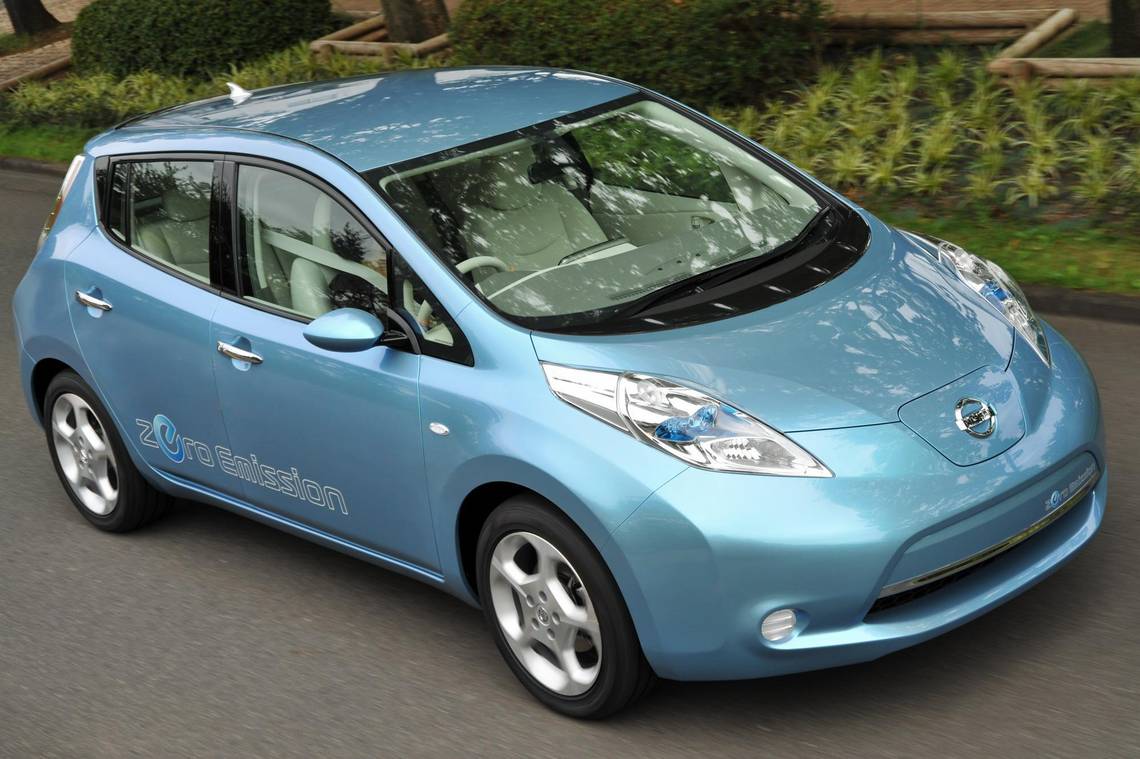
In a very bold move Nissan Jidosha Kabushiki-gaisha has made history by unveiling their first zero emissions vehicle intended for mass production. In an attempt to skip the gas/electric hybrid craze and jump directly into plug in electric vehicles, it might appear that Carlos Gohsen is set on taking over the world like a James Bond villain with the long awaited lithium ion beattery technology. This past Sunday the Japanese automaker unveiled the Nissan Leaf, a five door electric vehicle with a 100+ Mile range at their home base in Yokohama. The Leaf features a sharp, upright V-shaped body with a pair of slanted LED headlights that were designed to cleverly split and redirect airflow away from the door mirrors, thus reducing wind, noise and drag.

Those top secret batteries that we were talking about are made up of laminated lithium ion cells that are capable of delivering over 90 kW of power and weigh only 440 pounds. The battery pack sends it stored energy to the Leaf's front mounted electric drive motor that only outputs 80 of those kilowatts for a maximum output of 107 HP. The interesting thing about an electric motor is that they make their peak torque at 0 RPM, we know this sounds crazy, but unlike the internal combustion engine, the amount of energy an electric motor can do is based upon how it was made and it delivers that power at one constant amount. That is a healthy 208 lb-ft of torque. The instantaneous power should provide off the line acceleration comparable to the Infiniti G35 sports car.
Of course the question with any purely electric vehicle is how long will it take to charge? Nissan claims that the Leaf will take 8 hours for a full charge from a 200 V source; so a high capacity 220 V outlet is recommended, otherwise it will take twice as long for a full charge from a standard 110 V AC outlet. There is an impressive 50 kW AC fast-charge capability. This allows for an 80% charge of the lithium ion batteries meaning you can go up to 80 miles with only a 30 minute charge, or if you are really in a hurry, you can get an additional 31 miles after being plugged in for only 10 minutes. Although the hardware necessary is a little too expensive for in home use, leave that up to your local municipality. The disadvantage of having to run with all that electronic gear onboard is the excess weight, however because it can be mounted low in the chassis it should make for a decent handling package.
Press release after the jump.
2010 Nissan Leaf


- Make: Array
- Model: 2010 Nissan Leaf
- [do not use] Vehicle Model: Array
Press release
Nissan Motor Co., Ltd. today unveiled Nissan LEAF, the world’s first affordable, zero-emission car. Designed specifically for a lithium-ion battery-powered chassis, Nissan LEAF is a medium-size hatchback that comfortably seats five adults and has a range of more than 160km (100 miles) to satisfy real-world consumer requirements.
NISSAN LEAF
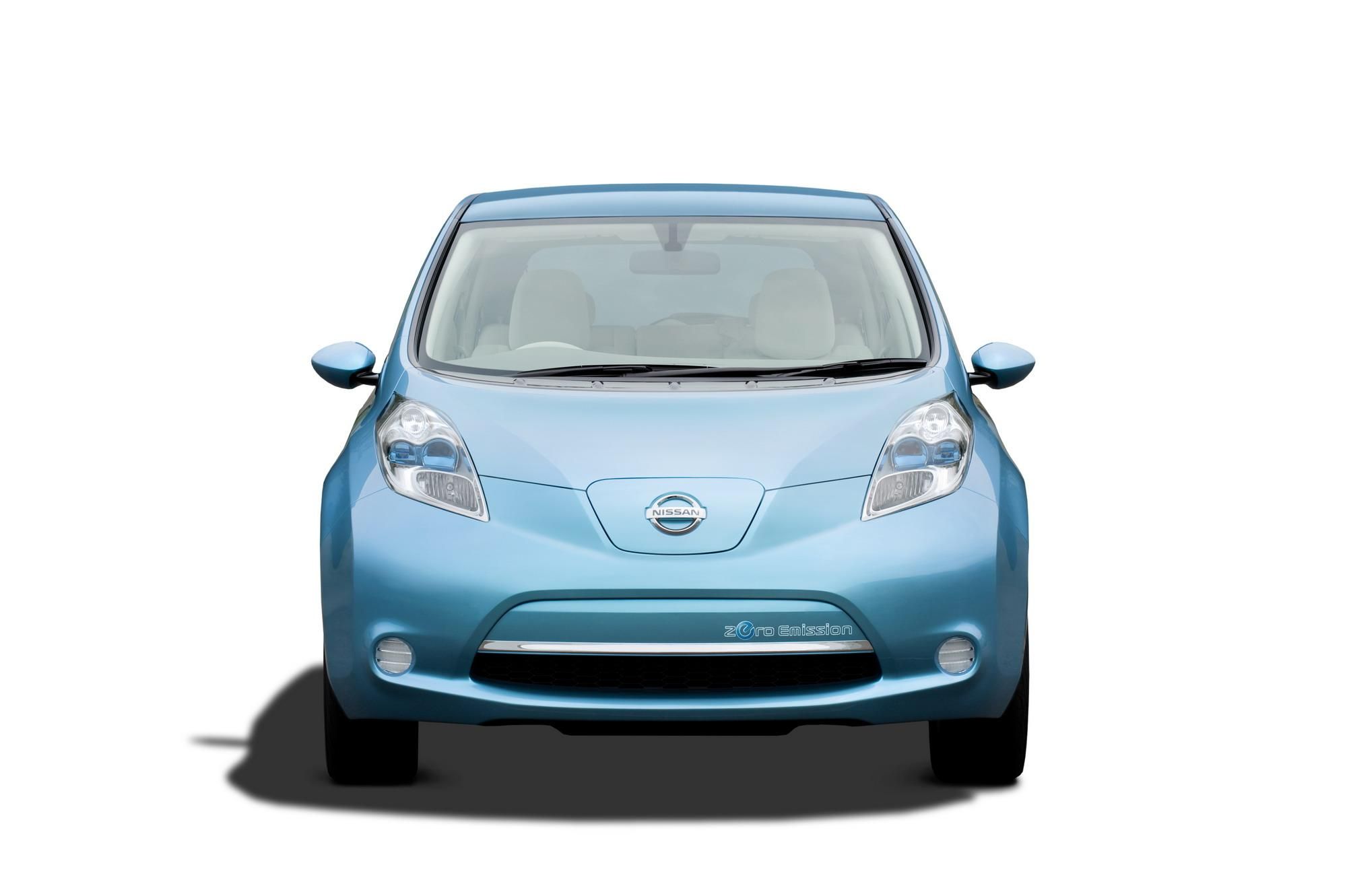 Slated for launch in late 2010 in Japan, the United States, and Europe, Nissan LEAF ushers in a new era of mobility – the zero-emission era. The car is the embodiment of Nissan’s radical, transformative vision for the future and the culmination of decades of investment and research.
“Nissan LEAF is a tremendous accomplishment – one in which all Nissan employees can take great pride,” said Nissan President and CEO Carlos Ghosn. “We have been working tirelessly to make this day a reality – the unveiling of a real-world car that has zero – not simply reduced – emissions. It’s the first step in what is sure to be an exciting journey – for people all over the world, for Nissan and for the industry.”
Key characteristics of the LEAF include:
1. Zero-emission power train and platform
2. Affordable pricing
3. Distinctive design
4. Real-world range autonomy – 160km (100 miles)
5. Connected Mobility: Advanced intelligent transportation (IT) system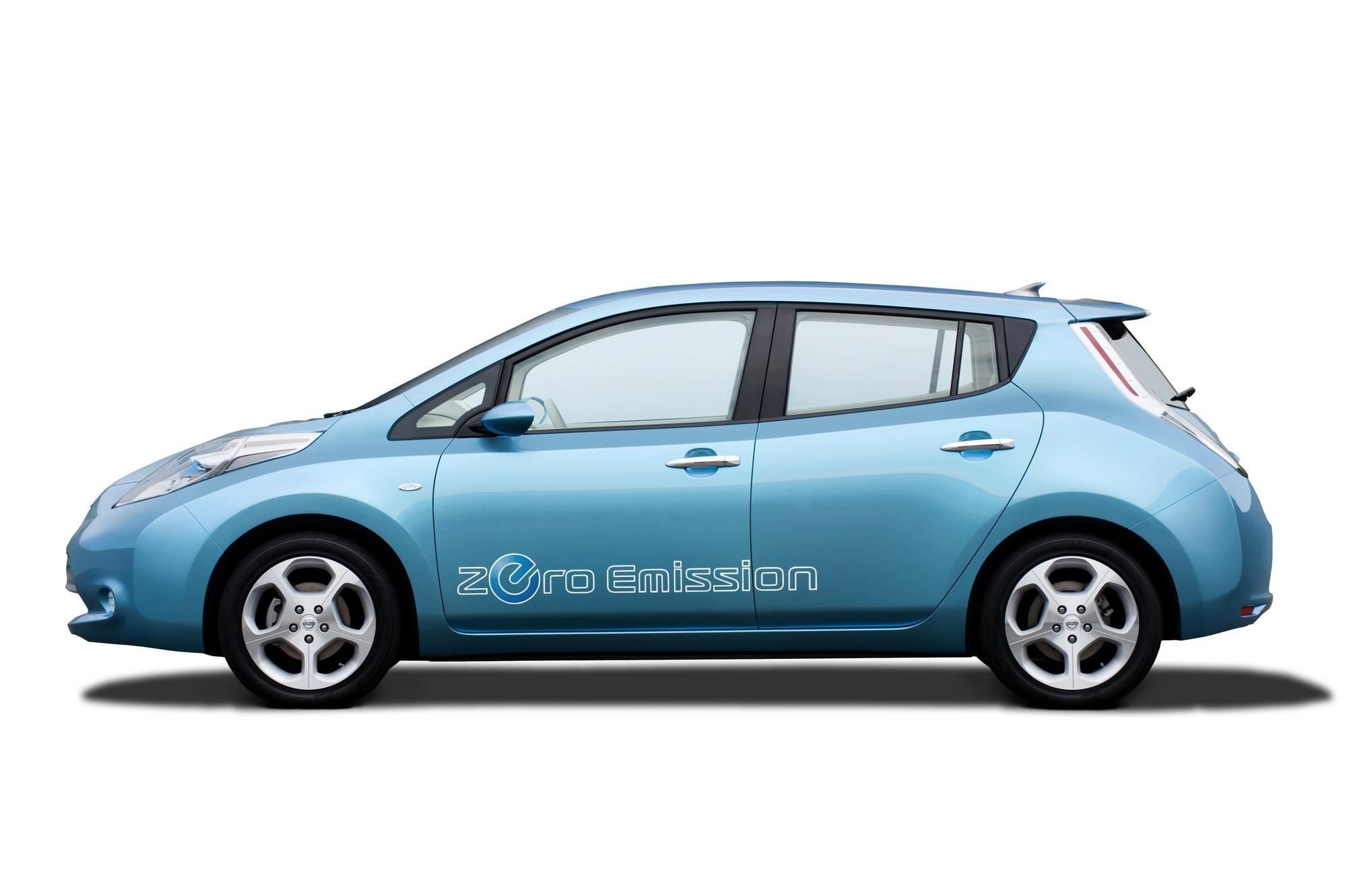 The “LEAF” name is a significant statement about the car itself. Just as leaves purify the air in nature, so Nissan LEAF purifies mobility by taking emissions out of the driving experience. Pricing details will be announced closer to start of sales in late 2010; however, the company expects the car to be competitively priced in the range of a well-equipped C-segment vehicle. Additionally, Nissan LEAF is expected to qualify for an array of significant local, regional and national tax breaks and incentives in markets around the world. As an added benefit, because the vehicle has less mechanical complexity than a traditional gasoline-powered car, Nissan LEAF is designed to be friendly to the wallet as well as to the environment.
ZERO-EMISSION MOBILITY
Nissan LEAF is powered by laminated compact lithium-ion batteries, which generate power output of over 90kW, while its electric motor delivers 80kW/280Nm. This ensures a highly responsive, fun-to-drive experience that is in keeping with what consumers have come to expect from traditional, gasoline-powered automobiles.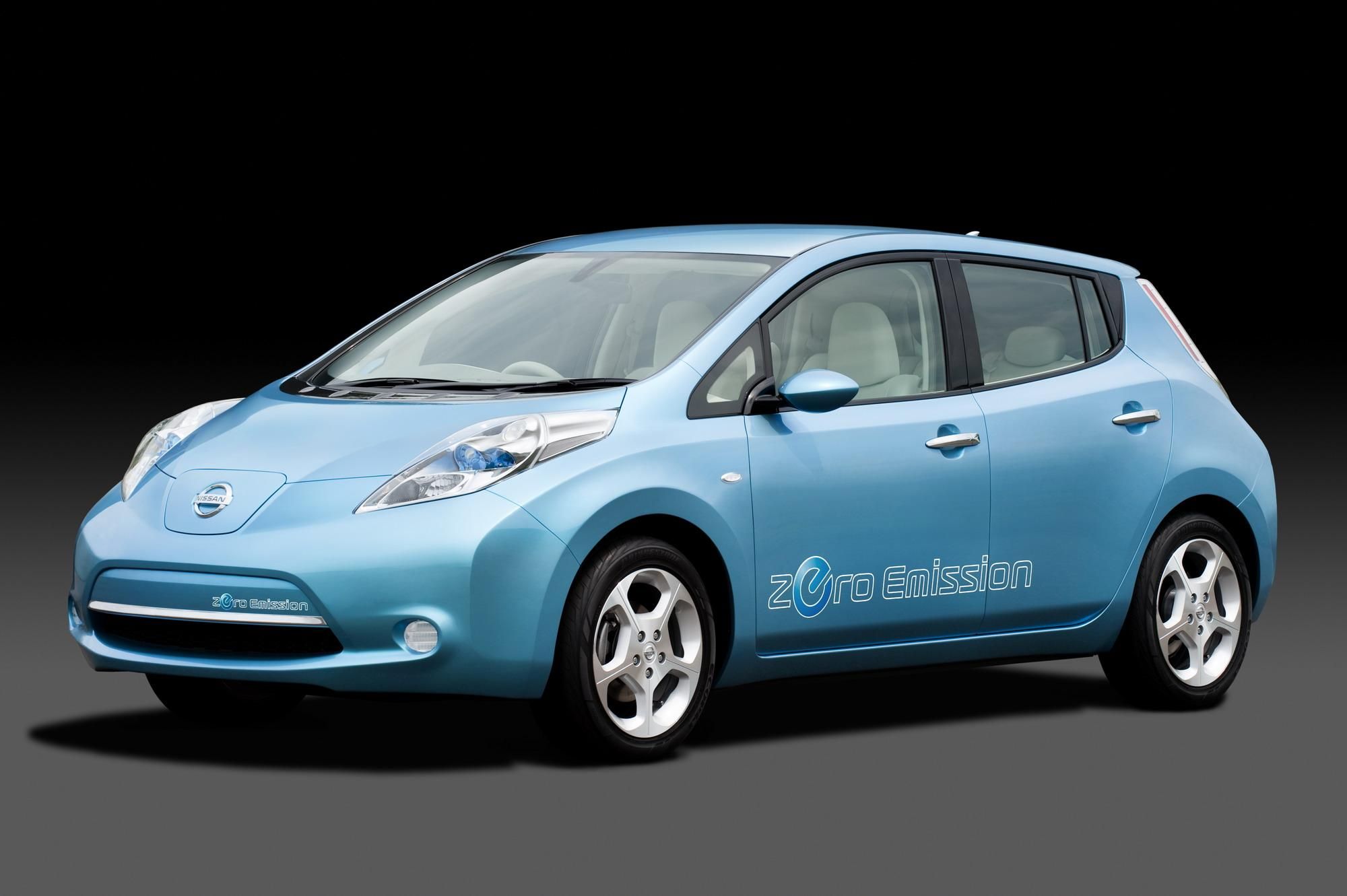 Unlike internal-combustion engine (ICE) equipped vehicles, Nissan LEAF’s power train has no tail pipe, and thus no emission of CO2 or other greenhouse gases. A combination of Nissan LEAF’s regenerative braking system and innovative lithium-ion battery packs enables the car to deliver a driving range of more than 160km (100 miles) on one full charge*. (*US LA4 mode)
Extensive consumer research demonstrates that this range satisfies the daily driving requirements of more than 70% of the world’s consumers who drive cars.
And, Nissan’s approach makes charging easy and convenient. Nissan LEAF can be charged up to 80% of its full capacity in just under 30 minutes with a quick charger. Charging at home through a 200V outlet is estimated to take approximately eight hours – ample time to enable an overnight refresh for consumer and car alike.
REAL-WORLD CAR

The engineers and designers behind Nissan LEAF worked to create a competitively priced real-world car that would enable Nissan to lead mobility into the zero-emission era. To ensure comfort, spaciousness and cargo capacity, Nissan LEAF employs a completely new chassis and body layout.
”Our car had to be the world’s first, medium-size, practical EV that motorists could afford and would want to use every day. And that’s what we’ve created. The styling will identify not only Nissan LEAF but also the owner as a participant in the new era of zero-emission mobility,” said Masato INOUE, Product Chief Designer.
DISTINCTIVE DESIGN
Even the smallest details can yield tremendous effect.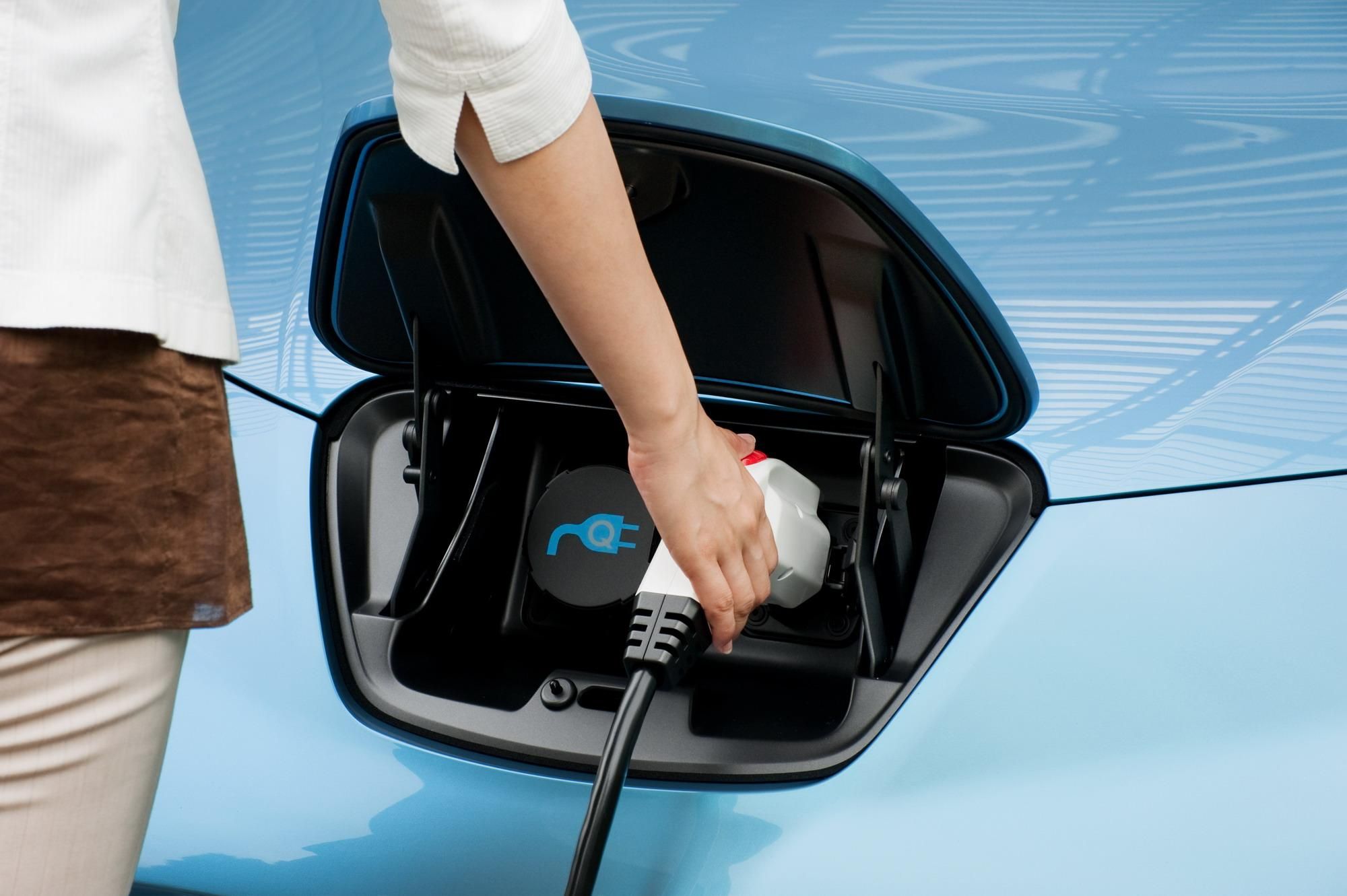 Nissan LEAF’s frontal styling is characterized by a sharp, upright V-shaped design featuring long, up-slanting light-emitting diode (LED) headlights that employ a blue internal reflective design that announces, “This car is special.” But the headlights do more than make a statement. They are also designed to cleverly split and redirect airflow away from the door mirrors, thus reducing wind noise and drag. And, the headlights provide yet one more benefit in that they consume just 10 percent of the electricity of conventional lamps, which helps Nissan LEAF to achieve its world-class range autonomy.
Through bright trim colors inside, Nissan LEAF creates a pleasing and stylish cabin environment. An environmentally friendly “blue earth” color theme originates from the Aqua Globe body color of Nissan LEAF’s introductory model. This theme is carried into the interior through blue dashboard highlights and instrument illumination.

CONNECTED MOBILITY IT SYSTEM
Nissan LEAF employs an exclusive advanced IT system. Connected to a global data center, the system can provide support, information, and entertainment for drivers 24 hours a day.
The dash-mounted monitor displays Nissan LEAF’s remaining power – or “reachable area” – in addition to showing a selection of nearby charging stations.
Another state-of-the-art feature is the ability to use mobile phones to turn on air-conditioning and set charging functions – even when Nissan LEAF is powered down. An on-board remote-controlled timer can also be pre-programmed to recharge batteries.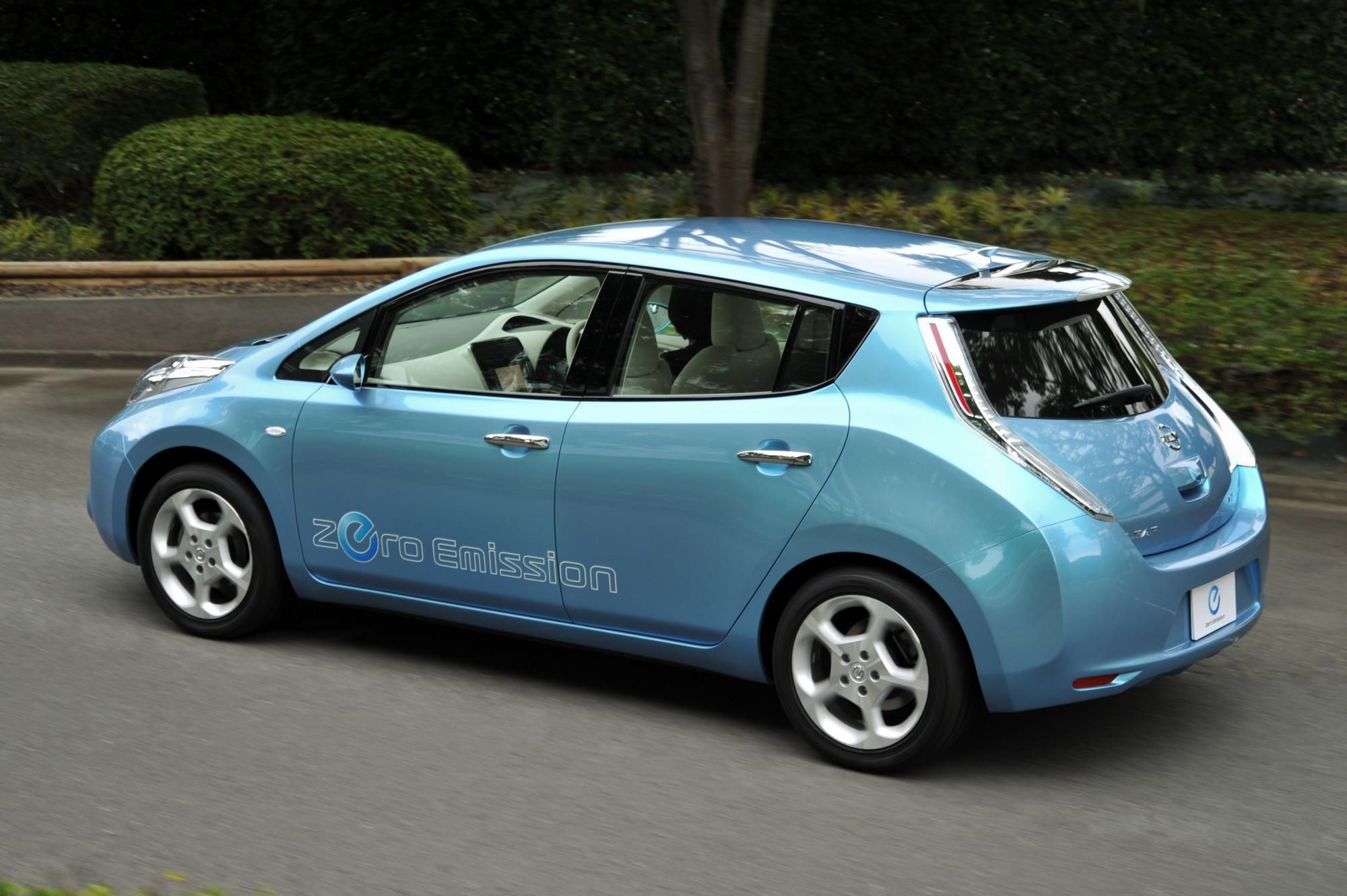 “The IT system is a critical advantage,” says Tooru ABE, Chief Product Specialist. “We wanted this vehicle to be a partner for the driver and an enhancement for the passengers. We also wanted this vehicle to help create a zero-emission community, and these IT features will help make that possible.”
HOLISTIC APPROACH TO ZERO-EMISSION MOBILITY AND ECO-FRIENDLY INNOVATION
Nissan LEAF is a critical first step in establishing the era of zero-emission mobility; however, Nissan recognizes that internal-combustion engine (ICE) technologies will play a vital role in global transportation for decades to come. Because of this, Nissan is implementing its zero-emission vision through a holistic approach, which provides consumers a comprehensive range of eco-friendly technologies from which to choose.
For some consumers, Nissan LEAF will be the perfect match, and the only car they will ever need. For others, Nissan LEAF will be a logical addition to the family fleet – the optimal choice for the daily commute, for example.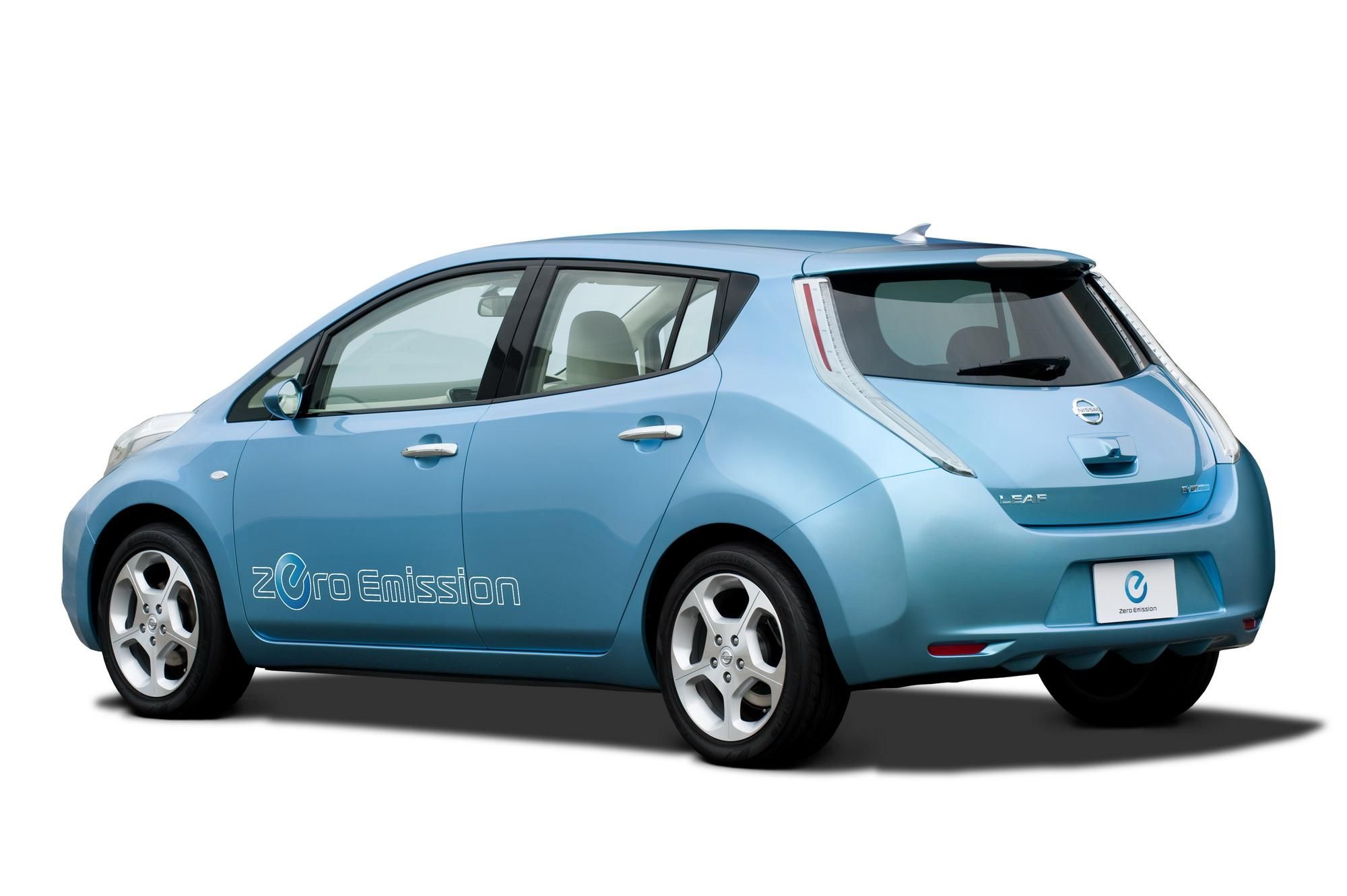 While zero-emission is the ultimate goal, the company is committed to ongoing innovation in eco-friendly technologies that increase efficiency and reduce emissions. As a result, Nissan offers a comprehensive suite of automotive technologies, including CVT, Idle Stop, HEV, Clean Diesel, and ongoing research and investment in FCV technology.
WORLDWIDE PARTNERS
Zero-emission mobility programs under the banner of the Renault-Nissan Alliance include partnerships with countries such as the UK and Portugal, local governments in the Japan and the USA, and other sectors, for a total of nearly 30 partnerships worldwide.
In these partnerships major efforts focus on three areas:
1. Development of a comprehensive charging infrastructure through public and private investment,
2. Incentives and subsidies from local, regional, and national governments, and
3. Public education on the individual and societal benefits of zero-emissions mobility.

ZERO-EMISSION VEHICLE PRODUCTION
Nissan LEAF is the first in the company’s forthcoming line of EVs and is a major milestone in the realization of the Renault-Nissan Alliance’s vision for zero-emission mobility. The first of Nissan’s EV’s will be manufactured at Oppama, Japan, with additional capacity planned for Smyrna, Tennessee, USA. Meanwhile, lithium-ion batteries are being produced in Zama, Japan, with additional capacity planned for the USA, the UK and Portugal, and other sites for investment are under study around the world.