
The Toyota Highlander Hybrid is the first gas/electric mid-size sport utility vehicle (SUV) to offer seating for seven passengers. Launched in June 2005 it shares the same “Hybrid Synergy Drive” as the Lexus RX 400h. The Toyota has to offer in a addition to the Lexus two extra seats, and a 20% lower price tag. By joining the popular Prius sedan, the Highlander Hybrid made Toyota the first brand to offer both a passenger car and an SUV with hybrid power-trains.
2007 Toyota Highlander Hybrid


- Make: Array
- Model: 2007 Toyota Highlander Hybrid
- Engine/Motor: V6 DOHC 24-valve with VVT-i
- Horsepower: 268 @ 5600
- Torque: 212 @ 4,400
- Transmission: eCVT
The Highlander Hybrid combines a 201 cui V6 engine with a high-torque electric drive motor-generator to deliver unexpected performance along with fuel economy ratings better than many four-cylinder compact cars, as well as remarkably low emissions.
As Jim Lentz, Toyota Division group vice president and general manager declared, "the Highlander Hybrid marks the launch of a second all-new hybrid vehicle from Toyota before most manufacturers have launched their first. The addition of the Hybrid Synergy Drive system in our best-selling SUV further affirms the company's leadership role as hybrid gas-electric vehicles continue to emerge into the mainstream consumer mindset."
The 2007 Toyota Highlander Hybrid is powered by a new version of Toyota's Hybrid Synergy Drive power-train already known from the Lexus RX 400h. It has been specifically developed to meet the load-carrying requirements and performance expectations of mid-size SUV buyers. The all-new high-speed electric motor operates at twice the speed and delivers more than twice the power as the motor used in the four-cylinder Prius, producing 268 peak combined horsepower with a standard towing capacity of 3,500 pounds.
The Hybrid Highlander provides rapid acceleration with a zero-to-60 mph time of just 7.3 seconds for the model with electric four-wheel-drive with intelligence (4WD-i), and that would be one of the best values for a hybrid vehicle. Despite the fast acceleration delivered the Highlander Hybrid offers the best fuel economy ratings in the mid-size SUV segment. The Highlander Hybrid 4x2 model carries an estimated EPA fuel efficiency rating of 33 mpg in city driving and 28 mpg on the highway. Its combined city/highway estimated EPA fuel efficiency rating of 30 mpg exceeds most V8-powered SUVs by more than 100 percent and is better than the current EPA average – 27.1 mpg – for a four-cylinder compact sedan.
The estimated EPA city/highway average for all 4WD-i models is an impressive 31/27 with a combined rating of 29 mpg. In addition, Highlander Hybrid is rated as a Super Ultra Low Emissions Vehicle (SULEV). One of the most stringent emissions ratings in the industry, SULEV-rated vehicles emit 80 percent fewer smog-forming emissions than conventionally-powered SUVs.
Body & chassis
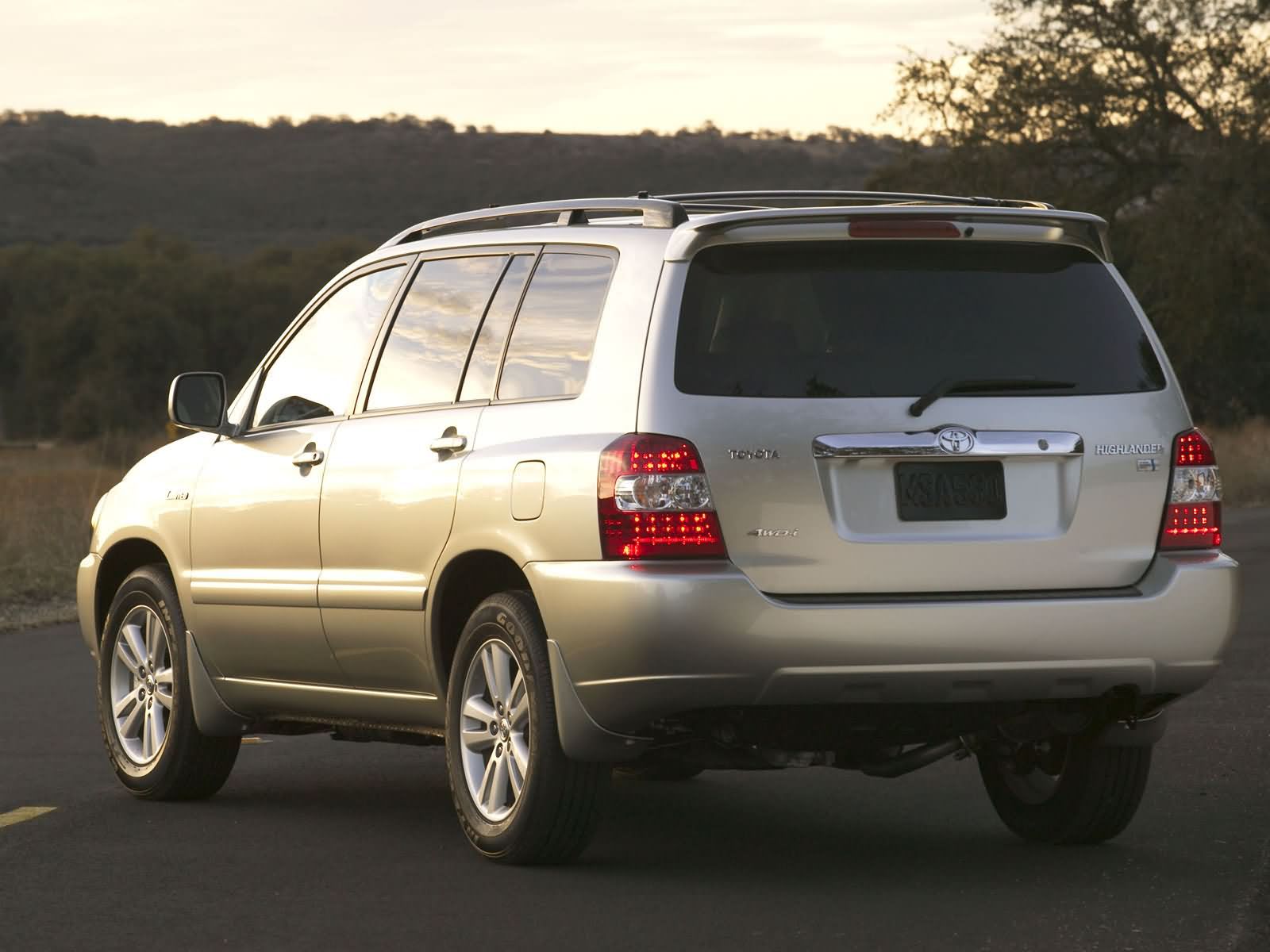
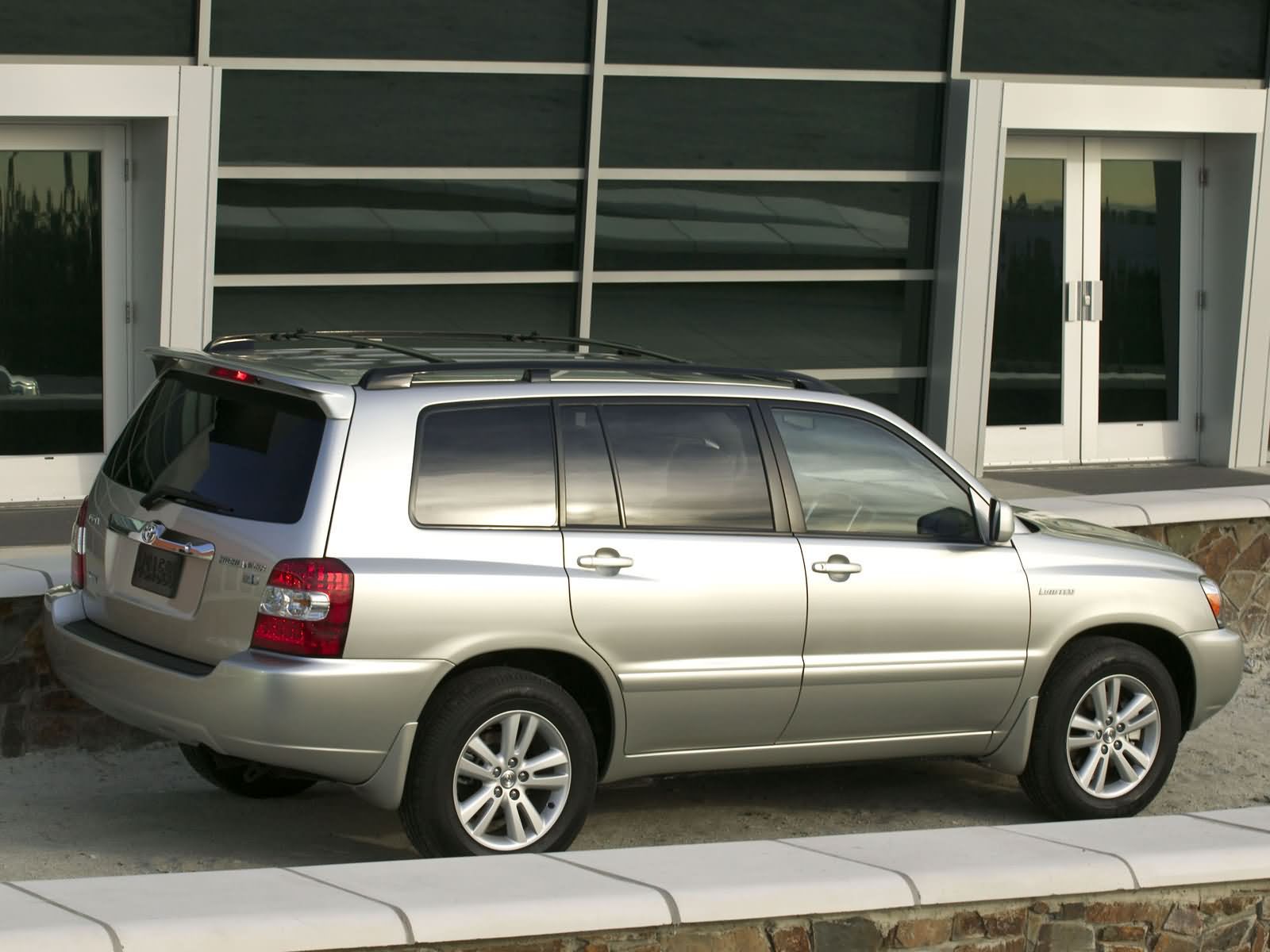
The exterior design of the 2007 Toyota Highlander Hybrid closely follows the line of the rest of the Highlander family. As a matter of fact, it is not easy to identify a model as being the hybrid just looking at the exterior.
The exterior styling has been freshened with the addition of a new chrome accented front grille and integrated bumper, smoke-tinted headlamp trim, LED tail lamps and a rear chrome license plate garnish. The LED lamps, very fashionable these days, use less power, have a longer life and lighten up faster than the usual lamps would. The Highlander Hybrid rides on new 17-inch split five-spoke alloy wheels and comes well equipped with the amenities customers have come to expect in premium mid-size SUVs.
Vehicle Dimensions
Overall Height 2WD: 68.3 (with std. roof rails) 4WD: 68.7 (with std. roof rails)
Tread Width (front/rear) 2WD: 62.0/61.6 4WD: 62.0/61.2
Minimum Ground Clearance 6.9/7.3 (2WD/4WD-i)
Curb Weight 2WD: 4,070 lbs. 4WD: 4,245 lbs.
Maximum Towing Weight 3,500 lbs
Angle of approach/departure: 2WD: 28/21 degrees 4WD: 29/22 degrees

-----
Engine & transmission
The Highlander Hybrid is defined as a high-power, high-voltage full hybrid, which means it is capable of operating in electric-only or gas engine-only mode as well as a mode that combines the power of the gas engine and electric motor. In contrast, other hybrid technologies are not capable of running only on electrical power, but instead require constant gas engine operation.
The Highlander Hybrid's 201 cui V6 engine is based on the engine in the conventional Highlander but with significant revisions to promote smooth integration with the hybrid system. These include revised calibrations to the Variable Valve Timing with intelligence (VVT-i) and Electronic Throttle Control (ETC) systems.
In making the transition to a hybrid power-train, the alternator, power steering pump, water pump and AC compressor are no longer engine belt-driven. This is because the gas engine often shuts down – a fuel-saving benefit of the hybrid system – especially when the vehicle is stopped or driven slowly through traffic. With the exception of the alternator, which is replaced by motor-generators, all components are now electrically powered to notably reduce parasitic losses to the engine, reduce noise and optimize fuel consumption.
The hybrid system uses a 288-volt DC Nickel metal hydride (Ni-MH) battery pack that fits neatly under the middle seat. The battery's power is directed through a "boost converter" that efficiently raises voltage to 650V DC. An inverter changes this to 650V AC, providing its elevated power to a front-mounted 123-kW electric motor that turns as high as 12,500 RPM.
There are two motor-generators in the 4x2 models and three motor-generators employed in the 4WD-i models. Referred to as MG1, MG2 and MGR for the rear electric motor in the 4WD-i, each has a specific function and each does double duty as both drive motor and generator (although MG1 is a starter and provides no motive force).

The engine-driven generator (MG1) and rear electric motor (MGR) can charge the battery pack, which powers other electric motors as needed. Power from the gas engine and front electric-drive motor (MG2) is distributed to the drive wheels via a planetary gear-type continuously variable transmission, which eliminates specific gear ratios. Two planetary gear units are used in the system. The Power-Split unit divides the engine's drive force two ways: one to drive the wheels and the other to drive MG1 so it may function as a generator. The Motor Speed Reduction unit reduces the speed of MG2 and increases its drive torque, significantly boosting acceleration performance.
In addition to its motor-generator duties, the crucial MG1 adds two functions: one as a starter motor for the gas engine; and two, by regulating the amount of electrical power it generates (which varies its RPM), MG1 controls the output speed of the transaxle through the planetary gear set – without clutches or viscous couplings. This is one of the key elements of the Toyota hybrid power-train and the reason why Highlander Hybrid eliminates the "shift shock" that can typically be felt as even the most refined modern automatic transmissions change gears.
In conventional 4WD vehicles, the weight and friction of the additional drive components reduce the vehicle's acceleration performance compared to the same model with 2WD. It is not so with the Highlander Hybrid. The innovative electric 4WD-i system employs a separate 50-kW electric motor (MGR) at the rear that provides up to 96 lb.-ft. of additional drive torque as required. The system electronically varies front and rear torque distribution depending on driving conditions.
The Toyota hybrid technology also allows extended electric-mode operation during low speed or stop-and-go driving conditions. The permanent-magnet front electric drive motor (MG2) produces peak torque from 0-1,500 RPM, giving the Highlander Hybrid powerful and instantaneous response that will be especially felt and appreciated in low- and mid-speed performance and in merging and passing maneuvers.
A regenerative braking system further boosts system efficiency. When the Highlander Hybrid is coasting or the brakes are applied, the electric motors function as generators, capturing kinetic energy that would normally be lost as heat through the brakes and transforming it into useable electricity to recharge the batteries.
Four-Wheel Drive With Intelligence and Advanced Vehicle Dynamics
Highlander Hybrid comes standard with front-wheel-drive and offers electric four-wheel-drive with intelligence (4WD-i). Both models are equipped with the STAR SAFETY SYSTEM, a comprehensive package of dynamic handling technologies that was introduced on all Toyota SUVs for model-year 2005. The system includes an Anti-Lock Brake System (ABS) with Electronic Brake-force Distribution (EBD) and Brake Assist (BA), plus Vehicle Stability Control (VSC) and Traction Control (TRAC).
The Highlander Hybrid enhances the STAR SAFETY SYSTEM with the addition of the Vehicle Dynamics Integrated Management (VDIM) system that is all-new for Toyota. This new system goes well beyond conventional traction control systems, which react to challenging conditions. Instead, VDIM can anticipate loss of vehicle control in virtually any direction and make corrections while allowing higher dynamic capability.
Specs
Layout Front gas engine with hybrid transaxle and front electric drive motor; 4WD-i models equipped with front and rear electric drive motors
Maximum total system performance 268 horsepower
Type V6 Aluminum block and heads DOHC 24-valve with VVT-i
Bore and Stroke 3.62 x 3.27 inches
Displacement 201 cui
Valve Train DOHC, 4-valve/cylinder
Horsepower (SAE Net) 208 hp @ 5,600 rpm
Torque 212 lb-ft @ 4,400 rpm
Maximum Engine Speed (redline) 5,600 RPM
Fuel tank capacity 17.2 gallons
Fuel System Multi-Point Injection (MPI)
Fuel Requirement 87-octane unleaded (91 Octane recommended)
Emission Category SULEV (California) Tier 2 – Bin 3 (all other states)
Evaporative Emission Certification Zero evap.
Motor Generator 1 (MG1)
Function Generator, engine starter, transmission ratio control
Type Permanent magnet motor
Max. Voltage AC 650V
Motor Generator 2 (MG2)
Function Drives front wheels, regeneration during braking
Type Permanent magnet motor
Max. Voltage AC 650V
Max. Output 167 hp @ 4,500 rpm
Max. Torque 247 lb.-ft. @ 0-1,500 rpm
Motor Generator Rear (MGR)
Function Drives rear wheels, regeneration during braking
Type Permanent magnet motor
Max. Torque 96 lb.-ft. @ 0-610 rpm
Battery Type Sealed nickel metal hydride (Ni-MH)
Nominal Voltage 288V
Maximum Power Output 45 kW
Transaxle/Transmission Type Electronically controlled continuously variable transmission (ECVT) with planetary gear unit for gear reduction and power splitting; electronic all-wheel drive control system
Top speed 112 mph (electronically limited)
Suspension
Highlander is based on a unibody platform with four-wheel independent suspension. This type of construction provides a smooth, quiet, refined ride like that expected in a high-quality premium passenger car. The higher ride height provides a commanding view of the road, while a tight 37.4-foot turning circle makes Highlander easy to maneuver.
Body/Frame Unitized Steel
Front MacPherson strut, coil springs
Rear Dual link MacPherson strut, coil springs
Brakes
A vital component of VDIM is a new Electronically Controlled Braking system (ECB). ECB translates brake pedal stroke and pressure to generate the precise amount of combined electric regeneration and hydraulic pressure needed for virtually any driving condition. Under guidance from VDIM, such precise brake control at individual wheels allows more optimized operation of the vehicle's dynamic handling systems that employ the brakes: ABS, Brake Assist, VSC and TRAC.
Type Electronically Controlled Brake system (ECB) with regenerative control and incorporating Anti-Lock Brakes (ABS), Electronic Brake force Distribution (EBD), Brake Assist and Vehicle Dynamics Integrated Management system (VDIM)
Brake Rotors -Front Ventilated Disc/12.6 inches
Brake Rotors Rear Solid Disc / 11.3 inches
Anti-Lock Braking System 4 channel, 4 sensors
Steering/Pedals
The new Electronic Power Steering system (EPS) optimizes steering assist for each situation. The EPS uses a DC motor and gear reduction system built into the steering gear housing to provide steering assist. This compact unit contributes to fuel economy by eliminating the traditional power steering pump and by providing its computer-controlled assist only when called for by the driver. EPS also allows a more precise and timely control of steering assist than conventional engine-driven hydraulic systems.
Type Electronic Power Steering (EPS): Rack and pinion with electronic power assist Overall Ratio 15.6:1
Turning Circle 37.4 feet
Tires & wheels
Wheel size 17 x 7 JJAluminum alloy
Tire Type All-season steel-belted radial
Interior
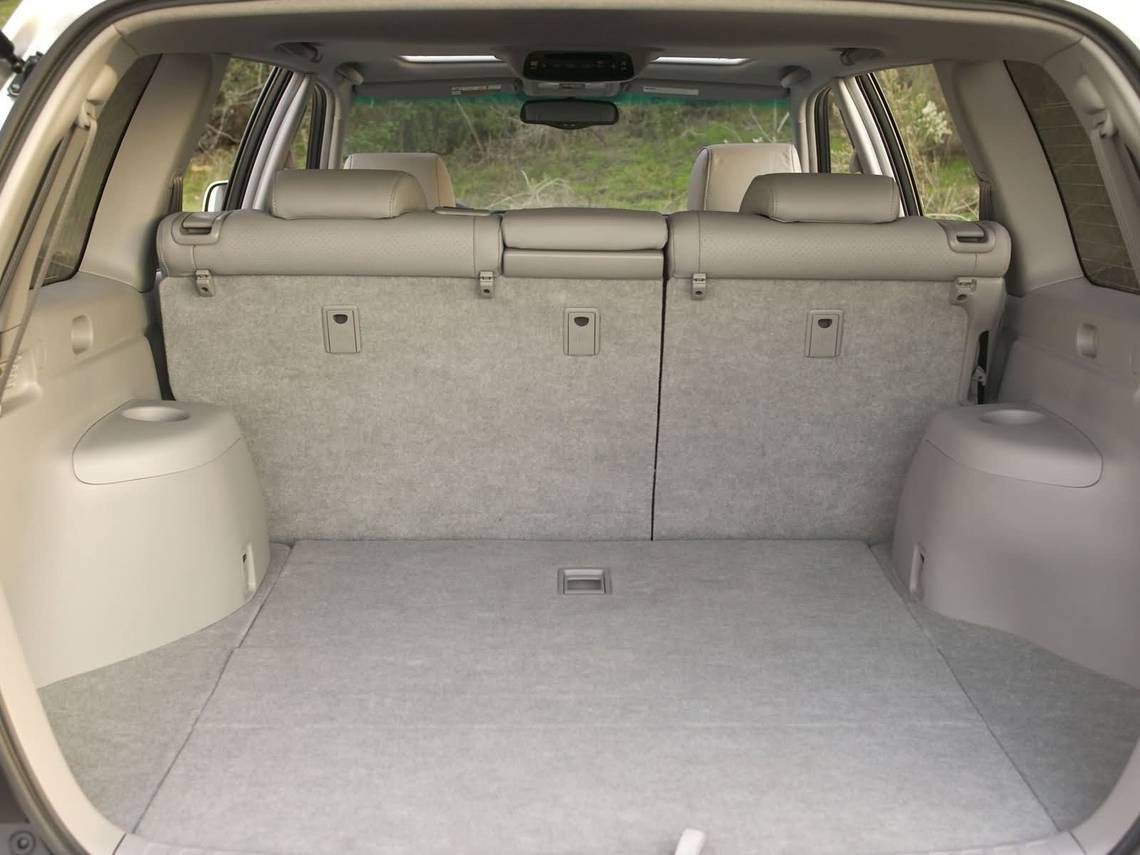
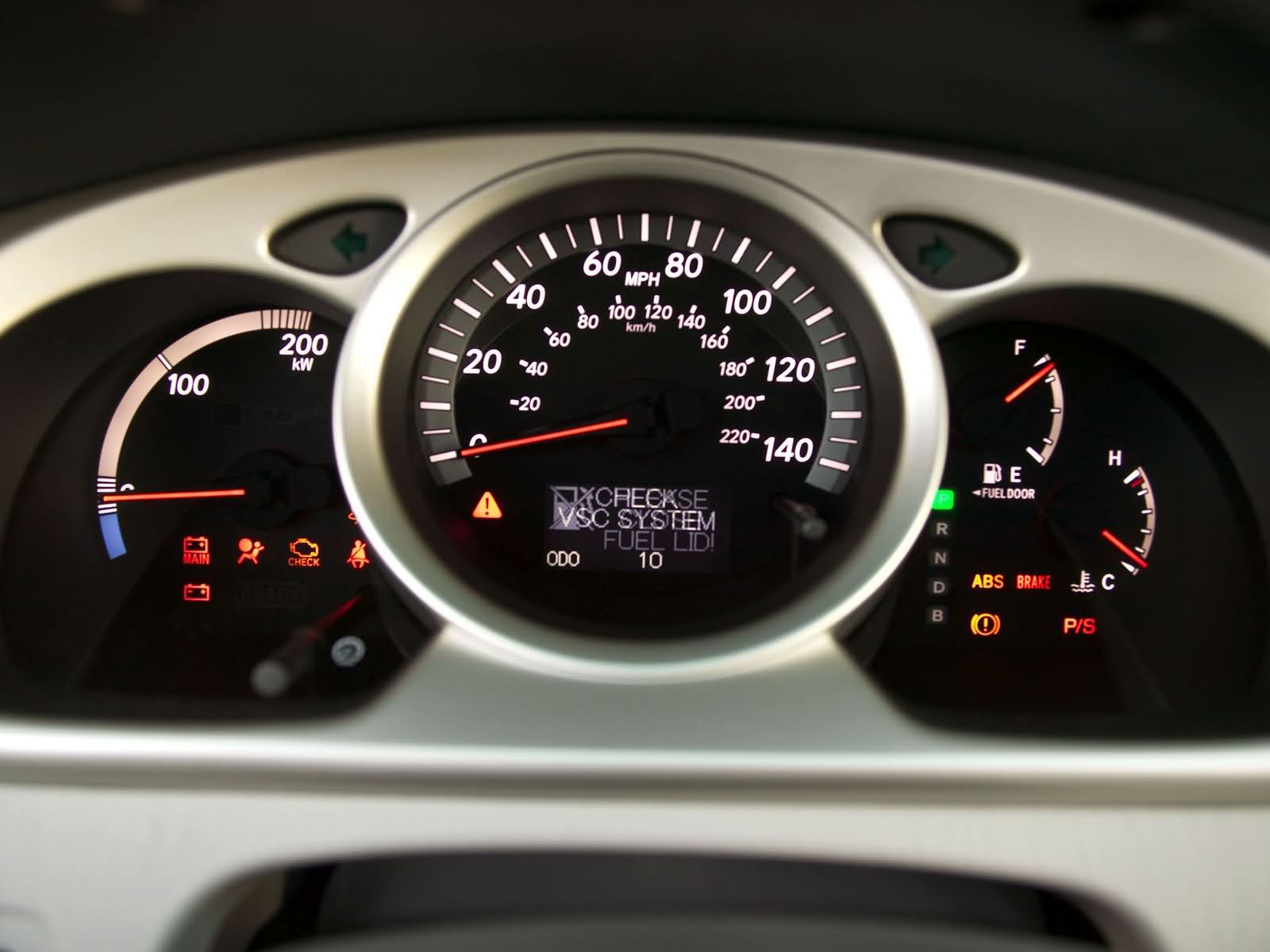
The Highlander Hybrid provides enhanced ride comfort with the same versatility as the conventional seven-passenger Highlander. Inside, the Highlander Hybrid features three seating rows in all models, rear privacy glass, a rear heater system, and rear seat cup-holders. "Walk-in" steps and a second-row sliding seat make it easy to enter and exit the third row. The third-row seat reclines and also folds completely flat into the floor to create added cargo space. The second-row 60/40 split fold-down seat also reclines and folds forward flat for added comfort and utility.
The Highlander Hybrid features a lengthy standard equipment list across all grades, including: defroster-linked air conditioning with a cabin air filter, an eight-way power driver seat with power lumbar support, power windows and door locks, deluxe 3-in-1 AM/FM/ETR cassette/CD sound system with six speakers, remote keyless entry, cargo area cover, UV-reduction glass, HomeLink universal remote control system, engine immobilizer, cruise control, roof rack, rear privacy glass, tow prep package and mudguards. The steering wheel features controls for the audio system when ordered in conjunction with the JBL premium audio option.
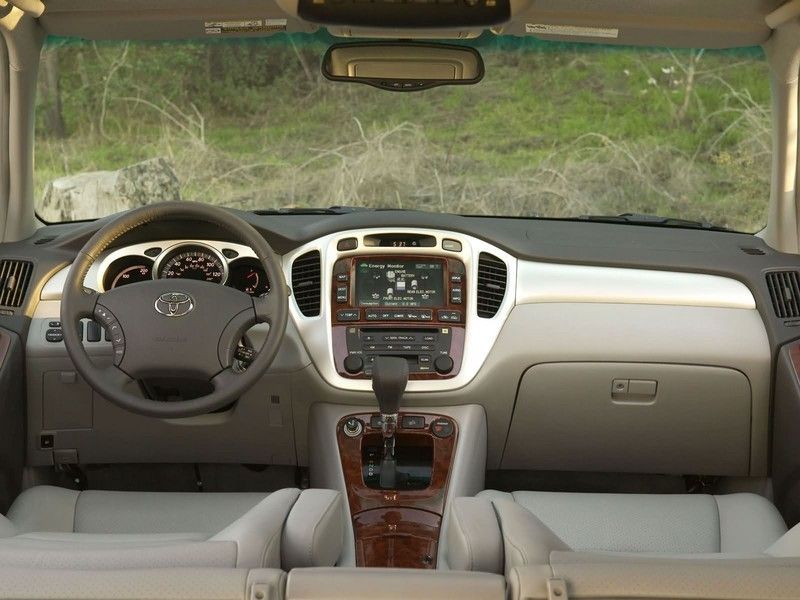
The Highlander Hybrid Limited model adds a level of luxury and refinement with the addition of heated, leather-trimmed seats, an automatic climate control system with humidity-control sensors, a four-way power passenger seat, leather-trimmed steering wheel with audio controls, upgraded audio system with a 6-disc CD-changer and eight speakers, an auto-dimming mirror with integrated electronic compass, anti-theft alarm system, silver and burled maple wood-grain style interior trim and a leather-trimmed shift handle. The Limited models can also be equipped with an optional touch-screen DVD navigation system.
Safety
The main safety features for the 2007 Toyota Highlander Hybrid are:
- STAR SAFETY SYSTEM that includes Vehicle Dynamics Integrated Management (VDIM) which integrates Anti-lock Brake System (ABS) with Brake Assist (BA) and Electronic Brake-force Distribution (EBD) and Vehicle Stability Control (VSC) with Traction Control (TRAC)
- Driver and front passenger advanced airbags with front passenger seat occupant classification sensor; driver and front passenger seat- mounted side airbags, and front and second row roll-sensing side curtain airbags
- Three-point seatbelts for all seating positions; Emergency Locking Retractors (ELR) on driver’s belt; Automatic/Emergency Locking Retractors (ALR/ELR) on all passenger seatbelts; three-point front seatbelts with adjustable shoulder anchors
- Side impact door beams
- Child seat top (ISOFIX CRS) tether anchor brackets located behind the rear seat (3rd row anchor located behind 2nd row seat) for all seating positions
- Child seat lower (ISOFIX CRS) anchor brackets located in the lower portion of the rear seat backs (2nd row seat back for 3rd row) in outboard seating positions
- Daytime running lights
- Pretensioners and force limiters on driver and front passenger seatbelts
- Head impact protection structure (A & B pillar trim panel)
Manufacturer's Warranty
Toyota's 36-month/36,000-mile basic new-vehicle limited warranty applies to all components other than normal wear and maintenance items. Additional 60-month warranties cover the powertrain for 60 months/60,000 miles and corrosion perforation for 60 months with no mileage limitation. The hybrid-related components, including the HV battery, battery control module, hybrid control module and inverter with converter, are covered for eight years/100,000 miles. In addition, 24-hour roadside assistance is provided to all Highlander Hybrid owners for 36-months/36,000 miles.

TopSpeed artists tuning recommendation
Usually SUVtuning optimizes either the road or the off-road side of the car. Tuning an SUV for on road means lowering the ride-height, fitting low profile tires and improving aerodynamics. The off-ride accents increase the ride-height, fit high profile heavy terrain tires and additional lights, protections bars, etc. The Toyota Highlander Hybrid has a quite plain appearance and we didn’t find it a appropriate as a base for a street racer. So, we went for an aggressive, but yet elegant off-road heavy-duty look. We replaced the front bumper with a new one that incorporates towing cables rings and different air intakes. Two halogen lamps incorporated in a wind deflector are placed on the roof. They are meant to improve visibility in off-road travels, but also increase the “wow” factor of the car. The new 17” off-road alloy wheels now fit massive tires.