
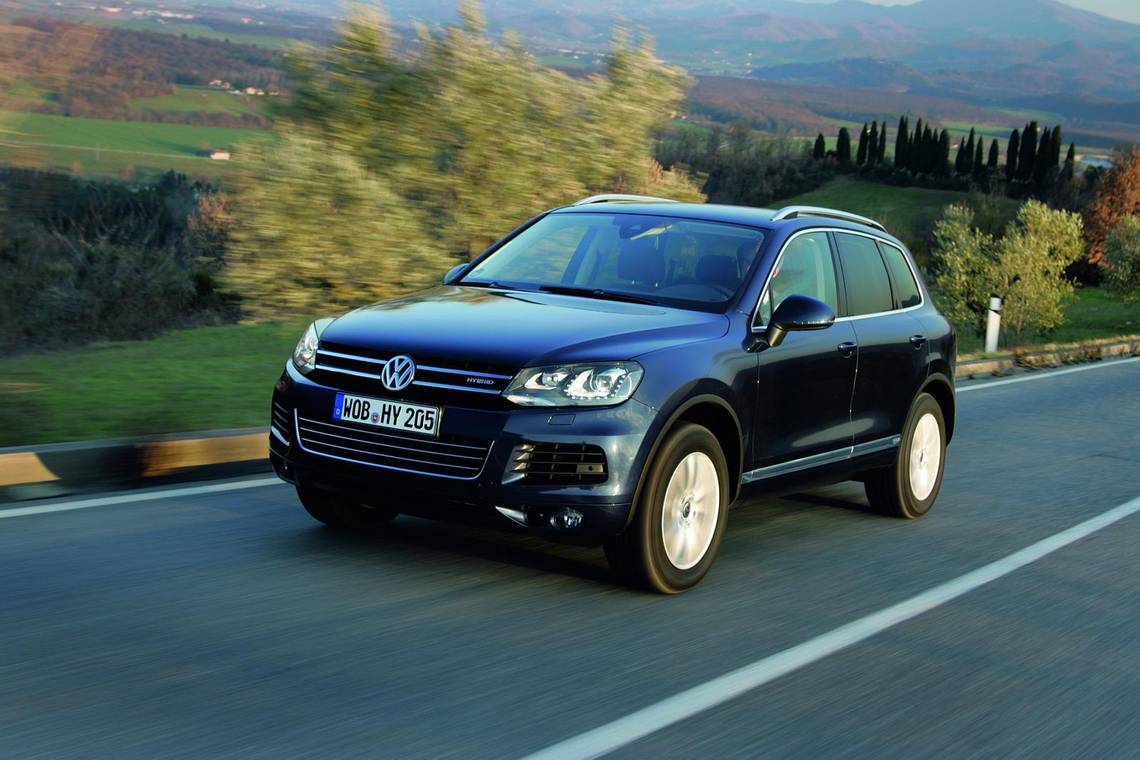
The new generation Touareg made its world debut at this year's Geneva Motor Show, and next to the usual petrol and diesel versions, Volkswagen->ke94 is also offering a new hybrid version. The Touareg Hybrid is on sale at a price of $61,385, that's almost $15k more than a standard Touareg which is priced at $45,270.
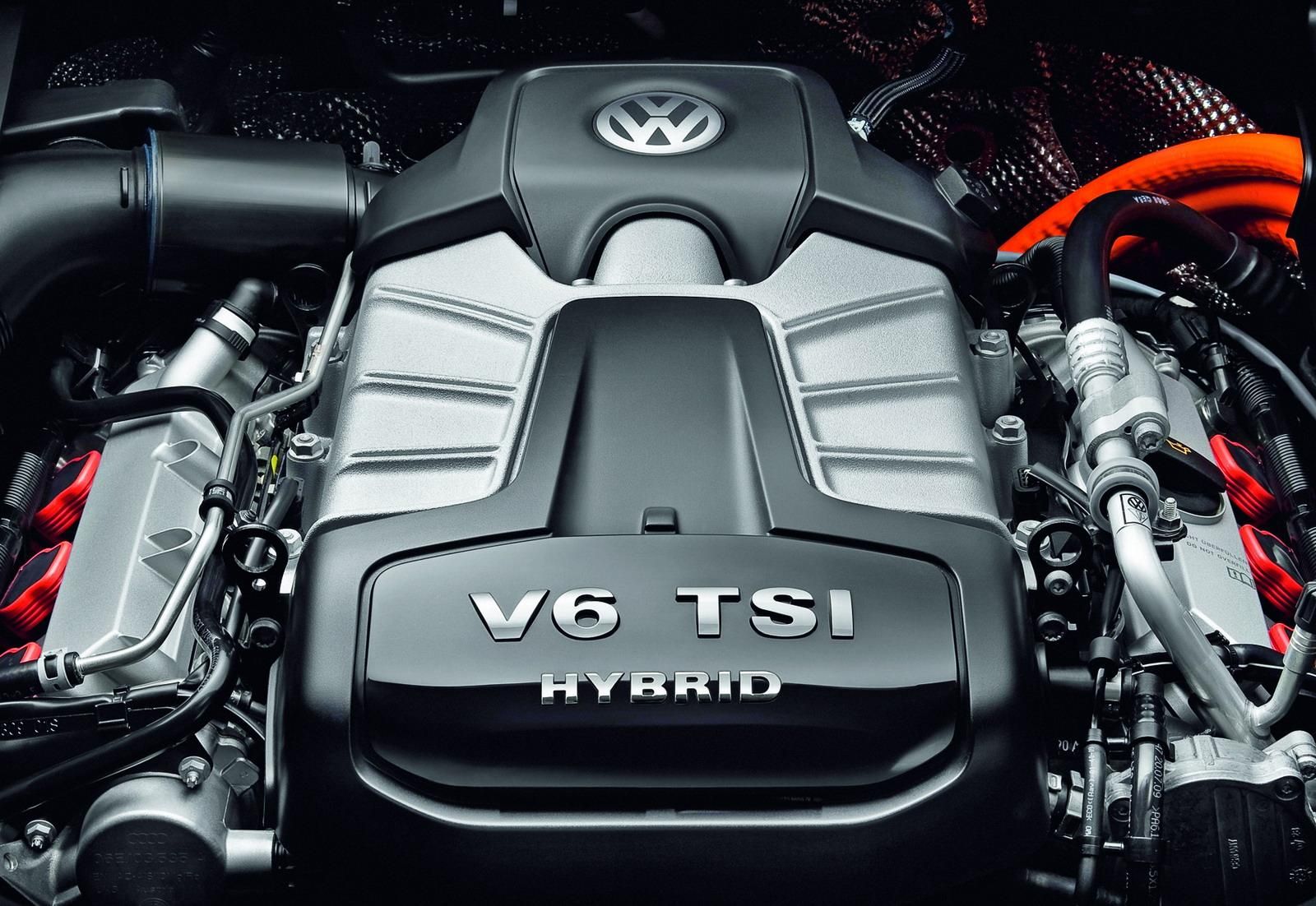
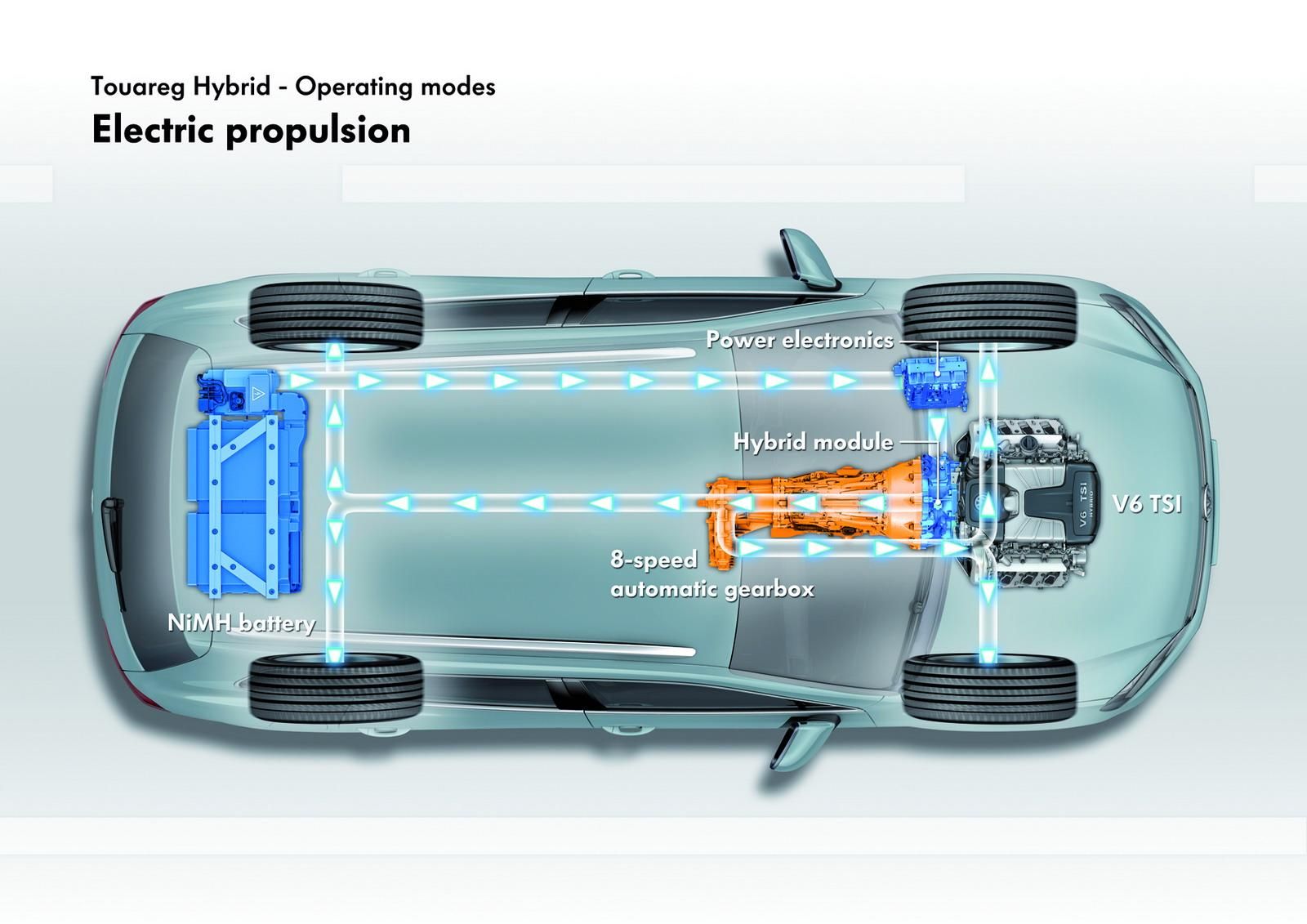
We won't talk much about the new design language since it mimics the design of the standard version Touareg, but we will focus on talking about the SUV's hybrid drive system. This system combines a 333 HP supercharged V6 TSI engine, an 8-speed automatic transmission customized for hybrid, and a Hybrid Module integrated between the internal combustion engine and automatic transmission. The hybrid module includes a 46 HP E-motor and a disengagement clutch. The E-motor gets its power from a Nickel Metal-Hydride (Ni-MH) battery and allows the Touareg to drive in pure electric mode at speeds up to 50 km/h. The hybrid drive system helps improving the fuel consumption by up to 25% in city driving. These engine specification allow the Touareg to sprint from 0 to 60 mph in 6.5 seconds and hit a top speed of 150 mph.
When it comes to hybrid SUVs, there aren't too many choices on the market. So the decision you're left with is why you want an SUV and what your expectations are. If you opt for luxury, then the Mercedes and Lexus SUVs are no doubt the right choice for you. However, the Touareg is offering you more power with a hybrid system that has a combined output of almost 400 HP. This makes it faster than any other hybrid SUV on the market, so the choice is really about ultimate luxury or environmentally friendly speed. So, which is it?
More details in the press release after the jump.
2011 Volkswagen Touareg Hybrid


- Make: Array
- Model: 2011 Volkswagen Touareg Hybrid
- [do not use] Vehicle Model: Array
Press release
With its low combined fuel consumption of 8.2 l/100 km, the all-wheel drive Touareg Hybrid sets new standards among genuine SUVs with petrol engines. CO2 emissions are
equally low: 193 g/km. The Hybrid drive, the new top engine choice, combines the power of a classic eight-cylinder engine with the fuel economy of a six or four-cylinder engine. Therefore, it is replacing the previous V8 petrol engines in Europe and America, continuing the success ful Volkswagen strategy of downsizing. Naturally, the Touareg Hybrid fulfils requirements of the Euro-5 emissions standard in Europe and ULEV2 in the USA. The SUV reaches a top speed of 240 km/h and accelerates to 100 km/h in just 6.5 seconds.
When the V6 TSI and E-motor work simultaneously at full power (boos ting), a system power output of up to 279 kW /380 PS and maximum torque of 580 Newton-metres are delivered.
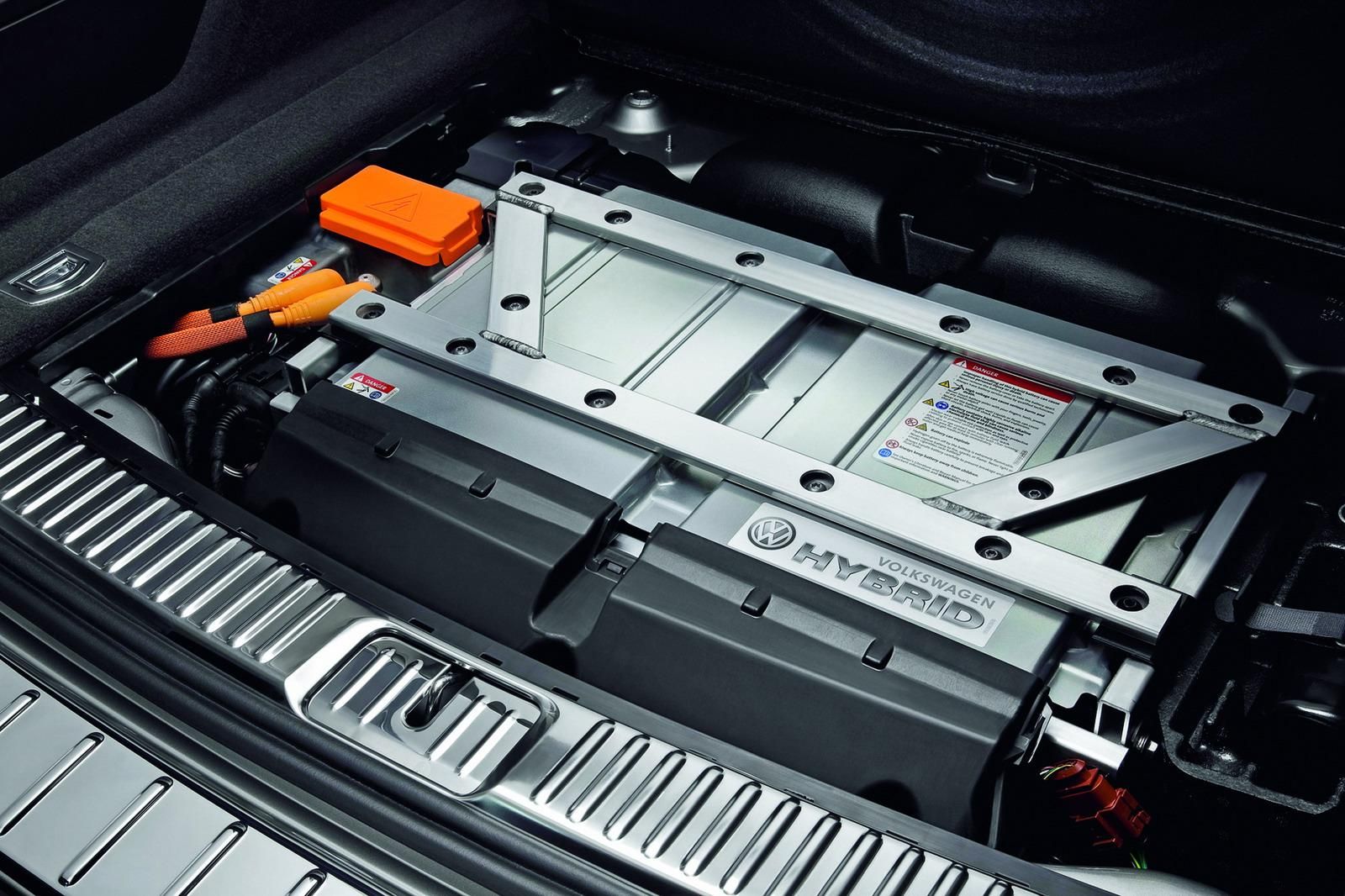
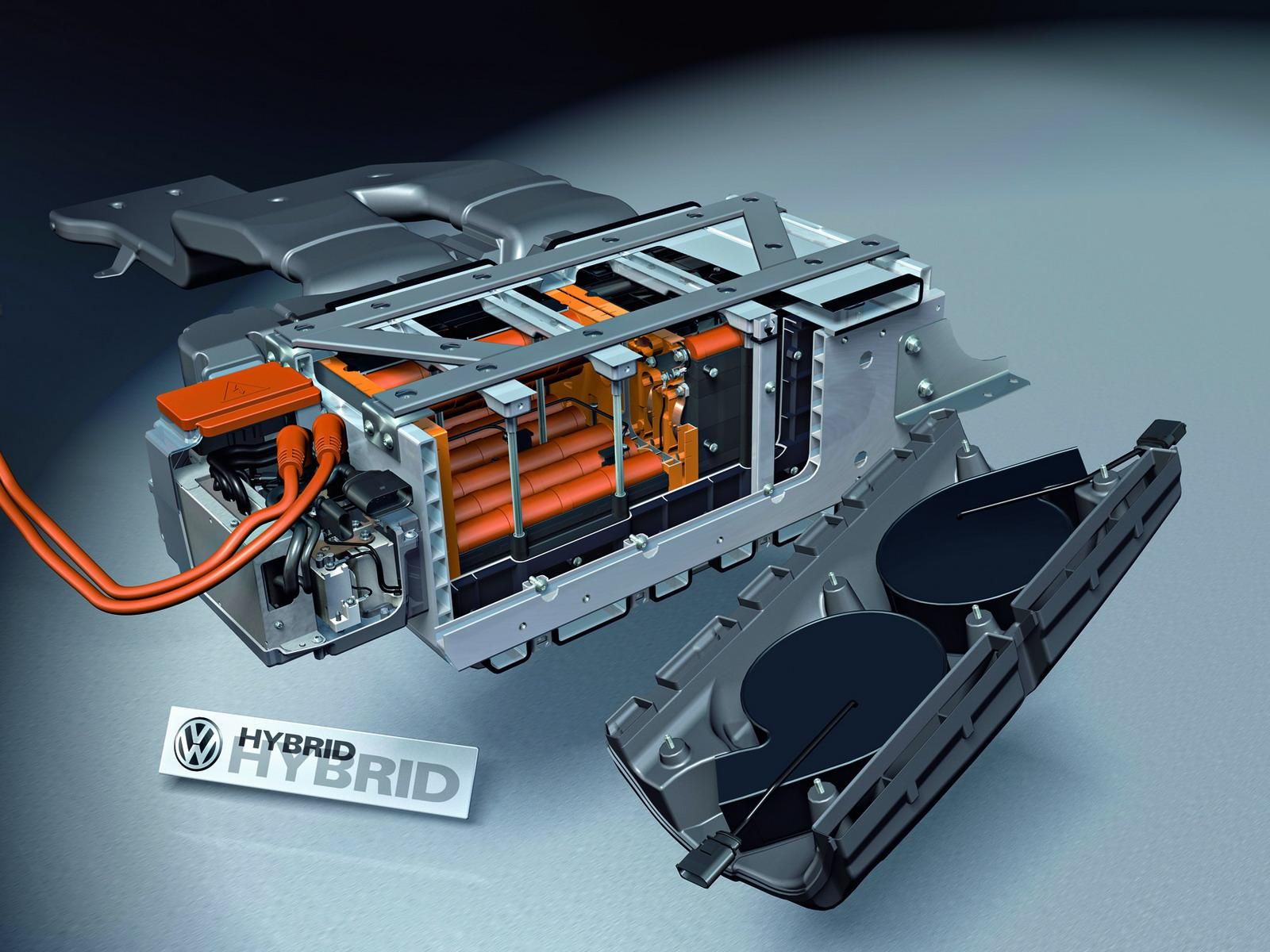
The drive energy for the E-motor is stored in a Nickel Metal-Hydride (Ni-MH) battery at the rear of the Touareg, stated more precisely in the spare wheel recess. With its nominal voltage of 288 Volt, the battery has an energy capacity of 1.7 kilowatt-hours (kWh) and a peak output power of 38 kW. The energy stored in the battery is sufficient to drive the Touareg over a distance of about two kilometres and up to a speed of 50 km/h in pure electric mode. The interplay of the individual system components is “co-ordinated” by a Hybrid Manager.
Parallel hybrid ideal for SUV use
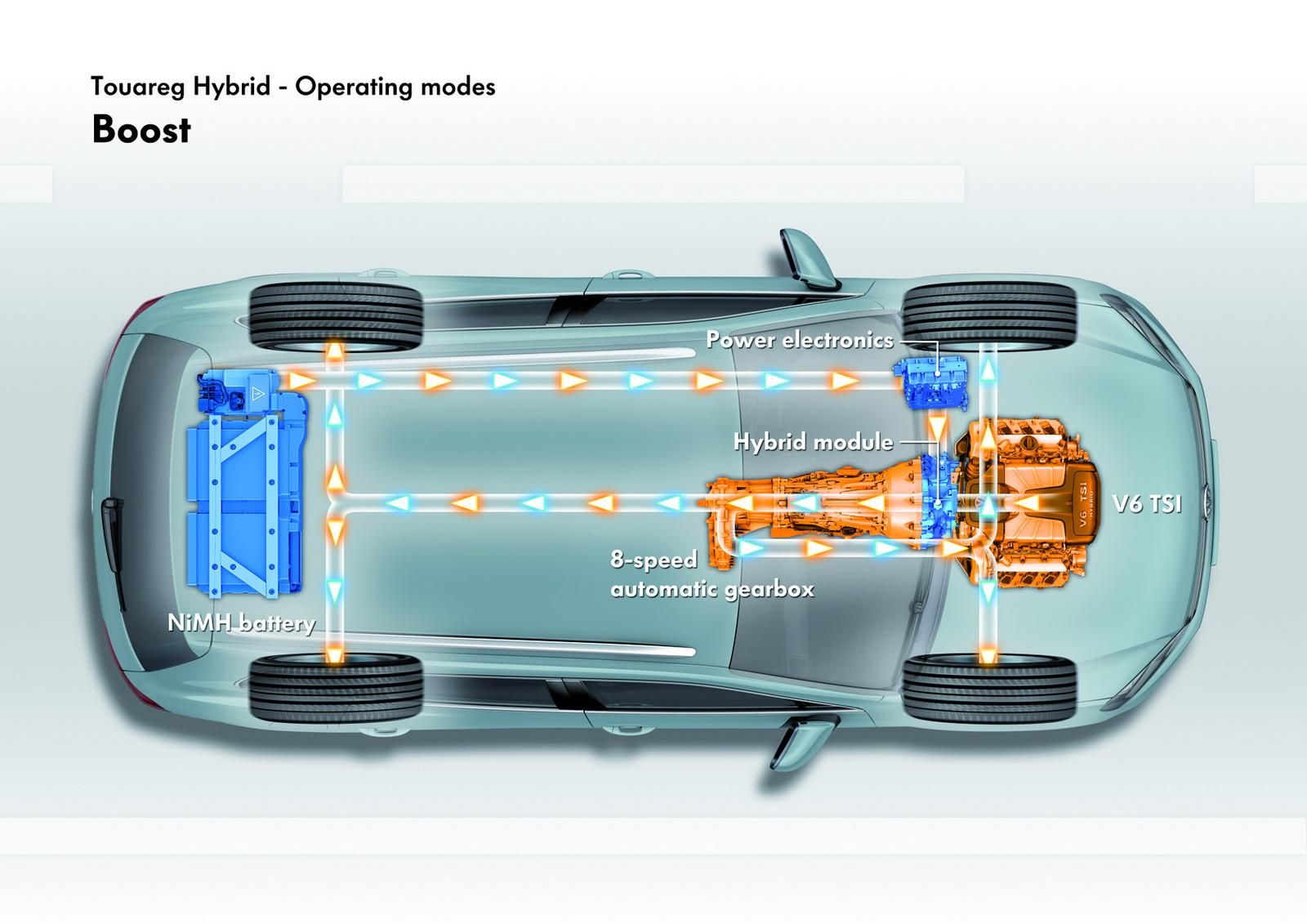 Volkswagen deliberately chose a parallel hybrid drive configuration for the Touareg. In contrast to other possible hybrid systems, it assures excel lent off-road performance and unlimited continuous climbing abili ty. In addition, with its maximum trailer payload of up to 3.5 tonnes, the Touareg is also an ideal towing vehicle in the hybrid version. More over, the parallel hybrid is more efficient than alternative hybrid concepts on long-distance and motorway journeys.
Compared to a conventional SUV of the same size and power, the hybrid concept delivers fuel savings of up to 25 percent in city driving. In combined mode driving – a mix of city, highway and motorway drives – development engineers calculate an average saving of 17 percent. Essen tially, four parameters were exploited to achieve this fuel efficien cy on the Touareg Hybrid: Electric driving: Emission-free driving (as described, up to 50 km/h) by pure electric power reduces petrol consumption. In this case, the V6 TSI is not only shut off, but is also disengaged from the 8-speed automatic by a disengagement clutch to avoid drag torque losses.
Coasting: As soon as the driver releases the accelerator pedal, the V6 TSI is disengaged from the transmission. This is even possible at higher speeds (up to 160 km/h), i.e. on the motorway as well. The Touareg “rolls” significantly longer, since drag torque losses are eliminated. When drivers adopt an anticipatory style of driving, this has a direct positive impact on fuel economy.
Regenerative braking: During braking, the E-Motor − now operating as a generator – recovers kinetic energy, which is then stored in the highvoltage battery (NiMH battery).
Stop-Start system: All V6 versions of the new Touareg are equipped with a standard Stop-Start system – and naturally this also includesthe Touareg Hybrid. The Stop-Start system integrated in the powertrain improves fuel economy, especially in urban areas and stop-andgo traffic.
Depending on the charge state of the battery, vehicle speed and other vehicle-specific parameters, the Hybrid Manager automatically ana lyses and chooses the ideal operating strategy – in fractions of a second.
This operating strategy is a key component of the software for control ling the powertrain. Because it networks the systems to optimise utilisation of the electrical energy available in the battery for maximum possible efficiency. This is anything but trivial. In contrast to the fuel tank, the electrical energy storage device – the battery – is not only discharged while driving; it is charged too. So, optimal operation of the Touareg Hybrid involves many short phases of use and storage of electri cal ener gy and therefore continually alternating operating modes.
E-motor brings the V6 TSI back in motion
 Whenever the V6 TSI is not needed to operate the Touareg, the disengagement clutch in the Hybrid Module disengages, and the motor is shut off – without the driver noticing. If the operating mode is switched again, and the V6 TSI is then re-started, this too is imper ceptible to the driver. And that is how it should be. Because the quali ty with which the sixcylinder is started during the drive affects the impression of the overall vehicle’s comfort. Essentially, the operating strategy’s engine start request is based on feedback from electric driving or braking regeneration. The control system then initiates – in fractions of a second – an energy flow sequence in which the re-start is coordinated as a kind of drive technology “handshake” between the V6 TSI, disengagement clutch, E-motor and transmission.
This starting sequence, always run the same way, can now be scaled between a comfort-oriented and dynamics-oriented range by the Hybrid Manager, which varies the duration of the individual subprocesses. This is how the different driver inputs − detected from accelera tor pedal activations − are put into effect.
Kinetic energy is ideal for charging the battery
 Incidentally, the recovery of braking energy – or regenerative braking – represents one of the best types of battery charging in terms of its effect on overall fuel economy. It is even more energy-efficient to directly maximise the kinetic energy of the coasting vehicle by minimising drag torque in the drivetrain. To do this, the V6 TSI is decoupled from the drivetrain and shut off during coasting (or “sailing”) by opening the disengagement clutch, so that its drag losses do not affect the vehicle’s overall efficiency. The energy-generating torque of the E-motor is regula ted to just cover the power needs of auxiliary consumers.
As already mentioned, this coasting mode is essentially possible up to vehicle speeds of 160 km/h. If the driver brakes the Touareg by pressing the brake pedal, the motion of the E-motor, now acting as a generator, is converted into electrical energy and is stored in the highvoltage battery. It is then available for the next acceleration phase. Yet, even the best electronic control of the hybrid components is only effective if the drive sources are operating efficiently. It is the V6 TSI that guarantees this efficiency on the new Touareg Hybrid.

-----
Specifications
Engine
- Type of engine 6-cyl. V6 petrol engine TSI Hybrid
- Engine position Front longitudinal installation
- Material of cylinder head and engine block Aluminium alloy/aluminium alloy
- Bore/stroke 84.5/89
- Effective displacement 2,995
- Valves per cylinder, drive 4 at an angle/indirect, roller rocker finger
- Number of camshafts, position, drive 2/in cylinder head/chain driven
- Crank offset in degrees 120
- Number of crankshaft bearings 4
- Compression ratio 10.5
- Mixture formation Direct petrol injection
- Type of charging and pressure Supercharger/turbocharger
- Ignition system electromechanic ignition
- Emissions control system 3-way catalytic converter with Lambda probe
- Power output 245 (333) 5,500 1)
- Max. torque 440/3,000-5,250 2)
- Battery, capacity 420 (75)
Performance (at curb weight + 200 kg)

- Acceleration 0 - 80/100 km/h 4.7/6.5
- Acceleration 0 - 400/1000 m/s /
- Top speed 240
- Stationary noise/driving noise 77/75
Fuel consumption (99/100/EC)
- Fuel type Premium 95 RON
- Urban 8.7
- Extra-urban 7.9
- Combined cycle 8.2
- Emissions (CO2/HC/NOx/HC+NOx/particulates) 193/0.05/0.04/ /0
- Exhaust emissions classification Euro 5
Power transmission
- Type of clutch Torque converter with lock-up clutch
- Gearbox Eight-speed automatic gearbox 4MOTION four-wheel drive
- Individual/overall ratio, 1st gear 4.919/16.1
- Individual/overall ratio, 2nd gear 2.811/9.2
- Individual/overall ratio, 3rd gear 1.844/6.035
- Individual/overall ratio, 4th gear 1.429/4.677
- Individual/overall ratio, 5th gear 1.207/3.951
- Individual/overall ratio, 6th gear 1/3.273
- Individual/overall ratio, 7th gear 0.827/2.707
- Individual/overall ratio, 8th gear 0.686/2.245
- Individual/overall ratio, reverse gear 4.024/13.171
- Front final drive ratio, output shafts 1/2/3 3.273//
- Running gear Front and rear: independent suspension, double wishbones, air suspension with low friction spring bellows, anti-roll bars, continuously regulated electronically controlled dampers, ESP.
- Wheels 8 J x 18
- Tyres 255/55 R 18 W
Brakes

- Brakes Internally ventilated disc brakes all-round, ABS, EBPD, brake assist system.
- Type of ABS Hydraulic ABS system
- Ø Discs/drums front/rear 360/330
- Wheels to which parking brake is applied Rear wheels
Exterior dimensions
- Number of doors 4
- Length/width/height 4,795/1,940/1,709
- Wheelbase 2,893
- Track, front/rear 1,650/1,670
- Turning circle 11.9
- Steering ratio 12.81
Interior dimensions
- Number of seats 5
- Front entry, width/height 937/1,542
- Rear entry, width/height 743/1,561
- Interior length 1,819
- Elbow width at front/rear 1,549/1,511
Luggage compartment
- Length, rear seat raised/folded down 974/1,814
- Greatest luggage compartment width 1,350
- Smallest luggage compartment width 1,158
- Height 465
- Load height up to headlining 866
- Volume by VDA measurement: rear seat raised/folded down 493/1,555
- Width of tailgate 1,197/1,189
Weights

- Unladen weight 2,240
- Permitted gross weight 2,910
- Payload 670
- Perm. axle load, front/rear 1,400/1,560
- Perm. trailer load up to 12%, braked/unbraked 3,500/750
- Perm. drawbar weight/roof load 140/100
Capacities
Service
- Oil change interval Depending up on service indicator
- Inspection interval Depending up on service indicator
- Warranty 2 years unlimited mileage, 3 years paintwork, 12 years body perforation, mobility guarantee
- Insurance classification 24/26/23
-----
Competitors
2011 Mercedes-Benz ML450 Hybrid

The 2011 ML450 Hybrid features a hybrid drive system that combines a gasoline-powered V-6 engine with two powerful electric motors generating a combined 335 horsepower and 381 lb-ft of net torque. Like with the Touareg, the ML450 Hybrid comes with engine stop-start system that uses electric power alone in stop-and-go traffic and when idling, plus technology that recovers energy during braking. The engine is mated to a new Continuously Variable Transmission that offers selectable "Sport" and "Economy" settings to suit your driving style or simply your preference.
The ML450 Hybrid is on sale at a price of $55,790. However, even if the ML450 is cheaper than the Touareg, Mercedes' SUV is a little bit more slower: it sprints from 0 to 60 mph in just 7.8 seconds But in this case we're talking about a Mercedes that indeed is offering more interior luxury.
2011 Lexus RX 450h

The 2011 RX 450h is even cheaper compared to the Touareg. It is available in two versions: RX 450h AWD priced at $44,825 and RX 450h FWD priced at $43,235. And for this prices the list of standard equipment is quite long. So the question comes as no surprise: what is Volkswagen offering for the almost $20k extra they are asking?
The 2011 RX 450h features a 3.5-liter V6 Atkinson cycle engine that works differently than conventional engines to convert more of the energy generated during combustion into mechanical energy. It also features a hybrid battery that is lighter and more compact than that found in the previous-generation RX Hybrid. With a total output of 295 HP, the RX 450h sprints from 0 to 60 mph in 7.4 seconds and can hit a top speed of 112 mph. So it seems that the answer to the previous question is: more power and better performances.