
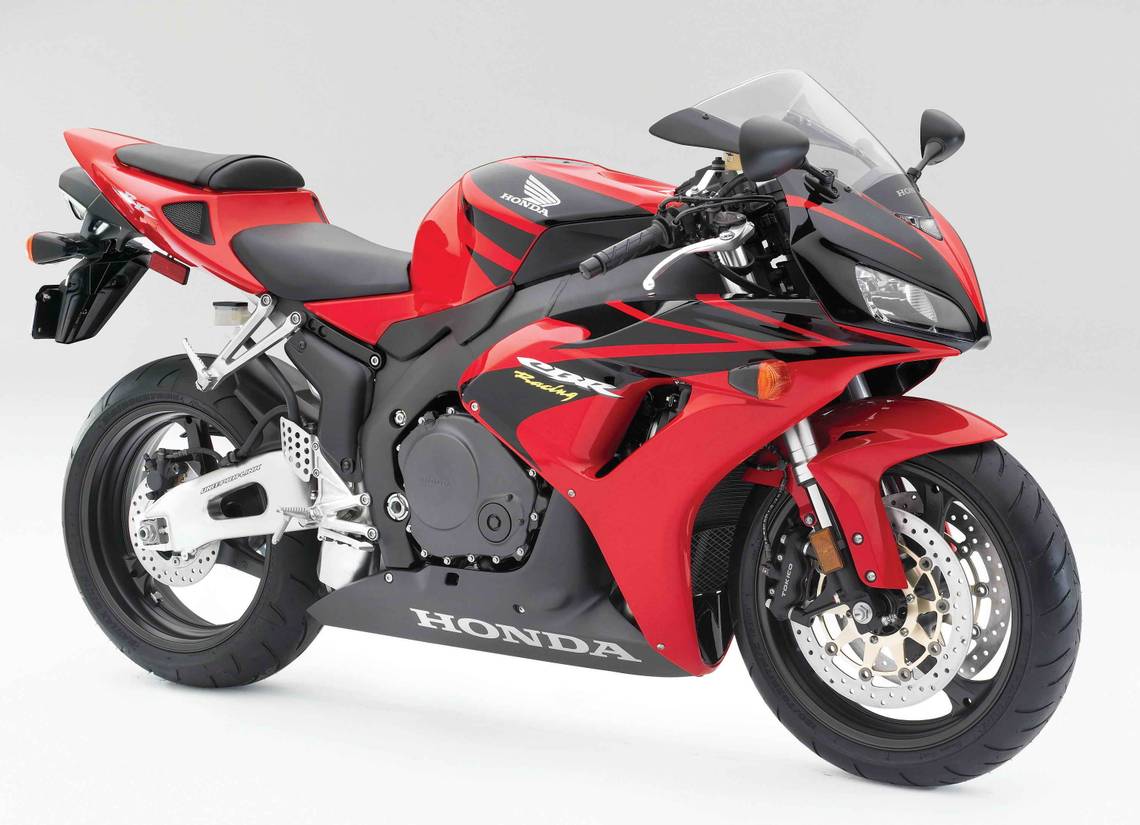
Sharing DNA with Honda's MotoGP-winning RC211V, the awesome CBR1000RR elevates its Superbike status to new performance levels in 2006 thanks to extensive changes that sharpen handling, boost horsepower and reduce weight.
2006 Honda CBR1000RR


- Make: Array
- Model: 2006 Honda CBR1000RR
- Engine/Motor: liquid-cooled inline four-cylinder
- Horsepower: 172
- Transmission: 6-speed
- [do not use] Vehicle Model: Array
The 2004 season witnessed the introduction of a truly innovative machine: Honda's CBR1000RR. The big RR represented a landmark break from past sport bikes; rather than following in lockstep with its predecessors, it instead drew from the present state-of-the-art and hurtled headlong into the future. By tapping wholesale into the cutting-edge technology gleaned from within the company's ultra-high-tech MotoGP racing program, this new design unveiled a whole new era of big-bore supersports machine. Indeed, the basic DNA of the CBR1000RR sprang forth from the incredible RC211V, a technological wonder that incorporated exotic and ground-breaking chassis architecture to accomplish its single purpose in life: winning races.
Like the MotoGP racer, the CBR1000RR design utilized an innovative long-swingarm, weight-forward configuration that allowed the machine to get more power to the ground sooner when exiting corners--thereby creating a remarkably well-balanced and rider-friendly package that simultaneously wielded the kind of awe-inspiring power that only a modern-day liter-bike could generate. The 1000RR's credentials seemed never-ending: gravity die-cast aluminum frame, extraordinarily compact high-output engine with Dual Sequential Fuel Injection (DSFI), Unit Pro-LinkTM rear suspension, radial-mount front brakes, and the unique Honda Electronic Steering Damper (HESD).
A never-ending quest for performance
Innovative as the new CBR1000RR appeared, its 2004 rollout provided scarcely a pause for Honda's engineers because life in the 1000cc sportbike class revolves around a single, relentless quest: more performance. This unquenchable drive for additional development and more performance continued virtually unabated. So now, only two years later, 2006 brings the next evolutionary step in the life of the 1000RR. To that end, the 2006 CBR1000RR offers advancements in every parameter, with more power, better handling and less weight, thanks to the following changes:
- New intake and exhaust porting
- Higher compression ratio
- Revised cam timing
- More intake valve lift
- Double springs for the intake valves
- Higher redline
- Larger rear sprocket
- New exhaust system
- New chassis geometry
- Larger 320mm front brake discs
- Revised front suspension
- Revised rear suspension with new linkage ratios
- New lighter swingarm
Power is where you find it
In the ultra-competitive liter-class sportbike wars there's no time to rest, no free lunch, no easy path to improvement. Which is to say the CBR1000RR's improvement in power output was achieved not with any single change, but rather with a collection of carefully developed modifications that add up to a significant boost in performance.
To start, the cylinder-head's intake and exhaust ports were refined in shape and size to yield a straighter path for higher flow--and a resulting significant improvement in power feel. The reduced volume in the combustion chamber provides a distinct increase in the compression ratio, from 11.9:1 to 12.2:1, although this alteration was achieved in a slightly unusual fashion. Rather than change only the shape of the combustion chamber proper, Honda's engineers also reshaped the surfaces of the intake valves that face each combustion chamber; shallower dished-out areas essentially add material to the chamber to reduce volume and help raise the compression ratio. To nullify any weight gain to the intake valves, each valve had a corresponding amount of material removed on the opposite side of the valve head, in the area near where the valves rest in their seats.
Other performance-up measures include new valve timing and more lift (from 8.9mm to 9.1mm) on the intake side to help boost power, and a new double-spring design for the intake valves replaces the single-spring setup previously used--all the better for enhanced power output and reliable operation at higher engine speeds. Specifically, torque now peaks at 10,000 rpm, 1500 revs higher than before, and engine redline increases from 11,650 rpm to 12,200 rpm with the 2006 model. In conjunction with a larger rear sprocket (from 41 to 42 teeth) these changes enhance acceleration while top speed can remain unchanged. Usually, gains made in a larger rear sprocket's sharper acceleration must be paid back in reduced top speeds, but this new engine's taller redline and stronger high-end power output maintain the CBR's high top-speed ceiling for performance.
When details count
To build in even greater durability during extended high-speed operation, a new crankshaft made of a stronger steel alloy provides enhanced stiffness and strength to meet the demands of high performance without adding extra weight. In addition, the camshafts have been lightened via thinner shaft wall thicknesses to trim weight from the drivetrain. The net result of all these changes is an approximate 3% increase in peak power output, with fully 75% of the improvement credited to the changes in the cylinder head and porting. These refinements also help achieve an improved power-to-weight ratio, resulting in sharper acceleration and noticeably stronger rush through the entire powerband.
A new, more simplified internal design for the electronic control unit (ECU) results in a modest reduction in its weight, making yet another small but significant contribution to the overall weight loss. A new magnesium ACG cover further contributes to reduced engine and overall machine weight; previously, only the head cover and oil pan had been constructed of magnesium.
Other detail improvements abound. A revised internal crankcase venting system reduces power loss due to crankcase pressurization. A lighter cam chain tensioner slices weight from the engine, as does a new cooling system impeller, which also improves flow for enhanced engine cooling and reduced heat-induced power loss. A larger-diameter thrust washer in the clutch provides more surface area and a wider needle bearing in the clutch basket adds strength and durability. The result is greater durability and smoother clutch engagement action as well. The shift drum shaft has been changed to reduce weight, and the transmission engagement dogs are undercut more for more positive shifting and less driveline lash.
On the intake side, the internal shape of the ram-air intake ducts have been altered to improve airflow and the grill covering the intake system now features a larger grid pattern for enhanced flow. The upper "showerhead" fuel injectors in the DSFI system now feature a revised spray pattern for greater efficiency as well.
Refining the elegant
The CBR1000RR burst onto the streets and Superbike racing scene in 2004 with an all-new gravity die-cast aluminum frame and advanced Unit Pro-Link rear suspension layout taken directly from Honda's famed RC211V MotoGP racer. Cradling the potent engine is a stressed-member diamond configuration that contributes to the big CBR's exceptional handling stability. This frame is light weight and has a relatively simple, organic form.
The 1000RR chassis and frame receive a host of refinements that add up to a significant improvement in overall handling ease and smoother response to rider input. First, the inverted, fully adjustable cartridge-type front fork now features fork springs made of a different material with an increased rate, and more spring preload is used. The steering head's caster angle is reduced slightly--a quarter of a degree--from 23 degrees, 45 minutes to 23 degrees, 25 minutes. Together with a reduction in trail from 102mm to 100mm (3.9 inches), these alterations help sharpen steering response and overall handling. In another change to the chassis, the swingarm is reduced fractionally in length by 4mm. Overall these chassis changes have decreased the CBR1000RR's wheelbase from 55.6 inches to 55.3 inches for quicker steering.
In back, the single-shock Unit Pro-Link suspension system--patterned after RC211V MotoGP technology--now incorporates a more supple spring rate (from last year's 12.0 kg/mm to 11.5 kg/mm) and a new linkage system that yields less rising rate. As before, the rear damper boasts full adjustability for spring pre-load, compression and rebound damping, and a lighter aluminium spring pre-load adjuster ring now replaces the steel piece used on the previous iteration.
New front brake rotors: larger and lighter
The CBR1000RR's superb radial-mount front disc brakes increase in diameter from 310mm to 320mm in 2006, and this change yields a readily apparent increase in braking power and a greatly enhanced feel. In order to minimize unsprung weight, the thickness of the rotors is reduced from 5mm to 4.5mm, resulting in a total weight reduction of 300g. Also lightening the chassis unsprung weight is a new smaller and lighter rear-brake caliper. And the rear wheel and sprocket are now fitted with a new set of dampers that better absorb the shocks of quick clutch operation and sudden jolts of power to driveline during hard acceleration and deceleration.
Lighter Exhaust System
To further minimize weight, even the 4-into-2-into-1 titanium and stainless steel exhaust system was revised in construction, trimming weight from the pipes, the servo-controlled exhaust valve--which increased in diameter from 45mm to 48mm--and from the center-up silencer located under the seat. This latter reduction not only shaves weight, it also contributes to the CBR1000RR's enhanced mass centralization for excellent handling traits.
Next-generation looks
For 2006, the CBR1000RR also sports a next-generation look thanks to all-new bodywork that projects a decidedly aggressive impression. The front and side cowls boast a sleeker, more curvaceous and more assertive look that still maintains strong bloodline ties to its MotoGP racing predecessor. Detailed changes include a more pronounced indent in the front cowl and redesign for the shape of the RR's distinctive slim-line headlights which combine to project a more aggressive forward visage. The fairing's new side cowls also feature more open and rounded lines to lighten and accentuate the bike's aerodynamic look while also complementing its high-speed handling. The CBR1000RR's sleek and slim seat cowl follow the bike's aerodynamic lines, and give its rider optimal maneuvering ease and comfort. Although the seat itself appears unchanged in shape and thickness, the 2006 version has a revised foam material to enhance rider comfort. Unseen below, the seat railing also changed shape to reduce weight. Under the tail's lower surface, a cleanly integrated slim-line LED taillight--now made with a heat-resistant polycarbonate lens that supersedes the previous acrylic item--hovers over the center-up exhaust system's prominent exit port, which features a newly restyled look.
Enhanced power. Less weight. And sparkling new looks to boot. In 2006 the state-of-the-art in liter-class sport bikes has advanced in giant steps once again. Thanks to the power of Honda engineering and the new CBR1000RR.
-----

Features
New for 2006
New cylinder-head porting for improved engine power in mid- and upper-rpm ranges.
New cylinder-head combustion chamber shape raises the compression ratio.
New intake cam increases power at high engine speeds.
New intake valves help increase power.
Intake valve springs change from a single spring to new double-spring design for optimum performance at high rpm.
Redline increased for improved performance.
Left engine ACG cover is made of magnesium for lighter weight.
New transmission gears for improved engagement.
New clutch needle bearings improve engagement feel and durability.
Redesigned ram-air intake screen grid reduces air resistance for optimum flow.
New exhaust system is lighter and increases flow for more power.
New chassis geometry for improved handling.
New, larger full-floating 320mm front disc brakes (up from 310mm) with four-piston radial-mounted calipers deliver superior braking performance and progressive feel.
Revised front suspension settings for superior suspension action.
Revised rear suspension includes new linkage for improved handling.
All-new bodywork includes upper, middle and lower cowl for aggressive, race-ready look.
Improved seat foam for additional rider comfort.
Exciting new colors are: Candy Blue/Yellow, Red/Black, Silver/Metallic Silver and Black.
Unique Features
Liquid-cooled 998cc inline four-cylinder engine.
Aluminum frame patterned after the RC211V MotoGP machine.
Honda Electronic Steering Damper (HESD) for optimum steering effort and stability.
Cassette-type close-ratio six-speed transmission.
Centrally located fuel tank increases mass centralization and allows more compact frame design.
Radial-mounted front brakes.
Center-up exhaust system.
Unit Pro-Link rear suspension and swingarm design inspired by RC211V.
Line Beam Headlight features three-piece reflector design.
Dual Stage Fuel Injection System (DSFI) features two injectors per cylinder.
Aggressive styling based on the championship-winning RC211V MotoGP machine.
Engine/Drivetrain
Liquid-cooled DOHC 16-valve 998cc four-stroke inline four-cylinder engine features bore and stroke dimensions of 75mm x 56.5mm.
Sixteen-valve cylinder head features 29mm intake and 24mm exhaust valves with an 12.2:1 compression ratio for efficient combustion and high horsepower.
Lightweight nutless connecting rods.
Direct shim-under-bucket valve actuation system ensures high-rpm durability and allows 16,000-mile valve maintenance intervals.
Iridium-tip spark plugs improve fuel combustion and performance.
Dual Stage Fuel Injection (DSFI) system features two injectors per cylinder--one upper and one lower--controlled by an ECU that senses rpm and throttle opening. Lower injector enhances rideability while upper injector improves top-end horsepower. At lower rpm only the lower injector is working. At higher rpm, both injectors are activated. The system uses 44mm throttle bodies.
Denso injectors with lightweight valving for faster reaction time and 12 holes per injector improve atomization of fuel mixture for optimum combustion efficiency and power.
Auto-enriching system is integrated into PGM-FI module, eliminating the need for a manual choke.
Forged aluminum pistons with moly surface treatment for reduced friction.
Aluminum composite cylinder sleeves are high-pressure-formed from sintered aluminum powder impregnated with ceramic and graphite. The lightweight composite sleeves provide better wear resistance and superior heat dissipation compared to conventional sleeves.
Electronic ECU provides two digital 3-D fuel injection maps for each cylinder and two digital 3-D ignition maps for cylinder pairs, creating ideal fuel mixture and spark advance settings for superb rideability.
Newly designed ram-air system allows higher volume of cool air to the 8.35-liter airbox for linear power delivery and incredible engine performance.
Stainless steel four-into-two-into-one center-up exhaust with twin outlets and titanium core increases lean angle and reduces wind drag.
Liquid-cooled aluminum oil cooler is lightweight and efficient.
Maintenance-free automatic cam-chain tensioner.
Starter gears located on the right side to produce narrow engine and increased lean angle.
Eight-plate clutch is compact and tough, featuring durable friction plate material.
Cassette-type, close-ratio six-speed transmission is easily accessible for rapid gear ratio changes and maintenance at the race track.
Durable #530 O-ring-sealed drive chain.
Chassis/Suspension
Lightweight twin-spar aluminum frame utilizes RC211V technology.
Aluminum-hybrid rear swingarm is longest in class for superior traction under hard acceleration.
New Aluminum subframe is lightweight and easily removed for ease of maintenance.
Honda Electronic Steering Damper (HESD) is a rotary type steering damper that electronically modulates steering damping based on road speed and acceleration. An ECU unit senses road speed and acceleration and then sends a signal to a solenoid. The solenoid controls an oil pressure relief valve within the damper unit. At slower speeds the relief valve is open, allowing for a free flow of oil through the damper unit, resulting in reduced damping force and lighter steering effort. At higher speeds the flow of oil is restricted, resulting in increased damping force and additional stability. HESD is the first steering damping system that makes it possible to increase high-speed performance while maintaining low-speed handling.
43mm inverted aluminum-slider Honda Multi-Action System (HMAS) cartridge front fork features spring preload, rebound and compression damping adjustability, and offers precise action and unparalleled rigidity.
Unit Pro-Link rear suspension system is patterned after the RC211V MotoGP machine. In this system, the upper shock mount is contained within the swingarm rather than the frame. With no top frame-mount for the shock, this unique system reduces negative suspension energy from being transmitted into the frame, allowing optimum frame rigidity and improved rideability out of corners. The HMAS shock offers rebound and compression damping, and spring preload adjustability.
Front brake system features radial-mounted four-piston calipers and 320mm floating discs, and a 220mm rear disc with a single-piston caliper for exceptional stopping power.
Super-light aluminum-alloy hollow-spoke wheels feature race-spec 3.5 x 17-inch front and 6.0 x 17-inch rear dimensions.
Centrally mounted 4.8-gallon fuel tank is positioned low in the frame, increasing mass centralization and allowing a more compact design. This design positions the rider farther forward for optimum handling.
Additional Features
High-capacity, 350-watt AC generator.
High-tech instrument display features tachometer, LCD readouts for speedometer, coolant temperature, odometer, two tripmeters and a clock. A low-fuel LED light and shift indicator light is located in the tachometer.
Line Beam Headlight features three-piece reflector design utilizing two H7 bulbs for optimum light distribution and unique compact design.
LED taillights for improved appearance.
Plastic tank shell cover protects tank and airbox.
One-piece fan assembly increases cooling efficiency.
Convenient ignition switch/fork lock for added security.
Folding aerodynamic mirrors.
Handlebar switches and controls use internationally approved ISO graphic symbols.
Convenient push-to-cancel turn signal switch.
Maintenance-free battery.
Transferable one-year, unlimited-mileage limited warranty; extended coverage available with a Honda Protection Plan.
Ownership includes one-year complimentary membership for an individual in the Honda Rider's Club of America (HRCA). Benefits include: discounts, travel benefits, roadside assistance, one year of Honda Red Rider magazine, access to HRCA Clubhouse Web site (www.hrca.honda.com) and access online to Honda Common Service Manual. For HRCA details, call 1-800-847-HRCA. For dealers only, please call (310) 783-3958.
Available accessories
Passenger Seat Cowl (Color-matched).
-----

SPECS
Model: CBR1000RR
Engine Type: 998cc liquid-cooled inline four-cylinder
Bore and Stroke: 75mm x 56.5mm
Compression Ratio: 12.2:1
Valve Train: DOHC; four valves per cylinder
Carburetion: Dual Stage Fuel Injection (DSFI)
Ignition: Computer-controlled digital transistorized with three-dimensional mapping
Transmission: Cassette-type, close-ratio six-speed
Final Drive: #530 O-ring-sealed chain
Suspension Front: 43mm inverted HMAS cartridge fork with spring preload, rebound and compression damping adjustability; 4.7 inches travel
Suspension Rear: HMAS Pro-Link single shock with spring preload, rebound and compression damping adjustability; 5.3 inches travel
Brakes Front: Dual full-floating 320mm discs with four-piston radial-mounted calipers
Brakes Rear: Single 220mm disc with single-piston caliper
Tires Front: 120/70ZR-17 radial
Tires Rear: 190/50ZR-17 radial
Wheelbase: 55.2 inches
Rake (Caster Angle): 23.45
Trail: 100mm (3.9 inches)
Seat Height: 32.3 inches
Dry Weight: TBD
Fuel Capacity: 4.8 gallons, including 1.06-gallon reserve
Colors: Candy Blue/Yellow/Red/Black/Silver/Metallic Silver/
Black
Meets current CARB and EPA standardsCalifornia version differs slightly due to emissions standards.