
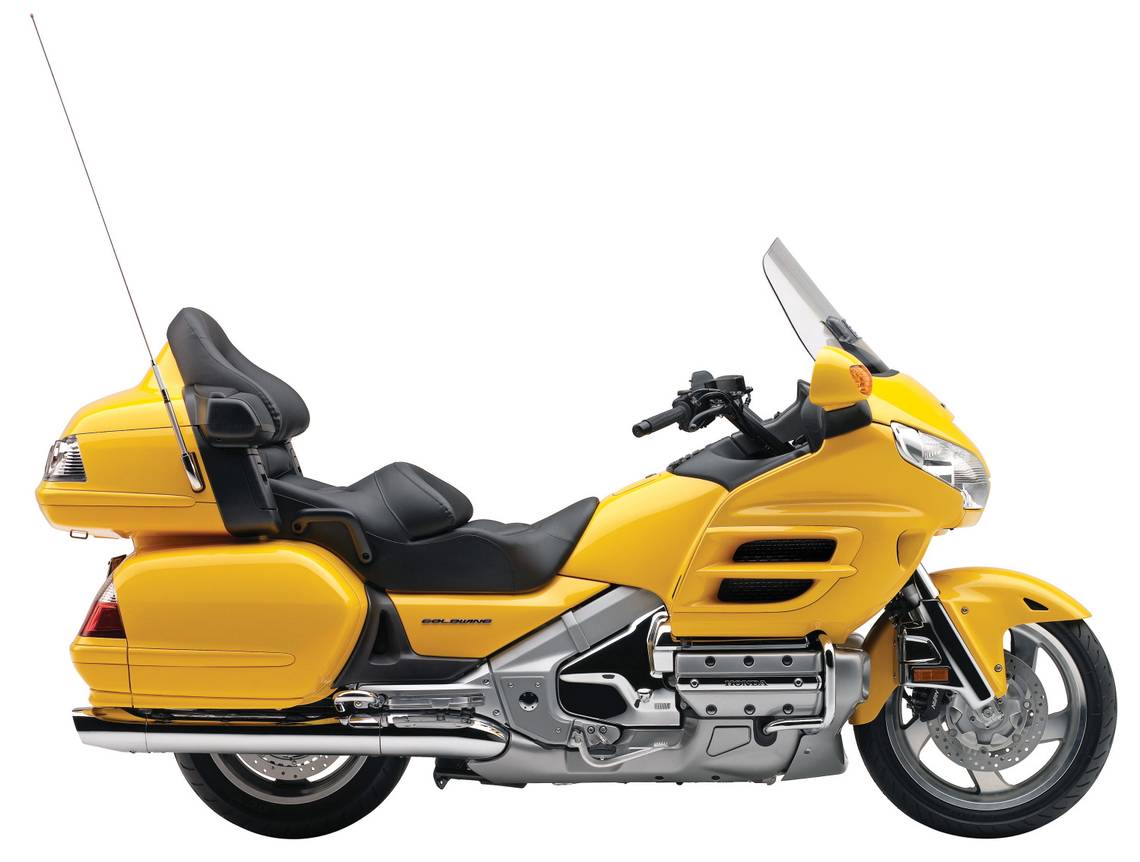
Honda spoils future owners of the 2009 Gold Wing with the addition of XM Radio featuring traffic and weather reporting capabilities, plus an automatic tire pressure monitoring system proving once again that finding new solutions for the customers needs is THE way to stay strong in this business.
2009 Honda Gold Wing


- Make: Array
- Model: 2009 Honda Gold Wing
- Engine/Motor: liquid-cooled horizontally opposed six-cylinder with SOHC; two valves per cylinder
- Horsepower: 118 hp @ 5500 rpm
- Torque: 167 Nm @ 4000 rpm
- Transmission: Five-speed including Overdrive, plus electric Reverse
- [do not use] Vehicle Model: Array
Introduction
The ultimate touring bike carries on to 2009 without featuring any technical or design changes, but does feature the regular fair share of goodies with which Gold Wing customers are already accustomed.
A true limousine on two wheels, the Gold Wing comes fitted with airbags, ABS, Comfort Package, heated seats and feet warmers, features without which any normal rider wouldn’t be able to pun the number of miles that this bike is capable of. Reverse gear and electronic suspension is simply more than any rider could dream of, but at a minimum curb weight of 895 pounds, these systems become absolutely necessary.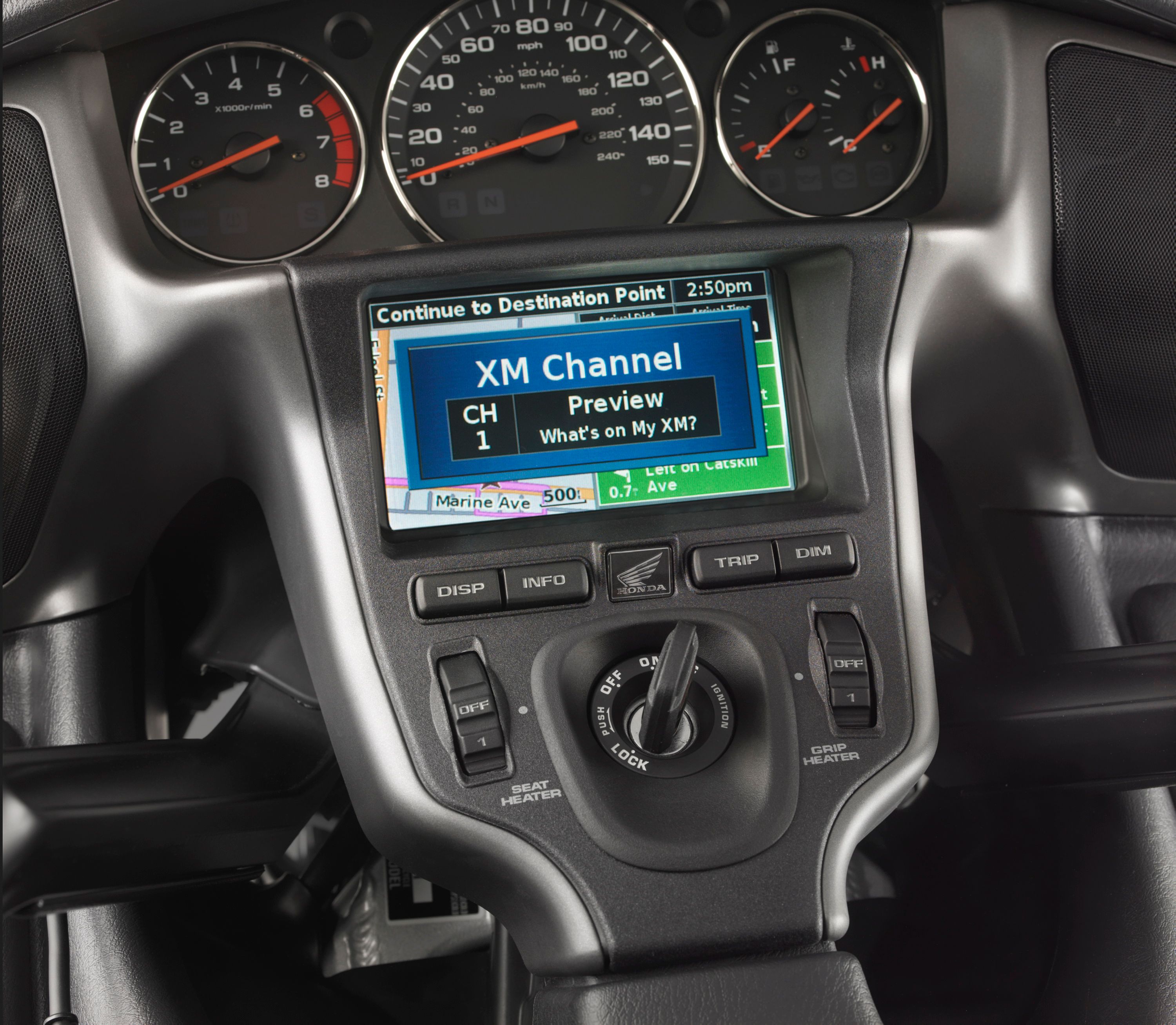 Instead, what will be new on the latest Gold Wing model year are the XM Radio, XM Nav Traffic and XM Nav Weather services. All are available for the North American model and while the first is just for fun and entertaining, the last two services are simply irreplaceable sources of information in what concerns, obviously, the traffic and weather conditions on the route you indicate. The bike now features Honda’s specially created Tire Pressure Monitoring System (TPMS) which warns you when low tire pressure is detected in the front or rear wheel (a warning light will be turned on below the tachometer, to be more precise).
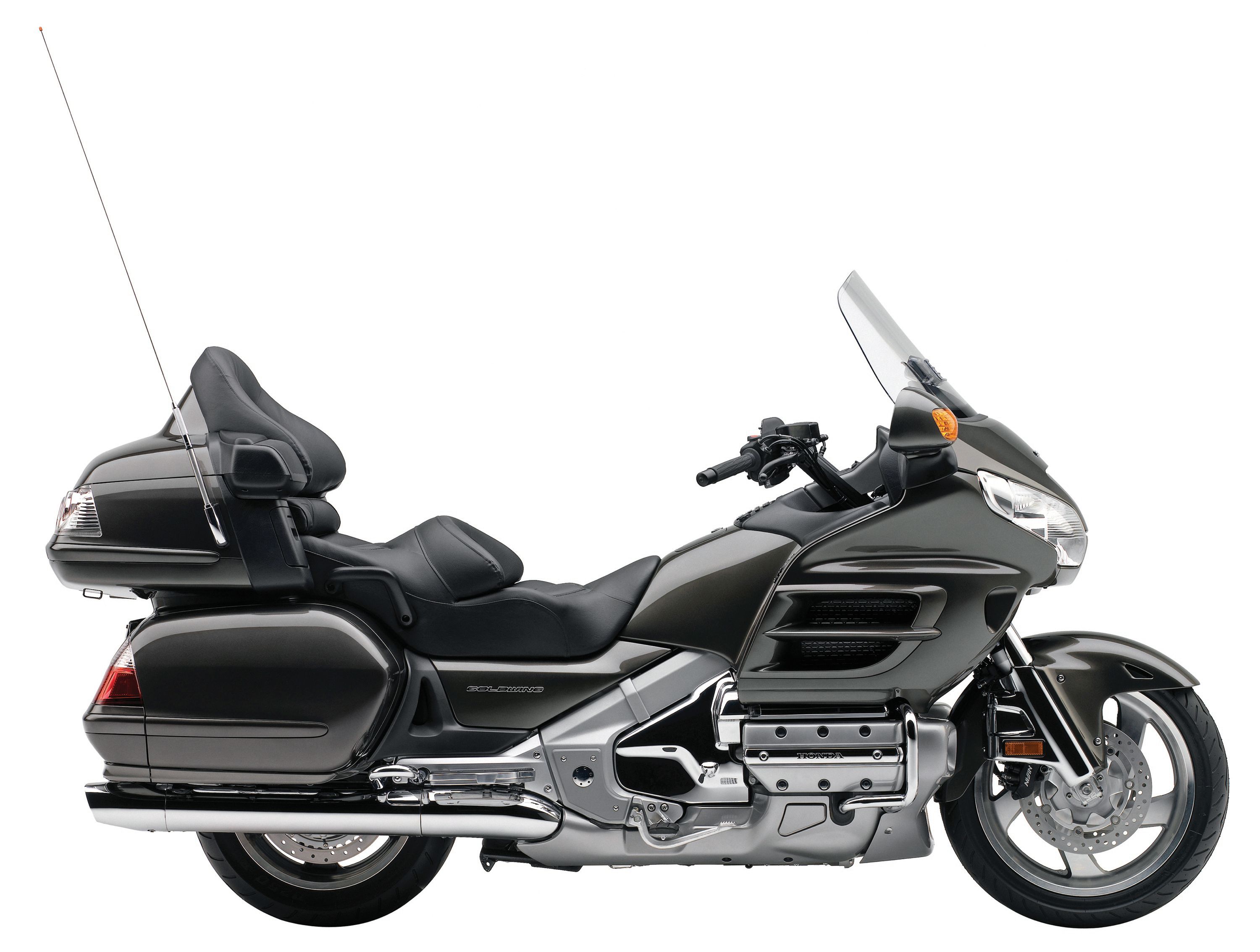
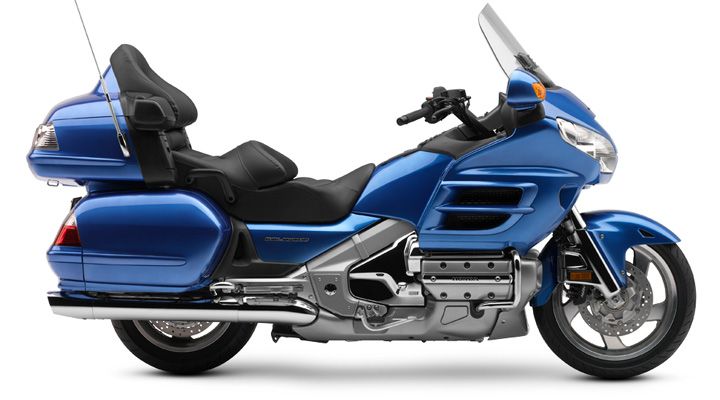
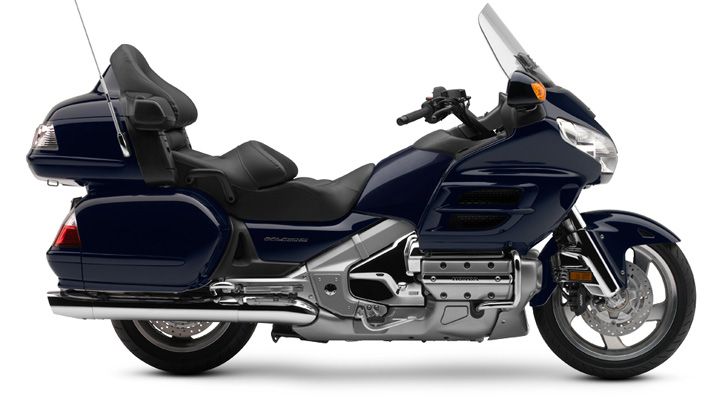
The Candy Black Cherry, Pearl Yellow, Metallic Silver, Deep Blue Metallic, Metallic Titanium, Metallic Blue color schemes are meant to further enhance visual attraction, but also to make the difference between the previous model years and the present one.
History
Honda first displayed the Gold Wing as a prototype in October 1974 at the Cologne Motorcycle Show. The engine was a 999cc flat-four, but so amazing about it were the innovative systems and technologies implemented. For starters, the water cooling system on the four-stroke engine was a Japanese premiere while the fuel pump was only a car feature for the time. Honda changed that. But water cooling a motorcycle engine in the 1970s required talent and innovation from Honda’s engineers who had used the fuel tank space as the radiator overflow. This is where the electronics bay would have also been, but where did the thing store fuel? The response was under the seat. Although it initially looked like a sport-touring motorcycle, the shaft drive came as an anticipation of how things would evolve as well as the impressively quite silencer that was mounted under the swingarm.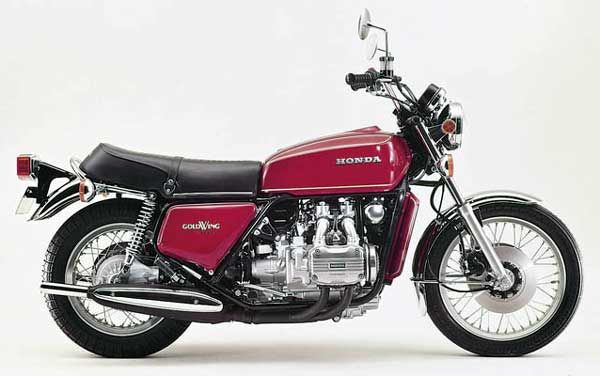 Due to positive reactions that followed the presentation in Germany, Honda started production of the GL1000 in 1975 and there haven’t been significant differences between the prototype and what the customer would have got. Now, because the new model was pretty much naked, but brought the benefits of a touring motorcycle, which is also what Honda listed it as, aftermarket kits consisting in fairings and saddlebags soon flooded the market. So after the 1978 series of changes consisting in new faux tank shape with instruments on top, seat, camshafts, carburetors, exhaust system, Comstar wheels as well as the kickstart removal, Honda introduced the genuine saddlebags and trunk, leaving the fairing to aftermarket producers.
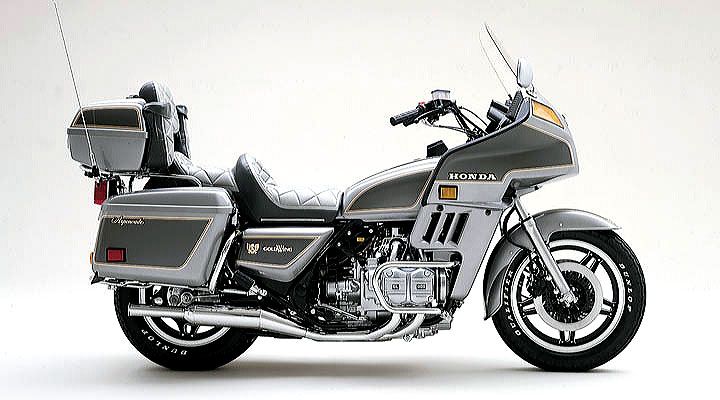 In 1979, the bored engine (1085cc) not only determined the model name change into GL1100, but also showed Honda’s principle that bigger is better. This would have featured an electronic ignition, which was also a fairly important step forward for the time. Also, features such as the air adjustable suspension indicated that Honda won’t lose its head start at any time.
By 1980 the market would have seen the Honda GL1100 Standard and the GL1100 Interstate. On this late model Honda would have accomplished most riders wishes of a fully accessorized (fairing included) Gold Wing.
Hard to be stopped as it has spotted the immense opportunities on their targeted market (the one in the U.S.), in 1981 Honda opened the plant in Ohio and so brought the Gold Wing closer to consumers in this country.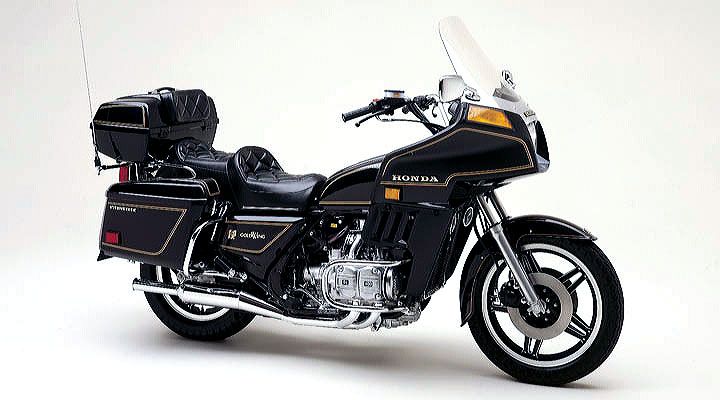 Following the GL1100 Interstate was the “Aspencade” 1982 model which distinguished through the two-tone paint and AM/FM radio, but there have also been options such as the floorboards, chrome and CB Radio.
But hat was pretty much a preview of what 1983 was to bring: LCD instrumentation, anti-dive forks, bigger trunk, repositioned passenger seat and footpegs for increased comfort as well as some transmission retuning aimed at reducing fuel consumption.
Ten years after the prototype’s first public appearance, the Gold Wing started writing its second big evolutionary step under the GL1200 name. The engine had again increased displacement, reaching an impressive for the time 1182cc. The better looking fairing on the Interstate and Aspencade models pretty much “made” the number of sales, which determined the Japanese maker to stop producing the Standard Gold Wing.
The 1985 Honda GL1200LTD was based on the GL1200 Aspencade which was the perfect base machine on which Honda could play with fuel injection, auto leveling rear suspension as well as driver-passenger intercom system and cruise control. Also, life on board was now even more comfortable and pleasurable due to the adding of a redesigned seat and fancy sound system, instrument panel and trip computer. The alternator capacity had to be increased in order to keep up with all those new systems. That is also when the gold two-tone color was first introduced, adding a distinctive note to the Gold Wing.
1986 saw the SE-i instead of the LTD, a model which apart from a 500 watt alternator and a new white and beige color scheme added nothing new. This was also to be removed from the lineup a year later as Honda dropped the fuel injection system and retained the best of it (intercoms, cruise control and upgraded stereo) for the Aspencade model.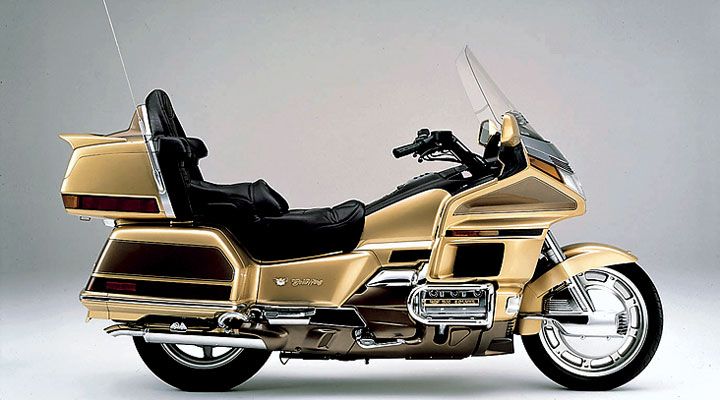 The 1520ccs that Honda had planned for the 1988 Goldwing simply couldn’t do on the flat-four engine so two more cylinders were added. The GL1500, as it was called, stood as the biggest upgrade brought to this model and it also made it the most popular. Power was now greater and smooth delivered, but the engine didn’t saw fuel injection. Having become bigger and heavier during the years of development, 1988 also seemed a perfect time for Honda to add reverse gear as, with the perfectly blended in fairing, it looked like you had to be a Mr. Olympia aspirant in order to have it go backward.
In 1990, Honda added the GL1500SE to the lineup. This was a visually upgraded model. Also, the Interstate and Aspencade were to be again introduced in 1991 and carried on until 1996, respectively 2000.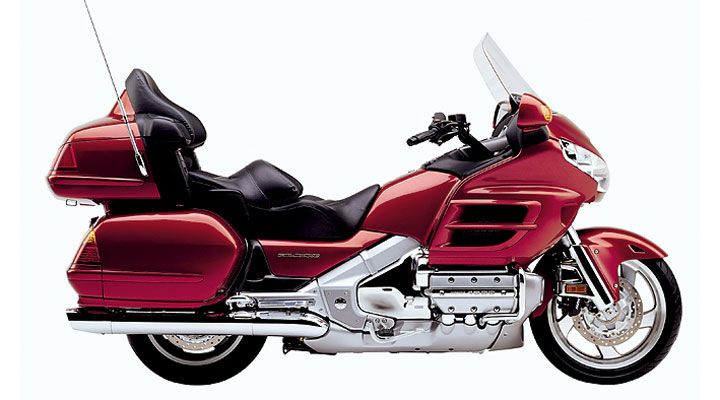 Finally, in 2001, Honda reserved a last big step for the Gold Wing, one that would be again based on displacement increase, fuel injection and premiers. The now 1832cc flat-six engine seemed to have reached the manufacturer’s goal so they further concentrated on reducing the overall weight and strengthening the aluminum extruded frame. They’ve managed to obtain a lighter bike than the GL1500 and the adding of ABS meant that there wasn’t anything more to be done to it.
How wrong could we be as the 2006 model year introduced the first production motorcycle to feature an airbag: the Gold Wing! Also in 2006, they’ve added the Honda Satellite Linked Navigation System, voice prompting through headsets or speakers, five-position heated seat/backrest combination with individual rider and passenger control as well as foot-warming system channels engine-heated air over the rider’s feet which was controlled by a fairing-mounted lever among many other features.
For 2007 and 2008, Honda took a well deserved brake from improving the Gold Wing, the next upgraded model year being the 2009.
------
Competition
In the early days, the Honda Gold Wing would have been the worst nightmare for touring motorcycles such as the Suzuki Cavalcade and Yamaha Venture XII, but both stopped being produced as they simply couldn’t match the class leader’s performance by the time Honda upgraded the engine to 1520cc and six cylinders.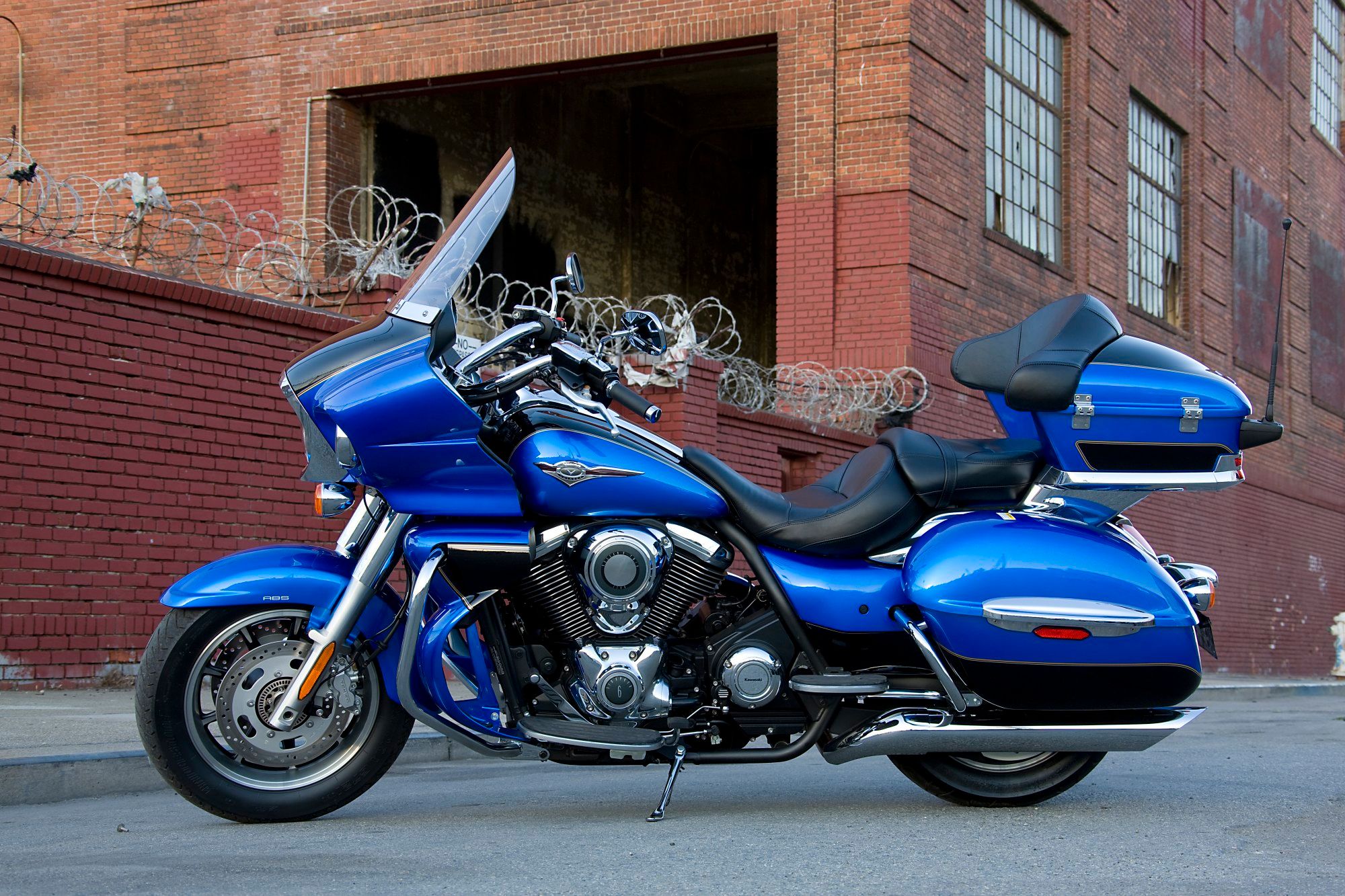 Kawasaki was and still is slightly more ambitious with the Voyager model, so after stopping production in 2004, they are back with the all-new Vulcan 1700 Voyager. It seems that Kawi realized that no attempt will be enough to match GL1800’s engine performance so they go for that early hot rod look and a timeless 1,700cc four-stroke, liquid-cooled, SOHC, four valves per cylinder, V-Twin engine. With the help of the digital fuel injection with dual 42mm throttle bodies, maximum torque is 107.8 lb-ft at 2,750 rpm. MSRP is yet to be announced for this entirely new model.
Exterior
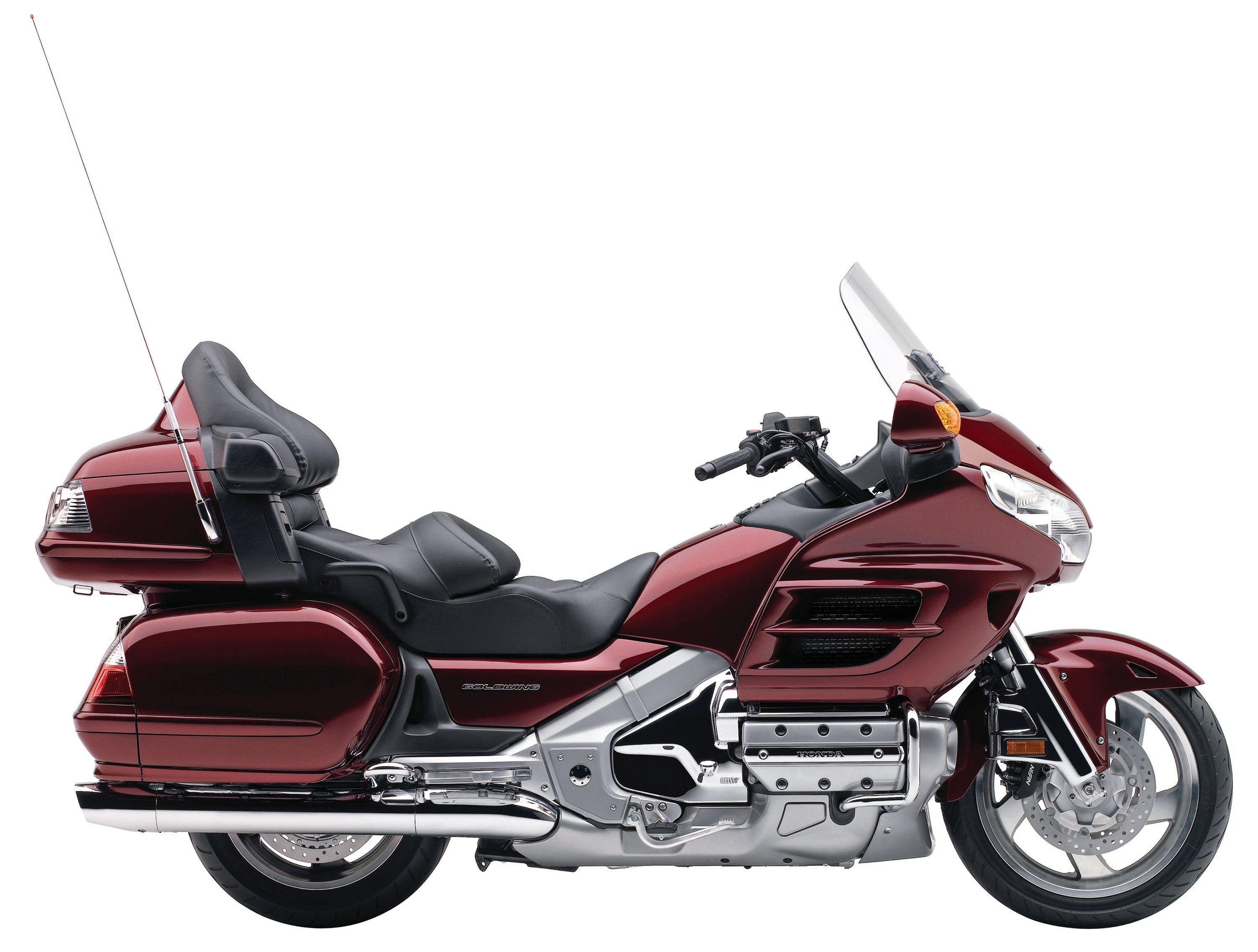 After the launch of the totally new 2001 Gold Wing, Honda has kept this model virtually unchanged. That is due to the fact that designers made sure the bike would not only look good a year or two after the launch, but even a decade later so we’ll have to wait a little bit more until the next revamp.
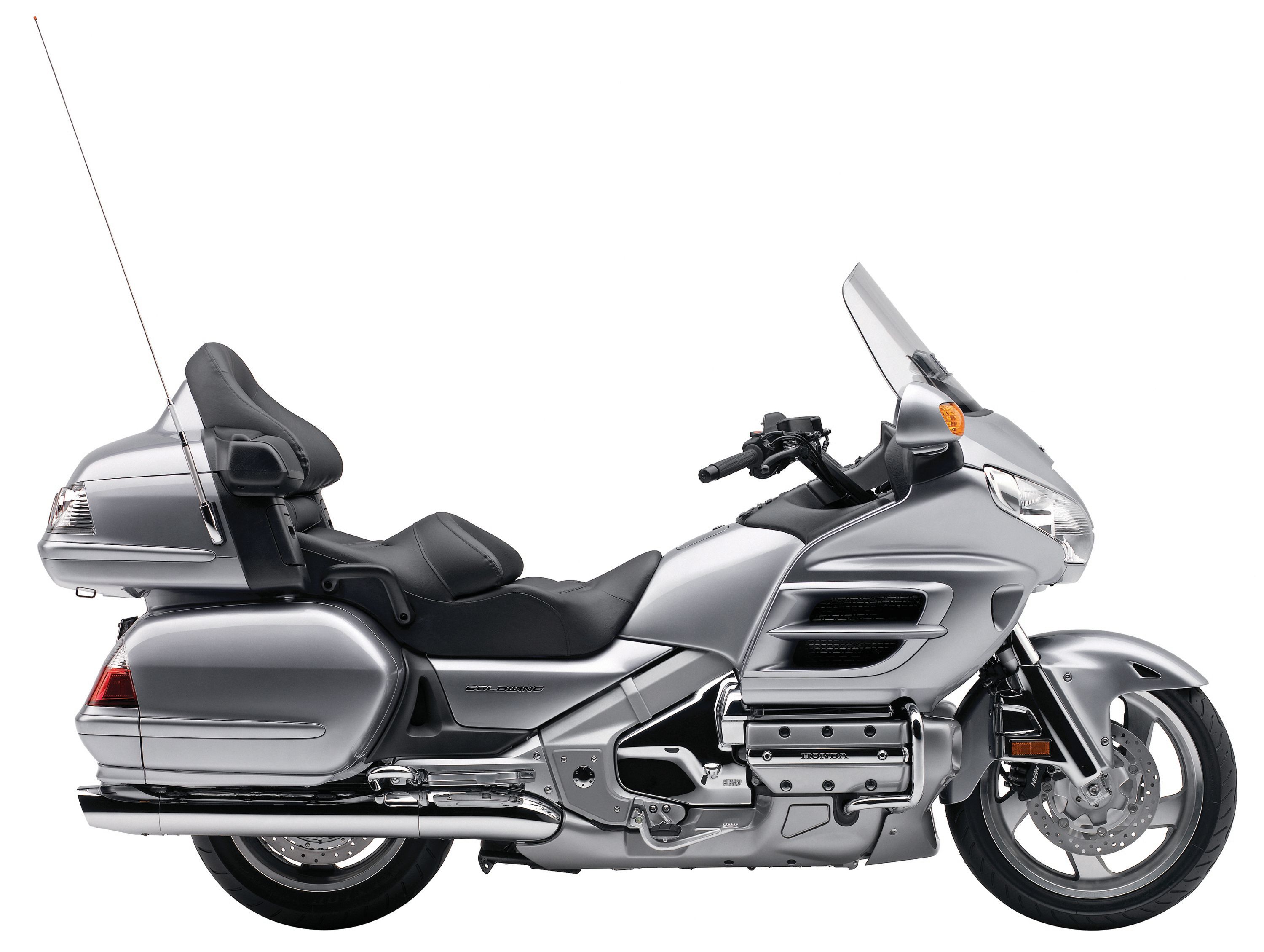
Still, working with what we have, it is a must to be said that the latest Honda Gold Wing is, despite the large dimensions, the best looking touring bike out there. It is a compact and well composed machine, with every design feature carefully accounted and, most importantly, featuring a predetermined role.
The headlights are big, well contoured and nicely integrated into the fairing and to people who consider it has a big “nose” I would ask if the Gold Wing would still look the same if cut down to the strict necessities. Quite frankly, that massive front end looks like a miniature luxury car, especially with those Mercedes-like mirrors.
On the sides, the engine and transmission show off a little bit and simply look like pieces of a puzzle together with the frame and the exhaust pipes. A lively note is given by the side vents, but probably the seats are what touring motorcycles all about. These are extremely spacious and comfortable on the Gold Wing and with that comfy backrest I bet passengers have nothing to complain about.
Trunk (I told you it looks like a miniature car) and side cases with integrated taillights are exactly what the bike needed in order to look as good from the back as it does from the front.
Price
As you probably already know, Honda offers the Gold Wing under a variety of models depending on the different options that they fit on them and, of course, that has an important influence on the prices for which the bikes are being marketed.
The names say pretty much everything about each one in particular: 2009 Honda Gold Wing Airbag – Base MSRP is $25,599; 2009 Honda Gold Wing Audio/Comfort – Base MSRP is $20,999; 2009 Honda Gold Wing Audio/Comfort/Navi/XM – Base MSRP is $23,299 and the 2009 Honda Gold Wing Audio/Comfort/Navi/XM/ABS with a manufacturer’s suggested retail price of $24,399.
Conclusion
Long story short, the 2009 Honda Gold Wing, no matter model, stands as the most comfortable, best performing and highly reliable touring motorcycle that money can buy. And the fact that it has virtually no competition is as yet another confirmation of this fact.
------
SPECIFICATIONS
Engine and Transmission
 Displacement: 1832cc
Engine Type: liquid-cooled horizontally opposed six-cylinder
Bore and Stroke: 74mm x 71mm
Compression Ratio: 9.8:1
Valve Train: SOHC; two valves per cylinder
Induction: PGM-FI
Ignition: Computer-controlled digital with three-dimensional mapping
Transmission: Five-speed including Overdrive, plus electric Reverse
Final drive: Shaft
Chassis and Dimensions
 Suspension Front: 45mm cartridge fork with anti-dive system; 5.5 inches travel
Rear: Pro Arm single-side swingarm with Pro-Link single shock with computer-controlled spring preload adjustment with two memory presets; 4.1 inches travel
Brakes Front: Dual full-floating 296mm discs with LBS three-piston calipers; optional ABS
Rear: Single ventilated 316mm disc with LBS three-piston caliper; optional ABS
Tires Front: 130/70R-18
Rear: 180/60R-16
Wheelbase: 66.5 inches
Rake (Caster Angle): 29.15o
Trail: 109mm (4.3 inches)
Seat Height: 29.1 inches
Fuel Capacity: 6.6 gallons
Curb Weight: 895 - 928 pounds, depending on option packages selected
Features & Benefits
New for 2009
XM Radio
XM NavTraffic
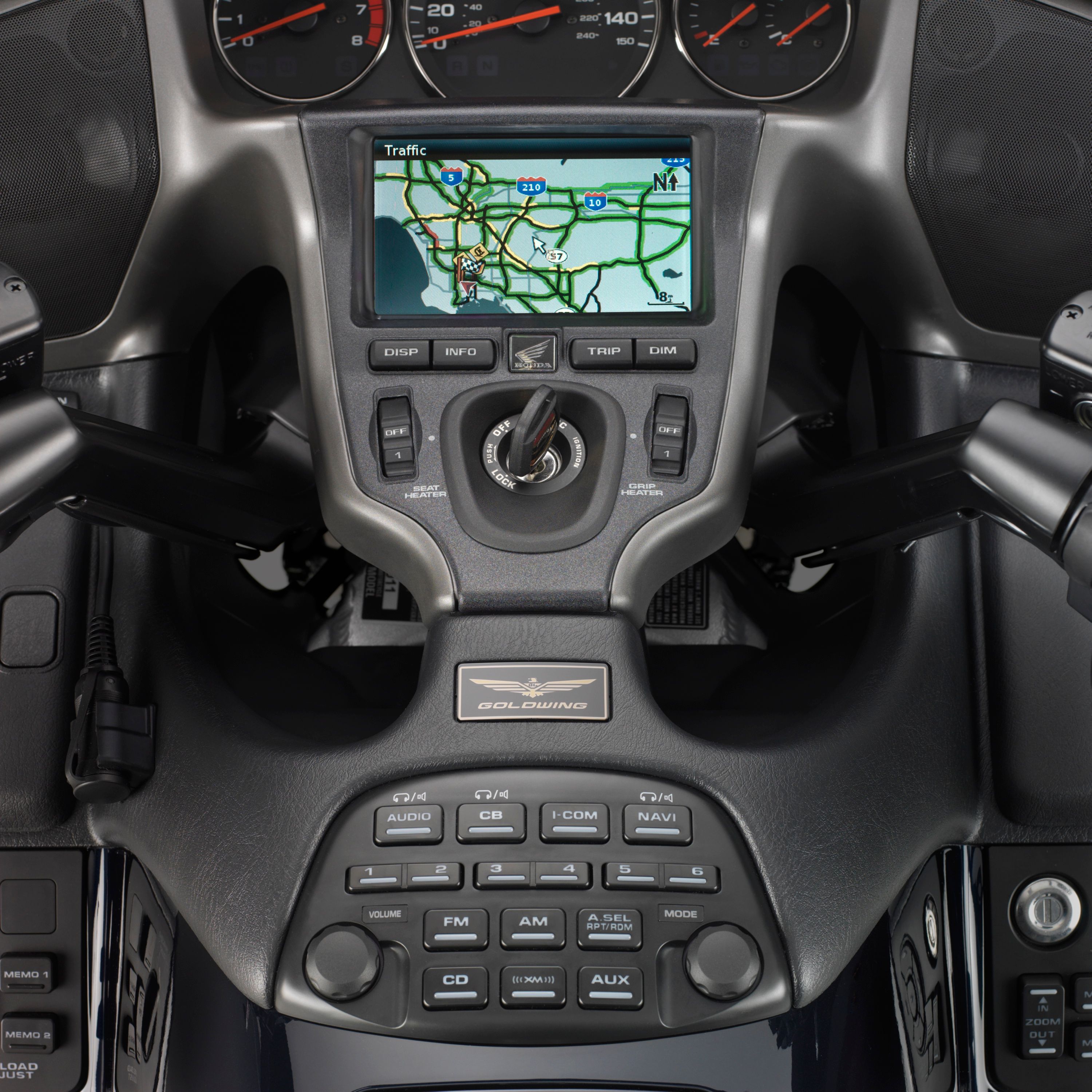
XM NavWeather
Unique Features
Honda Satellite Linked Navigation System™
Cold-Weather Comfort Package
State-of-the-Art Premium Audio System
Airbag
A complete line of bolt-on accessories and appearance items.
Engine/Drivetrain
Chassis/Suspension
Touring Features
Additional Features
Honda Genuine Accessories