
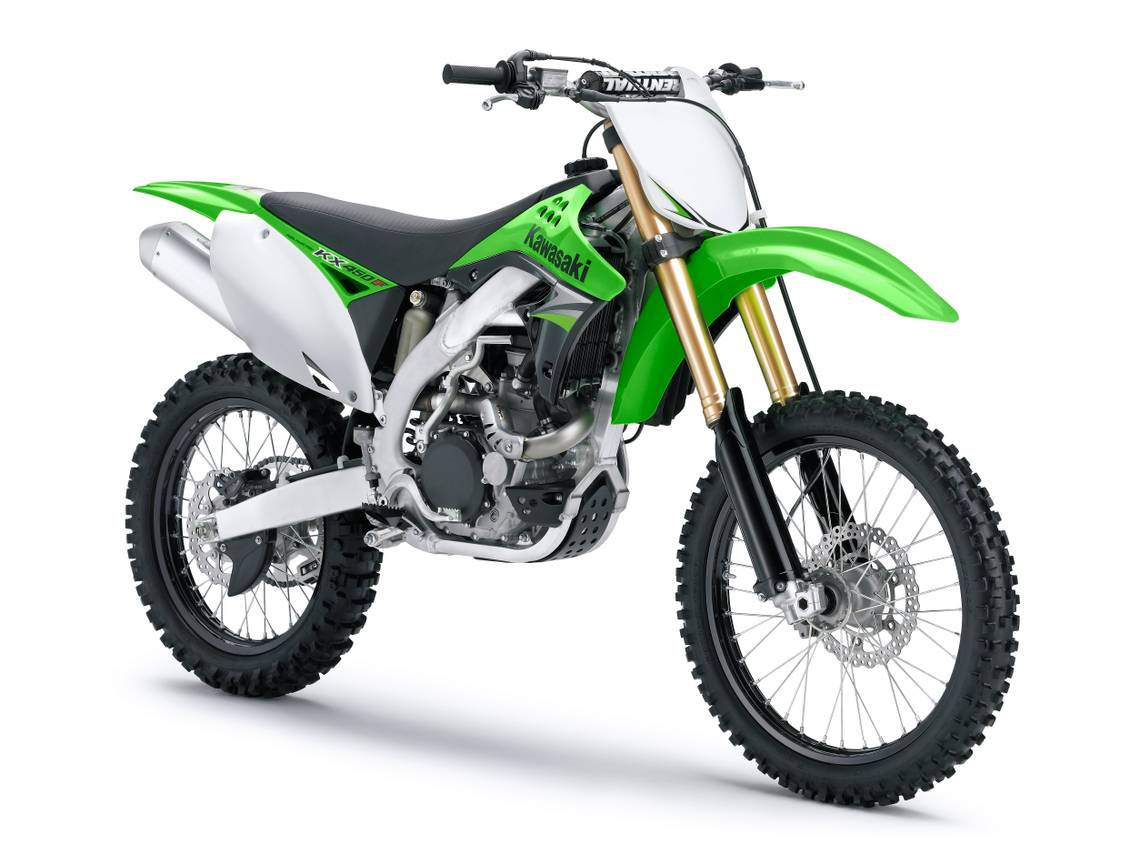
Kawasaki carefully planned the radical revision that implies all of its motocross models, with the KX450F being a top priority. It is the first new model to be launched after the bike’s introduction and it is definitely the best of Kawasaki so far. Especially redesigned to better deal with the track’s demands and the continuously advancing competition, the 2009 Kawasaki KX450F reaches the highest levels of performance and refinement, leaving us craving for one.
kawasaki-kx450f
- Make: Array
- Model: kawasaki-kx450f
2009 Kawasaki KX450F


- Make: Array
- Model: 2009 Kawasaki KX450F
- Engine/Motor: Liquid-cooled, four-stroke single with DOHC and four valves
- Transmission: Five-speed
- [do not use] Vehicle Model: Array
Introduction

The latest approach towards a bike that must rule the track first concerned the engine, afterwards the chassis, and finally the bodywork. A bike that in a way or another is related to the Ninja name couldn’t be another thing, but an absolute blast. So what is that Kawasaki did in order to achieve that? Well, it fuel-injected the engine, bringing it up to date and in line with the competition.
Now the 449cc liquid-cooled, four-stroke single with DOHC and four valves doesn’t need to be adjusted for track and climate conditions as it is versatility itself. Even more, the electronic fuel injection system brings with it an ECU and 43mm throttle body. These features, together with the fuel pump being positioned into the tank let us know how Kawasaki aimed at an advanced feeding system for the engine, as that is the entire key for performance.
In order to keep the overall package light, the engine is kickstarted, but don’t imagine you’ll brake your leg or anything like that if your engine stops when falling. The ECU powers up at the initial movement at the kickstarter so you’ll hear bangs after a single kick.
And those bangs will be as smooth as you’ll ever get as the new larger AC generator rotor that makes sure to increase the rotational inertia of the engine. Also, the redesigned crankshaft will bring contribution so the new engine reduces vibrations to a minimum.
The cylinder head is 5 mm shorter and features revised intake and exhaust ports. This makes it rev higher, be more compact and lighter. It also gives an increased compression ratio of 12.5:1, which required a one-piece titanium exhaust for even greater low and mid-range throttle response.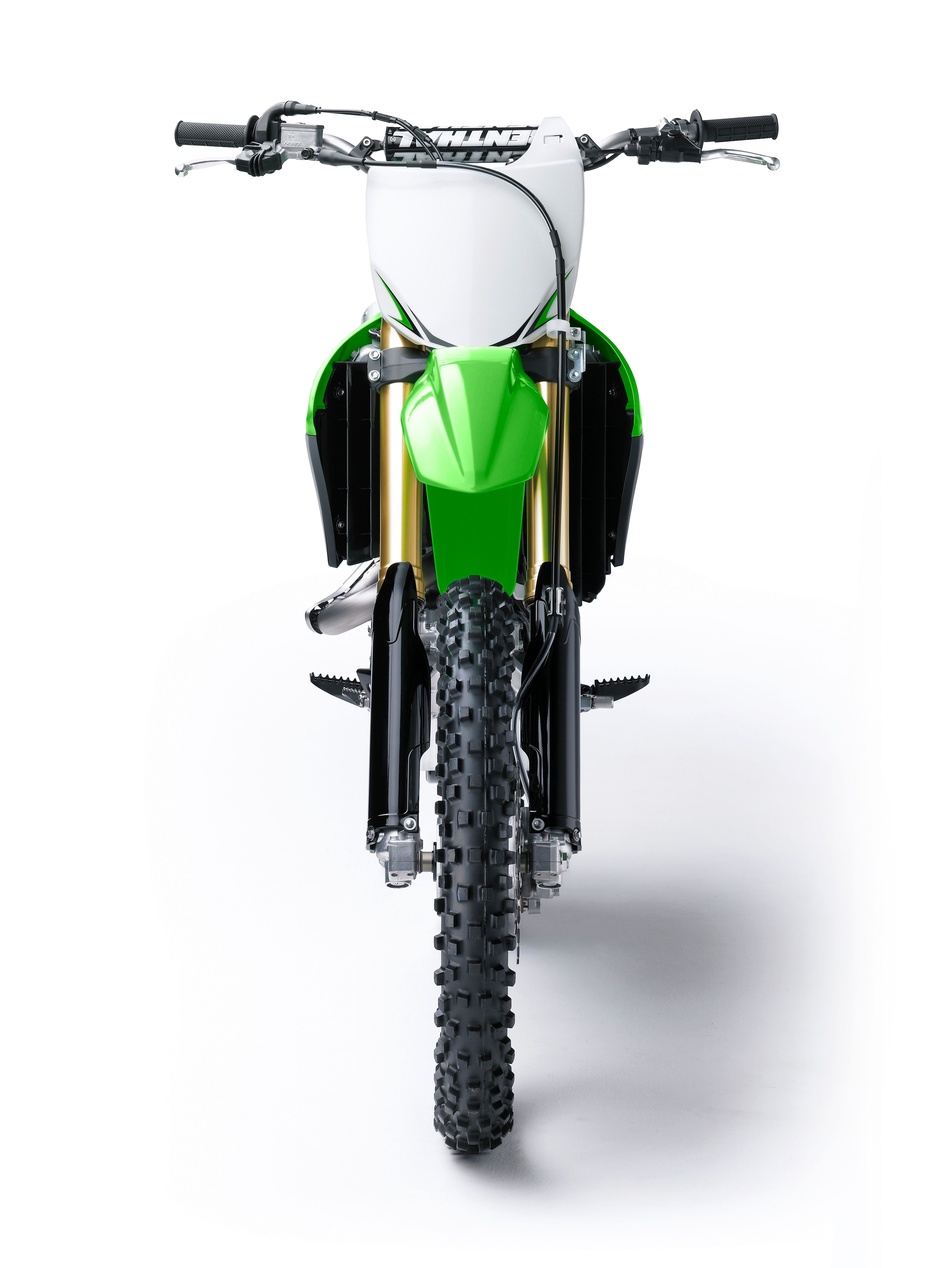 Now that Kawasaki engineers knew they’ve got it right with the engine, there was just a matter of properly exploiting all of that power and torque. This could only be done by designing a new aluminum frame and add proper suspensions to it in order to go better through corners and remain stable at high speeds. So Kawasaki shrunk the cross-section of the main spars, slimmed the head pipe and the down tube ended up through another process. Also, the subframe was reshaped and it ended up being stronger and narrower, exactly how it is needed.
The new aluminum swingarm travels 3 mm more as it positioned higher on the frame. There is also a new cross bracket, but what makes the entire rear unit so good is the fine tuning which became possible by mounting the arm of the Uni-Trak rear suspension linkage underneath the swingarm.
Also aiming at stability and sharper handling is the Kayaba Air-Oil-Separate fork implementing new Diamond-Like Carbon coating on the outer surface of the inner fork tubes. These offer a 15 percent reduction in stiction when the fork is exposed to lateral forces that hamper slide action. Nice through the corners, the bike will inspire confidence like it never did before.
A 50mm new piston at the rear is definitely better than the 46mm one that was present on the bike before and completes the overall safety feel as it offers better damping and bottoming performance, as well as response.
------
History

The green team launched the all-new Kawasaki KX450F in 2006 and this is its first major revision. So even though it doesn’t come with a long history page, the name’s guarantee sometimes says pretty much everything. This is history being written, my friends!
Now, I’m not trying to get it out with a clean face, but I invite you to bring your own arguments. Is the Kawasaki KX450F weaker in any way compared to any other machine that would normally find its place next to it on a motocross track?
Competition
I reckon it doesn’t! We’ve seen the Yamaha YZ450F, a bike that is as refined as it can get for 2009, it has many years behind and as much successes.
A Yamaha Particularity is the five-titanium-valved motor so that is pretty much what you will find different on it, but the chassis has also suffered significant improvement, something that shouldn’t be neglected at all. A disadvantage is the carburetor, which by now seems dated.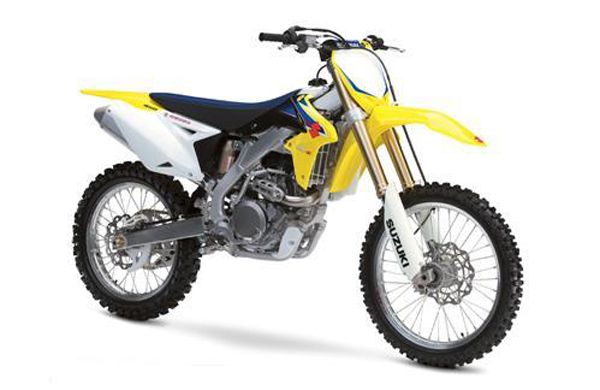 Priced at $7,499, the 2009 Suzuki RM-Z450 follows the same trajectory as the Kawasaki. It also comes with fuel injection for 2009 and Suzuki went the whole way. Using experience from developing fuel-injection systems for GSX-R super sport bikes, the new system was the most appropriate addition that Suzuki could have done not only on the new RM-Z450.
Exterior

Such an important revision couldn’t have passed without completely redesigning the bike. So the biggest motocross ride from Kawasaki received entirely renewed bodywork that comes as a testimony of performance and accuracy.
It is definitely attractive, modern and lines up to the Yamaha and Suzuki, but all the greatness consists in the fact that the Japanese maker actually intended to make it easier to ride and more comfortable. Did he succeed? Take a look at the bike and you tell me because I am simply caught up.
Sleek and aggressive, the think looked like it was racing even at its unveiling and it is all about the magic created by the fenders, plastic shrouds and number plates. Also, the seat is now slimmer and it not only offers better grip, but perfectly blends in the frankly small space destined for it to occupy.
Kawasaki remains faithful to the Lime Green coloring and it brings new graphics, but it also introduces the Monster Energy Version which comes with Ebony painted. They are sold as separate models, but are mechanically identical. Also, they both feature alumite-coated rims for the extra style.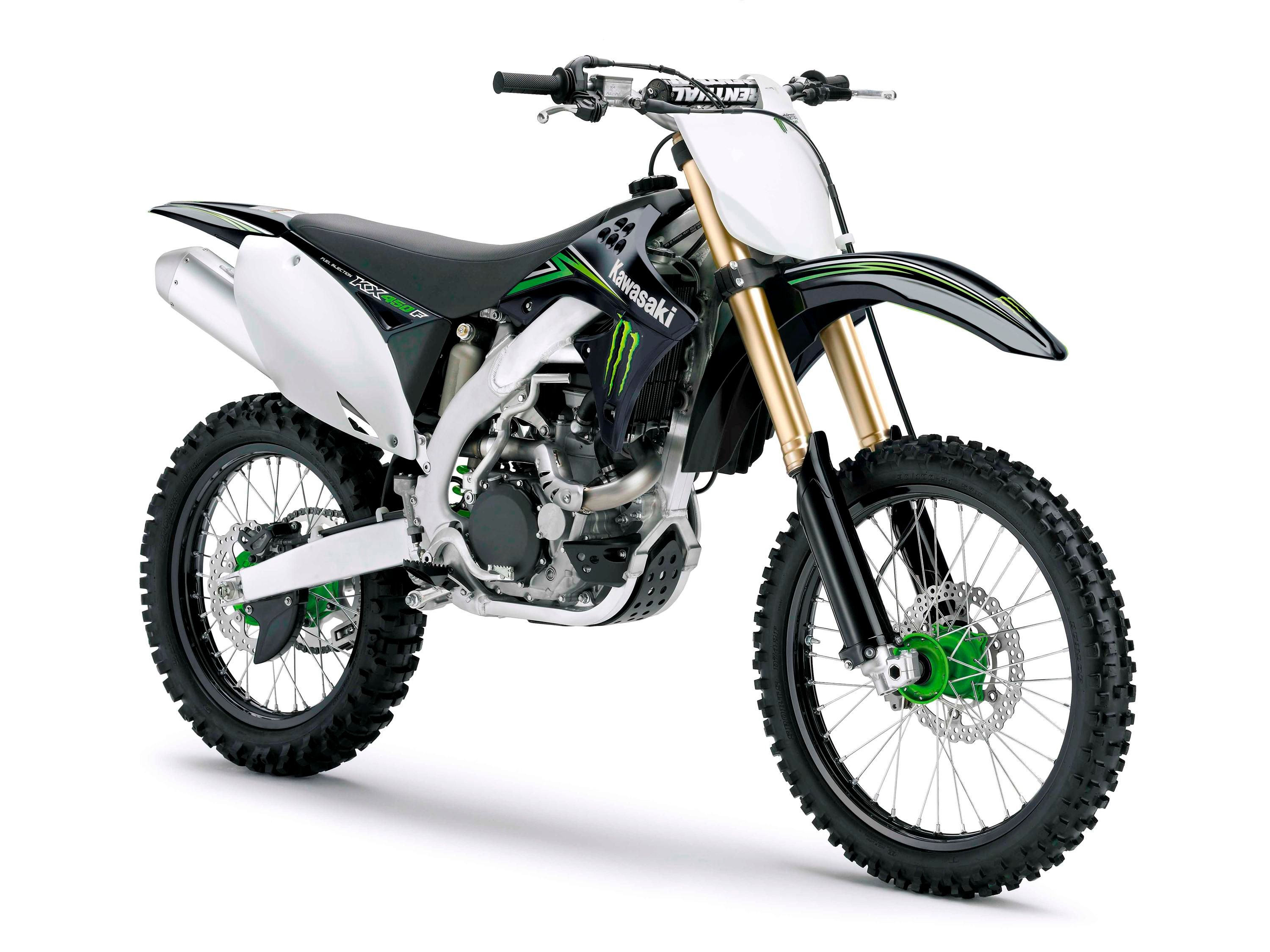
Price
Depending on the model you choose, the price will be influenced, but not that much. Many would like to Go Green and choose the simple model (not that the Monster Energy Version would bring new technologies) and the MSRP in this case is $7,549.
An insignificant $200 sit between the bike you’ve probably saw coming and the one you’ve don’t and given to the fact that styling makes the difference, you will have to choose with your heart. Good luck with that!
Conclusion
Kawasaki caught the last train for the four-stroke 450cc battle, but it sure knew how to position itself among the best in its class. Also, although not heavily revised in its two years of existence, the radical improvements done now simply compensate for all of the things that would previously make a Kawasaki seem a bit dated even though not old at all.
------
SPECIFICATIONS
Engine and Transmission

Engine: Liquid-cooled, four-stroke single with DOHC and four valves
Displacement: 449cc
Bore x stroke: 96.0 x 62.1mm
Compression ratio: 12.0:1
Fuel Injection: 43mm Keihin Throttle body
Ignition: Digital DC-CDI
Transmission: Five-speed
Rake / trail: 26.7 degrees / 4.6 in.
Chassis and Dimensions

Front suspension / wheel travel: 48mm inverted, Kayaba AOS with DLC coated sliders, 22-position compression and 20-position rebound dampening adjustment / 12.4 in.
Rear suspension / wheel travel: UNI-TRAK® linkage system and Kayaba shock with 22-position low-speed and stepless high-speed compression dampening, 22-position rebound dampening and fully adjustable spring preload / 12.4 in.
Front tire: 90/100-21
Rear tire: 120/80-19
Front brake: Single semi-floating 250mm petal disc with dual piston caliper
Rear brake: Single 240mm petal disc with single-piston caliper
Overall length: 86.0 in.
Overall width: 32.3 in.
Overall height: 50.4 in.
Wheelbase: 58.3 in.
Ground clearance: 13.4 in
Seat height: 38.0 in.
Curb weight: 247.2 lbs.
Fuel capacity: 1.8 gal.