
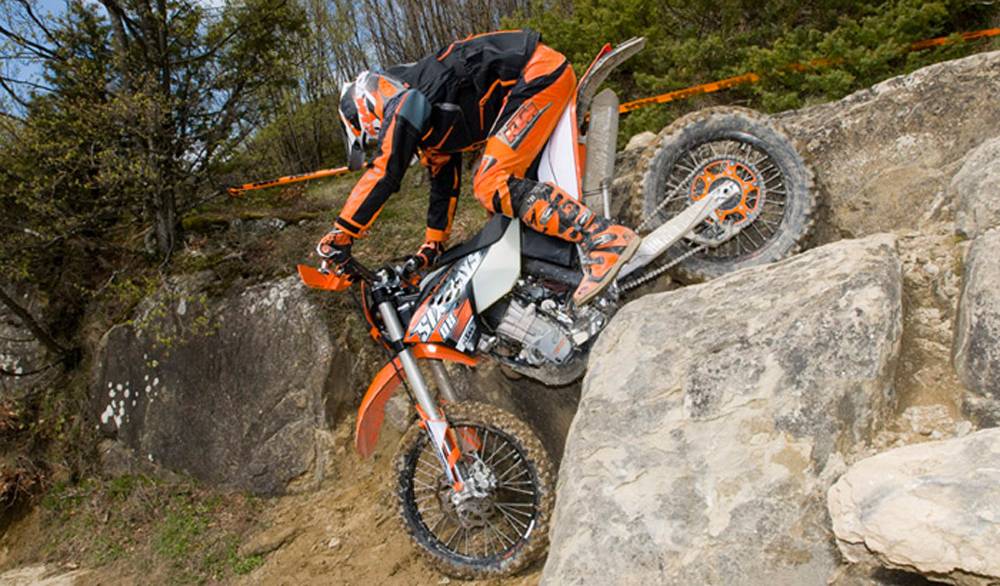
Two-strokes have long overrun their glory days, but there’s still incredible potential in the cheap and old technology engines, so manufacturers such as KTM not only carry on producing dirt bikes that are powered by such engines, but continue upgrading the oil burners and mounting them on today’s refined chassis for excellent results both on the tracks and on the trails. This is the case of the new 250 and 300 XC models produced and sold by the Austrian manufacturer and we simply had to dig a little deeper into this unique torque and sharpness combination.
2009 KTM 250/300 XC


- Make: Array
- Model: 2009 KTM 250/300 XC
- Engine/Motor: Single cylinder, 2-stroke
- Transmission: 5 gears XC semi-close-ratio
- [do not use] Vehicle Model: Array
Introduction
Although the two XC models look like veritable competition ones, these are actually enduro machines that do nothing but inspire from motocross in order to offer excellent off-road excitement while meeting the necessary demands to be called work horses. Power comes from the same type of engine – liquid cooled, single cylinder, two-stroke – displacing 249 cc or 293 cc depending on the chosen model. What’s good to know is that in both cases we’re dealing with an E-starter upgrade, but it’s the new crankshafts and modified casings that give the XC engine that magic touch consisting in new power and torque curves.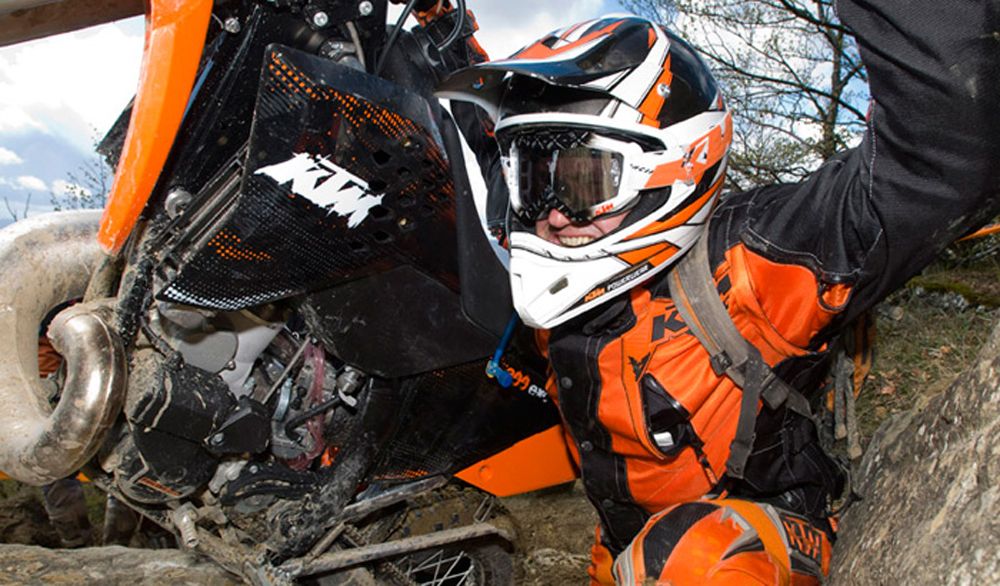
Also, the quarter-liter XC and its bigger sibling are now built on SX frames with new PDS geometry while the WP suspensions and Brembo brakes are nothing to be neglected. You get the same 63.5-degree steering angle as in the case of racing bikes and adjustable trail, so the ride shouldn’t be that different considering that in both cases the dry weight is of only 221.34 pounds and the seat height a killing 38.78 inches.
History
In 2006, the KTM 250 XC was derived from the 250 EXC, a two-stroke motorcycle that started being produced just after the year 2000, while the all-new 2004 KTM 300 XC was a natural evolution from the 300 MXC, which was first launched in 2001.
Competition

KTM is into offering diversity and that’s why you’ll more likely find people wondering if they should either buy an SX, an XC or an XC-W rather than even considering the already few alternatives. Two models that shouldn’t be neglected are Husqvarna’s WR 250 and all-new for 2009 WR 300. These are too powered by the same engine type – liquid cooled, single cylinder, two-stroke – and differ in displacement (249.3 cc for the WR 250 and 293.1 cc for the WR 300) while being light and highly maneuverable.
Exterior

As similar as the KTM and Husky motorcycles would be in what concerns performance, the Austrian manufacturer’s distinctive looks manage to stand out wherever you ride. Furthermore, the two XCs are redesigned for 2009, standing out as being both aggressive and refined. It is all about the sharp, high-mounted fenders and the nicely contoured side panels, all covered in this year’s eccentric decals among which we can even distinguish what appears to be a human skull.
The 2.9 gallons fuel tank is perfectly integrated within the narrow frame’s tubes, almost at the same level as the seat, which is as well narrow and unforgiving to those used with comfier rides. Mud guards and hand guards come as standard equipment, so at least that would indicate that we’re dealing with an enduro ride if all the other features of the bike don’t.
Riding on black Excel wheels with two diameter options (18 or 21 inches), the bikes integrate perfectly into the XC lineup and only the exhaust system will indicate that this is no ordinary four-stroke bike.
In both cases, the only color available for 2009 is KTM Orange.
-----
Test Ride

Everything about the XCs resumes to the amazing blasts that they turn into once the engines are started. You can do that using a button or by kick with the same immediate result. Those who have ridden two-stroke bikes before are sure to recognize the characteristic sound, smell and even vibrations, all contributing at making the rider’s heart beat faster before even getting on the move.
Pull the clutch freely in and get the bike into first gear before making some engine noise (and smoke) in order to notice how fast these things take off. The entire secret is that you’ll have to work on the throttle with more courage than on most four-stroke bikes because there isn’t that much low-end grunt to exploit and it all consists in getting the engine as close to its peak point as possible. We’ve come to find that the 300 XC is significantly superior to the 250 XC although it might not be considered so, given the small displacement difference between the two engines. Believe us, it’s dramatic!
Both bikes value their engine’s capabilities through the same 5 gears XC semi-close-ratio gearbox. We must say that the unit is perfectly adequate for doing that and no sixth gear was ever needed along the ride that we had. It works with chirurgical precision while being very quiet, which is a major necessity, considering that the rider will work the gearbox lever very often as these bikes are very demanding when it comes to selecting the right gear for different riding situations.
Because both bikes weigh the same, handling feels light and reassuring in both cases. The chassis upgrades have a strong word to say from the very first sharp corner that you approach and during which you’ll only have to lean more in order to complete successfully in the case in which speed was in excess than what’s recommended for the respective situation.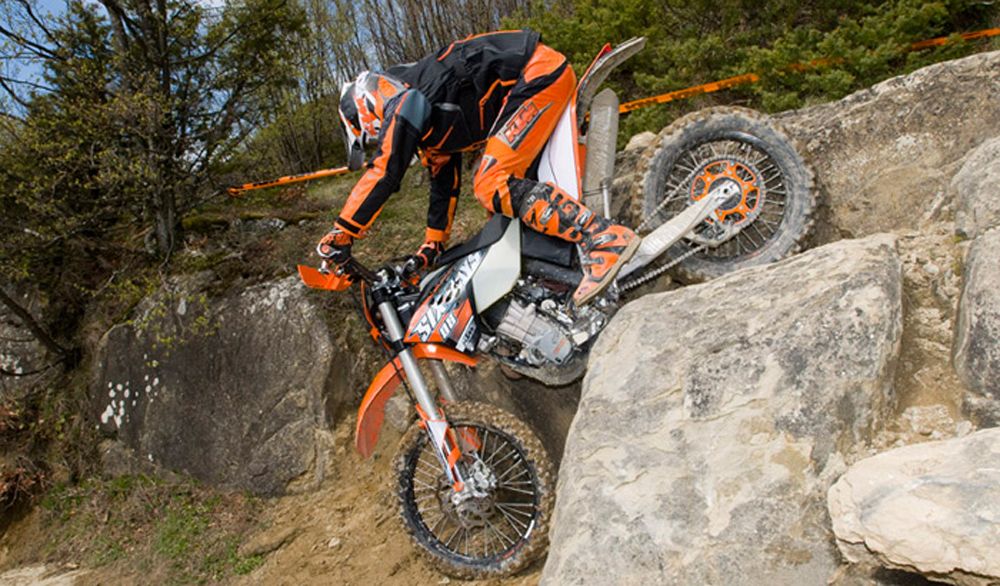
During our short jumping session, the suspensions performed effectively and proved that the 11.81 inches of travel front and 13.19 inches of travel rear are more than enough for these bikes as we weren’t able to experience bottoming resistance even when landings weren’t quite perfect. Our tester bikes were equipped as such: 18-inch wheels for the 250 XC and 21-inch wheels for the 300 XC. While the first did allow all three of us to flatfoot the ground (note that the seat height is the same in both cases) without being less of a mountain goat, the second was tricky when it came to height, but more of a climber.
As much as we’d like to find a major disadvantage when buying the 250/300 XC, we can’t mention any other one apart from the uncomfortable seat and aggressive character (although this last one might very well qualify as an advantage).
Braking on the two XC models inspires confidence as there are two Brembo pistons working on the 10.24-inch front disc and a single Brembo piston working on the 8.66 rear one. Stopping power is always enough for high speed wheelies on the large-diameter front wheel and, in emergency situations, applying both the front and the rear brake is always the solution for almost instant stops.
Price
The base MSRP for the 2009 KTM 250 XC is of $6,948 while the new KTM 300 XC will start at $7,998.
Conclusion
Given the fact that two-stroke of-road bikes are rare bread nowadays, these prices don’t seem exaggerated at all. The XCs are the kind of bikes that serve their owners out of the trails during the first five days of the week and provide a fair share of extreme track riding during the weekends, so it’s almost like buying two bikes in a single one.
-----
SPECIFICATIONS

Engine and Transmission
Engine type: Single cylinder, 2-stroke
Displacement: 249 cc / 293 cc
Bore x stroke: 66.4/72 mm (2.61/2.83") / 72/72 mm (2.83/2.83")
Starter: Kick start/Electric Start
Transmission: 5 gears XC semi-close-ratio
Carburetor: Keihin PWK 36 S AG
Control: TVC twin valve control
Lubrication: Mixture oil lubrication 1:60
Transmission oil: 15W50
Primary drive: 26:72
Final drive: 14:50
Cooling: Liquid cooled
Clutch: Wet multi-disc clutch, operated hydraulically
Ignition: Kokusan digital E
Chassis and Dimensions
Frame: Central double-cradle-type 25CrMo4
Subframe: Aluminium 7020
Handlebar: Neken Aluminium Ø 28/22 mm (1.10/0.87")
Front suspension: WP USD Ø 48 mm (1.89")
Rear suspension: WP monoshock PDS
Suspension travel front/rear: 300/335 mm (11.81/13.19")
Front brake: 260mm (10.24") disc, Brembo double piston
Rear brake: 220mm (8.66") disc, Brembo single piston
Rims, front/rear: 1.60 x 21"; 2.15 x 18"
Tires, front/rear: 80/100-21"; 110/100-18"
Chain: X-ring chain 5/8 x 1/4"
Main silencer: Aluminium 250 SX
Steering head angle: 63.5°
Trail: Adjustable
Wheel base: 1475±10 mm (58.07±0.39")
Ground clearance (unloaded): 385 mm (15.16")
Seat height: 985 mm (38.78")
Tank capacity: approx. 11 liters (2.9 gal)
Weight (no fuel): approx. 100.4 kg (221.34 lbs)